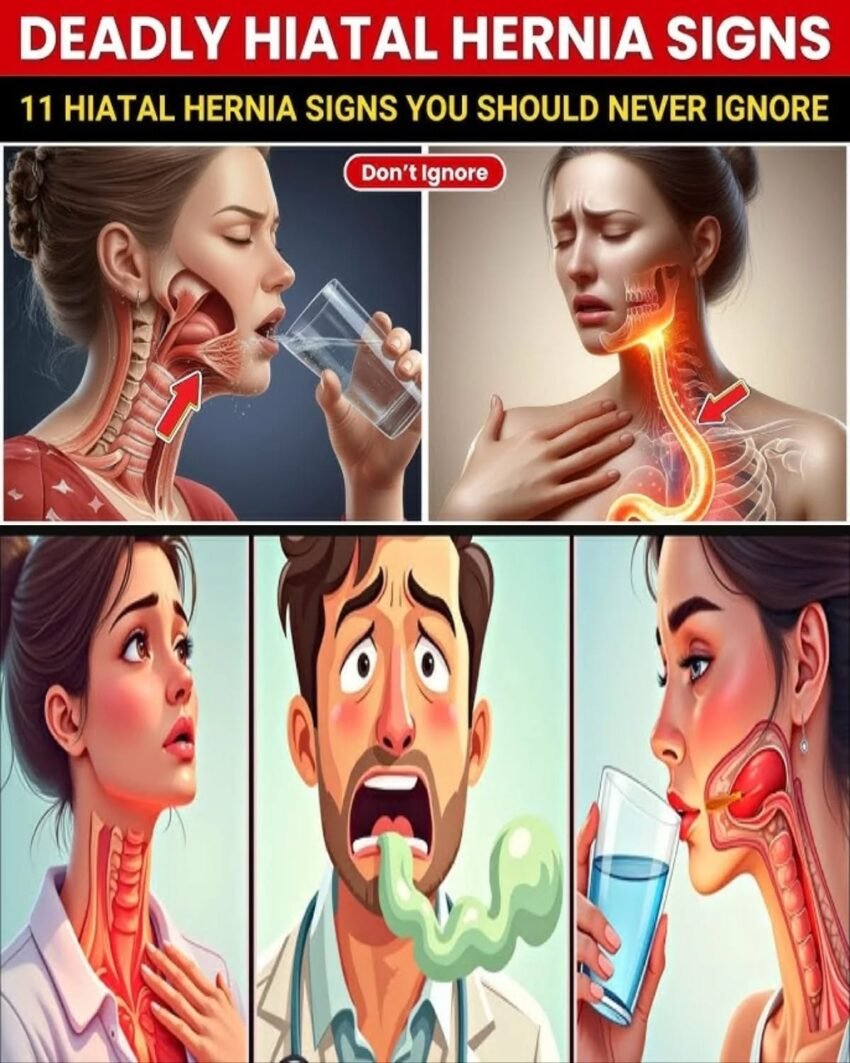
10 Hiatal Hernia Signs and Symptoms You Should Know!
A hiatal hernia is a common digestive condition that affects millions of people worldwide—yet many don’t realize they have it. In some cases, symptoms are mild or mistaken for simple indigestion, while in others, they can significantly impact daily life.
Knowing the signs and symptoms of a hiatal hernia can help you seek timely medical advice and avoid complications. In this article, we’ll break down 10 important hiatal hernia symptoms, explain why they happen, and discuss when to see a doctor.
Disclaimer: This article is for informational purposes only and does not replace professional medical advice, diagnosis, or treatment.
What Is a Hiatal Hernia?
A hiatal hernia occurs when part of the stomach pushes upward through the diaphragm into the chest cavity. The diaphragm normally separates the chest from the abdomen and helps control breathing.
There are two main types:
-
Sliding hiatal hernia (most common)
-
Paraesophageal hiatal hernia (less common but more serious)
10 Common Hiatal Hernia Signs and Symptoms
1. Heartburn
Heartburn is the most common symptom of a hiatal hernia.
Why it happens:
The hernia weakens the lower esophageal sphincter (LES), allowing stomach acid to flow back into the esophagus.
Symptoms include:
-
Burning sensation in the chest
-
Worsening after meals or lying down
2. Acid Reflux (GERD)
Many people with a hiatal hernia experience gastroesophageal reflux disease (GERD).
Signs include:
-
Sour or bitter taste in the mouth
-
Acid backing up into the throat
3. Chest Pain
Hiatal hernia–related chest pain can sometimes feel similar to heart-related pain.
⚠️ Important: Any unexplained chest pain should be evaluated immediately to rule out heart conditions.
4. Difficulty Swallowing (Dysphagia)
A hiatal hernia can make swallowing uncomfortable or difficult.
Why it happens:
Inflammation or narrowing of the esophagus caused by frequent acid exposure.
5. Regurgitation of Food or Liquid
Some people experience food or liquid coming back up into the throat or mouth, especially after eating or when bending over.
This symptom often worsens at night or when lying flat.
6. Bloating and Feeling Full Quickly
A hiatal hernia can interfere with normal digestion, leading to:
-
Abdominal bloating
-
Early satiety (feeling full after small meals)
7. Shortness of Breath
In larger hiatal hernias, the stomach can press against the lungs.
Possible effects include:
-
Difficulty breathing after meals
-
Feeling breathless when lying down
8. Chronic Cough or Throat Irritation
Stomach acid entering the throat can irritate the airways.
Common signs include:
-
Persistent dry cough
-
Hoarseness
-
Frequent throat clearing
9. Nausea or Vomiting
Some people with hiatal hernias experience nausea, especially after eating large or fatty meals.
In severe cases, vomiting may occur and requires medical attention.
10. Worsening Symptoms at Night
Hiatal hernia symptoms often become worse at night due to gravity no longer keeping stomach acid down.
Nighttime symptoms may include:
-
Severe heartburn
-
Acid reflux during sleep
-
Interrupted sleep quality
What Causes a Hiatal Hernia?
Several factors can contribute, including:
-
Aging and muscle weakening
-
Obesity or excess abdominal pressure
-
Heavy lifting or straining
-
Chronic coughing
-
Pregnancy
When Should You See a Doctor?
Seek medical help if you experience:
-
Severe or persistent chest pain
-
Trouble swallowing
-
Vomiting blood or black stools
-
Shortness of breath
These could indicate complications requiring immediate care.
Managing Hiatal Hernia Symptoms
While treatment depends on severity, common management strategies include:
-
Eating smaller, more frequent meals
-
Avoiding spicy, fatty, or acidic foods
-
Not lying down immediately after eating
-
Elevating the head of the bed
-
Maintaining a healthy weight
Medications or surgery may be recommended for severe cases.
Final Thoughts
A hiatal hernia can range from mildly uncomfortable to seriously disruptive. Recognizing early signs such as heartburn, acid reflux, chest pain, and difficulty swallowing can help prevent complications and improve quality of life.
If symptoms persist or worsen, consulting a healthcare professional is essential for proper diagnosis and treatment.
Frequently Asked Questions (FAQs)
Can a hiatal hernia heal on its own?
Small hiatal hernias may not cause symptoms, but they usually don’t go away without treatment.
Is a hiatal hernia life-threatening?
Most are not dangerous, but certain types can cause serious complications if untreated.
Can lifestyle changes help?
Yes, diet and lifestyle adjustments often significantly reduce symptoms.