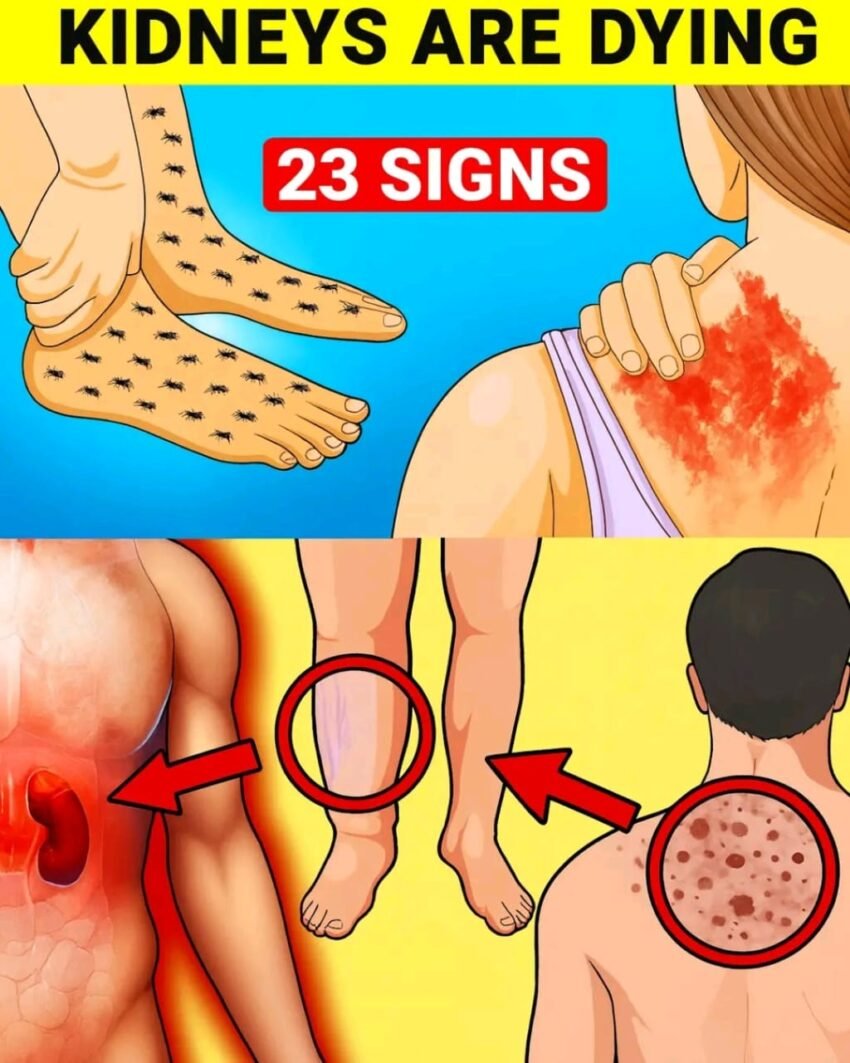
23 Silent SOS Signs Your Kidneys Are Begging for Attention
Because kidney problems rarely shout — they whisper first
Introduction: Why Kidney Problems Are Often Missed
Your kidneys are quiet heroes. Every single day, they filter waste, balance fluids, regulate blood pressure, support red blood cell production, and keep your body’s chemistry stable — all without asking for attention.
The problem?
Kidney disease often develops silently.
Many people don’t realize their kidneys are struggling until significant damage has already occurred. That’s why understanding the early, subtle warning signs is so important.
This article is educational, not diagnostic. Having one or even several of these signs does not mean you have kidney disease. But persistent, unexplained symptoms are your body’s way of saying: please pay attention.
Why Kidney SOS Signals Are Easy to Ignore
Kidney-related symptoms are often:
-
Mild at first
-
Painless
-
Easily confused with stress, aging, dehydration, or diet
-
Gradual rather than sudden
That’s what makes awareness critical.
23 Silent SOS Signs Your Kidneys May Be Struggling
1. Persistent Fatigue or Low Energy
When kidneys don’t filter waste effectively, toxins build up in the blood, leading to deep, ongoing tiredness that rest doesn’t fix.
2. Difficulty Concentrating or Brain Fog
Waste buildup can affect mental clarity, causing poor focus, forgetfulness, or confusion.
3. Swelling in Feet, Ankles, Hands, or Face
Damaged kidneys may retain sodium and fluids, leading to noticeable swelling — especially by the end of the day.
4. Changes in Urination Frequency
-
Urinating more often (especially at night)
-
Or less often than usual
Both can signal kidney stress.
5. Foamy or Bubbly Urine
Excess foam may indicate protein leakage — an early sign of kidney damage.
6. Dark, Cloudy, or Bloody Urine
Urine color changes can reflect dehydration, infection, or kidney filtering issues.
7. Persistent Lower Back or Flank Pain
Pain just below the rib cage on either side of the spine can sometimes be kidney-related, especially if persistent.
8. Puffiness Around the Eyes
Especially noticeable in the morning, this may indicate protein loss through urine.
9. Muscle Cramps
Electrolyte imbalances (like low calcium or high phosphorus) can cause frequent cramps.
10. Dry, Itchy Skin
Healthy kidneys help balance minerals. When they don’t, skin can become dry and itchy.
11. Metallic Taste in the Mouth
Waste accumulation can alter taste, making food taste metallic or unpleasant.
12. Bad Breath (Ammonia-Like Smell)
This can result from toxin buildup in the bloodstream.
13. Loss of Appetite
Nausea or aversion to food can occur as waste levels increase.
14. Nausea or Vomiting
Especially when not linked to food poisoning or stomach illness.
15. Feeling Cold More Often
Kidney-related anemia can reduce oxygen delivery, making you feel cold even in warm environments.
16. Shortness of Breath
This may occur due to fluid buildup in the lungs or anemia caused by reduced kidney hormone production.
17. High Blood Pressure That’s Hard to Control
Kidneys help regulate blood pressure. Damage can create a dangerous cycle of worsening hypertension.
18. Trouble Sleeping
Toxin buildup and frequent nighttime urination can disrupt sleep.
19. Frequent Urinary Tract Infections
Recurrent infections may signal structural or functional kidney issues.
20. Sudden Changes in Weight
Rapid weight gain (fluid retention) or unexplained weight loss should be taken seriously.
21. Decreased Urine Output
Even if you’re drinking enough fluids, reduced output may indicate impaired kidney function.
22. General Feeling of Being “Unwell”
A vague sense that something isn’t right — persistent malaise without a clear reason.
23. Family History Plus Mild Symptoms
If kidney disease runs in your family, even subtle symptoms deserve attention.
Who Is at Higher Risk?
You may be at higher risk if you:
-
Have diabetes
-
Have high blood pressure
-
Are over age 50
-
Have a family history of kidney disease
-
Take certain medications long-term
-
Have heart disease
-
Smoke or are frequently dehydrated
Many people with kidney disease have no symptoms at all in early stages.
When Should You See a Doctor?
You should seek medical advice if:
-
Symptoms last more than 2–3 weeks
-
Multiple signs appear together
-
Symptoms worsen over time
-
You have known risk factors
Simple blood and urine tests can often detect problems early.
Common Myths That Delay Care
❌ “If my kidneys were sick, I’d feel pain”
❌ “Only older people get kidney disease”
❌ “Swelling is just from salt”
❌ “I’d know if something was wrong”
✔ Truth: Kidney disease is often silent until advanced stages
What You Can Do to Protect Your Kidneys
-
Stay well hydrated
-
Manage blood pressure and blood sugar
-
Limit excessive salt and ultra-processed foods
-
Avoid unnecessary painkiller overuse
-
Don’t ignore persistent symptoms
-
Get routine health checkups
Small daily habits make a big difference over time.
Frequently Asked Questions
1. Can kidney damage be reversed?
Early-stage damage may be slowed or improved, depending on the cause.
2. Do kidney problems always cause pain?
No — many people have no pain at all.
3. How often should kidneys be checked?
Annually for high-risk individuals, or as advised by a doctor.
4. Is dark urine always a kidney problem?
No, but persistent changes should be evaluated.
5. Can dehydration damage kidneys?
Chronic dehydration can strain kidney function over time.
6. Are supplements always safe for kidneys?
Not all — some can be harmful, especially in high doses.
7. Can stress affect kidneys?
Indirectly, through blood pressure and lifestyle habits.
8. Are kidney problems common?
Yes — millions of people worldwide have undiagnosed kidney disease.
Final Thoughts: Listen Before Your Kidneys Have to Shout
Your kidneys don’t fail overnight.
They send quiet signals long before serious damage occurs.
Recognizing these silent SOS signs doesn’t mean assuming the worst — it means giving your body the respect and care it deserves.
A Gentle Call to Action
-
Don’t ignore persistent symptoms
-
Schedule regular health checkups
-
Share this article with someone who might need it
-
Choose awareness over fear
Your kidneys work for you every day.
Listening to them could save your health — and your life.