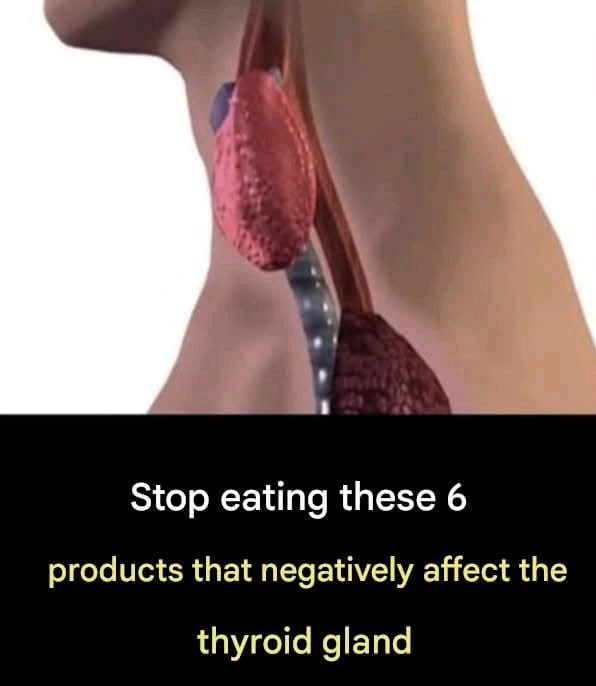
6 Foods That Negatively Affect Your Thyroid: What to Avoid or Limit for Better Hormonal Balance
Struggling with thyroid health? Learn which everyday foods may interfere with thyroid function and how to consume them safely and smartly.
3. Introduction
If you’ve ever felt constantly tired, unusually cold, foggy-headed, or frustrated by unexplained weight changes, your thyroid may have crossed your mind—and for good reason.
In the United States, thyroid disorders affect millions of adults, especially women. While genetics and autoimmune conditions play a major role, diet is one of the most misunderstood—and often overlooked—factors influencing thyroid health.
Here’s where confusion starts.
You’ll see headlines claiming certain foods “destroy” the thyroid, while others insist those same foods are perfectly healthy. The truth, as usual, lives in the middle.
In this article, you’ll learn:
-
How the thyroid actually works
-
Why certain foods can interfere with thyroid function
-
Which foods to avoid completely—and which to simply limit
-
How preparation and portion size change the impact
-
Common dietary mistakes people with thyroid concerns make
No fear-mongering. No extreme elimination lists. Just practical, science-aligned guidance you can use in real life.
4. Understanding the Thyroid (Without the Medical Jargon)
What the Thyroid Does
The thyroid is a small, butterfly-shaped gland in your neck—but it has a massive job.
It helps regulate:
-
Metabolism
-
Body temperature
-
Heart rate
-
Energy levels
-
Hormone balance
To do its job properly, the thyroid depends on nutrients like iodine, selenium, zinc, and iron—and it’s sensitive to disruptions.
Why Diet Matters More Than People Think
Certain foods can:
-
Interfere with iodine uptake
-
Affect hormone conversion
-
Increase inflammation (especially in autoimmune thyroid conditions)
That doesn’t mean these foods are “bad” for everyone—but context matters.
5. Food Sensitivity vs. Food Fear: An Important Distinction
Before we dive into the list, one critical point:
Most foods that affect the thyroid are problematic in excess, raw form, or in specific conditions—not automatically harmful.
Many of the foods below are otherwise nutritious and widely consumed in the U.S.
The key is knowing when, how, and how much.
6. Food #1: Soy-Based Products
Why Soy Gets Attention in Thyroid Health
Soy contains compounds called isoflavones, which may interfere with thyroid hormone production and iodine absorption—especially in people with existing thyroid dysfunction.
Common soy sources include:
-
Soy milk
-
Tofu
-
Edamame
-
Soy protein isolate (often in processed foods)
Who Should Be Most Cautious
-
People with hypothyroidism
-
Those with iodine deficiency
-
Individuals taking thyroid medication
Soy doesn’t usually cause thyroid problems—but it can worsen existing ones if consumed heavily.
Smart approach:
Limit highly processed soy and avoid consuming it close to thyroid medication timing.
7. Food #2: Cruciferous Vegetables (When Raw and Overconsumed)
The Surprising Thyroid Controversy
Vegetables like:
-
Broccoli
-
Cauliflower
-
Kale
-
Brussels sprouts
-
Cabbage
contain natural compounds that may interfere with iodine uptake when eaten raw and in large quantities.
Important Clarification
Cruciferous vegetables are nutrient-dense and healthy for most people.
The issue arises when:
-
They’re consumed raw daily in large smoothies
-
Iodine intake is already low
-
Thyroid function is compromised
Cooking changes everything.
Heat significantly reduces the compounds that affect iodine absorption.
8. Food #3: Gluten-Containing Grains
The Thyroid–Gluten Connection
Gluten doesn’t affect the thyroid directly—but it plays a role in autoimmune thyroid conditions, such as Hashimoto’s disease.
Why?
-
The structure of gluten proteins may trigger immune responses
-
Increased gut permeability may worsen inflammation
This connection is particularly relevant in the U.S., where gluten consumption is high and autoimmune thyroid disorders are common.
Should Everyone Avoid Gluten?
No.
But people with:
-
Hashimoto’s thyroiditis
-
Celiac disease
-
Unexplained thyroid symptoms
often benefit from evaluating gluten intake under medical guidance.
9. Food #4: Highly Processed Foods
Why Processed Foods Stress the Thyroid
Ultra-processed foods often contain:
-
Refined sugars
-
Inflammatory oils
-
Additives and preservatives
-
Excess sodium
These foods don’t damage the thyroid directly—but they:
-
Increase systemic inflammation
-
Disrupt blood sugar balance
-
Strain metabolic processes
Over time, this creates an environment where thyroid function struggles.
Common examples:
-
Packaged snacks
-
Fast food
-
Sugary cereals
-
Frozen ultra-processed meals
10. Food #5: Excessive Sugar
Sugar and Hormonal Chaos
High sugar intake contributes to:
-
Insulin resistance
-
Chronic inflammation
-
Energy crashes
These factors indirectly impact thyroid hormone conversion and sensitivity.
In the U.S., sugar is one of the most overconsumed dietary components—often without people realizing it.
Hidden sources include:
-
Flavored yogurts
-
Sauces and dressings
-
Granola bars
-
Sweetened beverages
Reducing sugar doesn’t fix thyroid issues—but it supports hormonal balance overall.
11. Food #6: Alcohol (Especially in Excess)
How Alcohol Affects Thyroid Function
Alcohol may:
-
Suppress thyroid hormone production
-
Interfere with liver function (important for hormone conversion)
-
Increase inflammation
Occasional, moderate alcohol may not cause harm for everyone—but regular heavy intake can negatively affect thyroid balance.
12. Foods to Limit vs. Foods to Avoid: A Clear Breakdown
| Food Type | Avoid Completely? | Limit or Modify? |
|---|---|---|
| Soy | ❌ | ✅ |
| Cruciferous veggies | ❌ | ✅ (cook them) |
| Gluten | ❌ | ✅ (case-by-case) |
| Processed foods | ❌ | ✅ |
| Sugar | ❌ | ✅ |
| Alcohol | ❌ | ✅ |
Most thyroid-friendly diets focus on moderation and preparation, not restriction.
13. Common Mistakes People Make With Thyroid Diets
1. Cutting Out Too Many Foods at Once
This often leads to nutrient deficiencies and frustration.
2. Blaming One Food for Everything
Thyroid health is influenced by sleep, stress, genetics, and medication—not just diet.
3. Ignoring Iodine Balance
Too little or too much iodine can both cause problems.
4. Following Online Advice Without Testing
Thyroid conditions require individualized care.
14. Practical Tips for Supporting Thyroid Health
-
Focus on whole, minimally processed foods
-
Cook vegetables instead of overusing raw smoothies
-
Balance carbs, protein, and healthy fats
-
Eat consistently to support metabolism
-
Work with a healthcare provider for testing
Food works best when it supports—not replaces—medical care.
15. FAQs (People Also Ask Style)
Do certain foods shut down the thyroid?
No foods “shut down” the thyroid, but some can interfere with function when consumed excessively.
Are cruciferous vegetables bad for the thyroid?
Not when cooked and eaten in normal amounts.
Is soy bad for hypothyroidism?
It may interfere with hormone absorption in some people, especially in large amounts.
Should I avoid gluten for thyroid health?
Only if you have an autoimmune thyroid condition or sensitivity.
Can sugar worsen thyroid symptoms?
High sugar intake can worsen inflammation and energy balance.
Does alcohol affect thyroid hormones?
Excessive alcohol may suppress hormone production.
Can diet alone fix thyroid problems?
No—diet supports treatment but doesn’t replace medical care.
Is there a perfect thyroid diet?
There’s no one-size-fits-all approach.
16. Future Outlook: Where Thyroid Nutrition Is Headed
Modern research is shifting away from rigid food rules and toward personalized nutrition.
Instead of asking, “Which foods are bad?”
The better question is: “Which foods work best for my body?”
As testing and awareness improve, thyroid care is becoming more individualized—and more effective.
17. Final Thoughts: Balance Beats Elimination
Most foods that “negatively affect” the thyroid aren’t villains.
They become problematic when:
-
Consumed excessively
-
Poorly prepared
-
Combined with nutrient deficiencies
-
Ignored in the context of a medical condition
A thoughtful, balanced approach beats extreme restriction every time.
18. Call-To-Action
If this guide helped clarify thyroid nutrition:
-
Share it with someone managing thyroid concerns
-
Leave a comment with foods you’re unsure about
-
Explore more evidence-based wellness content
Your thyroid doesn’t need perfection—it needs consistency, balance, and informed choices.