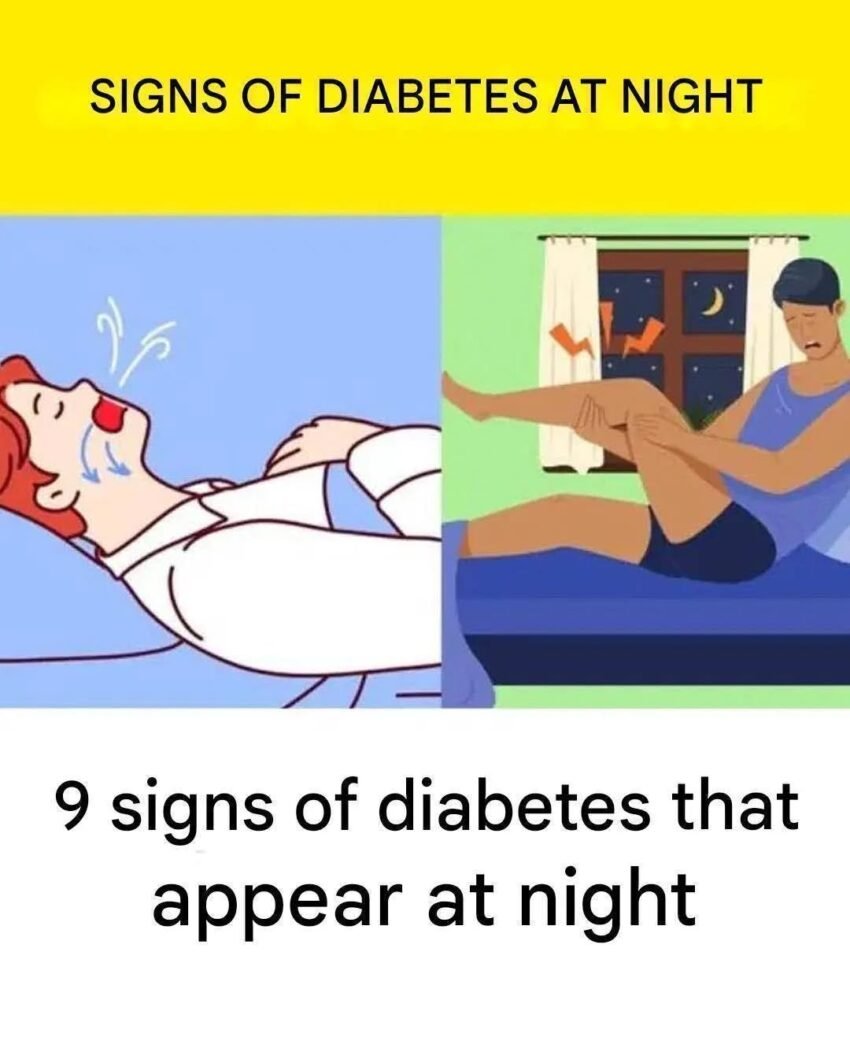
9 Signs of Diabetes That Appear at Night You Shouldn’t Ignore
Night time symptoms may signal diabetes. Learn 9 common signs that appear at night, why they happen, and when to seek medical advice.
Diabetes is a condition that often develops quietly. Many people associate its symptoms with daytime issues like thirst or fatigue, but some of the earliest and most noticeable signs can appear at night—when the body is resting and blood sugar regulation changes.
Night time symptoms are easy to dismiss as stress, aging, or poor sleep. However, when they occur frequently or together, they may be your body’s way of signalling that blood sugar levels are not well regulated.
This article explains nine night time signs commonly associated with diabetes, why they happen, and what to do if you notice them.
Why Diabetes Symptoms Often Show Up at Night
During sleep:
-
Hormones that affect blood sugar fluctuate
-
The body relies on stored glucose
-
Dehydration becomes more noticeable
-
Nerve sensitivity may increase
Because of these changes, symptoms linked to blood sugar imbalance can become more obvious at night.
1. Frequent Urination During the Night
Waking up multiple times to urinate—also known as nocturia—is one of the most common nighttime signs.
Why It Happens
When blood sugar levels are high, the kidneys work harder to remove excess glucose through urine. This leads to increased urine production, even while sleeping.
What to Watch For
-
Waking up more than once per night regularly
-
Increased urine volume
-
Disrupted sleep
Occasional nighttime urination is normal, but persistent changes may be worth noting.
2. Excessive Thirst at Night
Feeling unusually thirsty before bed or waking up needing water can be another sign.
Why It Happens
Frequent urination leads to fluid loss, which triggers thirst as the body tries to rebalance hydration levels.
Common Signs
-
Dry mouth at night
-
Needing water by the bedside
-
Waking up thirsty despite drinking enough during the day
3. Night Sweats
Sweating heavily during sleep, even in a cool room, may be linked to blood sugar fluctuations.
Possible Reasons
-
Low blood sugar during the night
-
Hormonal responses to glucose imbalance
-
Stress response from the body
Night sweats can have many causes, but recurring episodes deserve attention.
4. Restless or Poor-Quality Sleep
Many people with blood sugar issues report difficulty staying asleep.
Contributing Factors
-
Frequent bathroom trips
-
Thirst
-
Nerve discomfort
-
Blood sugar highs or lows
Poor sleep can worsen insulin sensitivity, creating a cycle that affects overall health.
5. Tingling, Burning, or Numbness in Feet or Hands
These sensations are often more noticeable at night when external distractions are minimal.
Why It Happens
Prolonged high blood sugar can affect nerves, especially in the extremities.
Common Descriptions
-
Pins-and-needles sensation
-
Burning feet
-
Numb toes or fingers
Symptoms that worsen at night should not be ignored.
6. Leg Cramps or Muscle Pain at Night
Nighttime muscle cramps may be linked to circulation or nerve issues.
Possible Causes
-
Dehydration
-
Electrolyte imbalance
-
Nerve sensitivity
While leg cramps are common, frequent episodes combined with other symptoms may signal an underlying issue.
7. Sudden Hunger During the Night
Waking up feeling unusually hungry can occur when blood sugar drops too low.
Why This Happens
The body signals hunger to raise blood sugar levels, even during sleep.
Signs Include
-
Waking up needing to eat
-
Hunger accompanied by sweating or shakiness
-
Difficulty falling back asleep
8. Blurred Vision at Night or Upon Waking
Vision changes may be subtle but noticeable in low light or early morning.
Why It Happens
Blood sugar fluctuations can temporarily affect the lens of the eye, altering focus.
If vision issues persist, professional evaluation is important.
9. Fatigue Upon Waking Despite Adequate Sleep
Feeling exhausted in the morning—even after a full night’s sleep—can be a sign that the body didn’t rest efficiently.
Contributing Factors
-
Blood sugar instability
-
Interrupted sleep
-
Dehydration
Morning fatigue that continues day after day is worth investigating.
Important Note: Symptoms Alone Are Not a Diagnosis
Experiencing one or more of these signs does not automatically mean you have diabetes. Many conditions can cause similar symptoms, including:
-
Stress
-
Hormonal changes
-
Sleep disorders
-
Dehydration
Only a qualified healthcare professional can diagnose diabetes through proper testing.
When You Should Consider Medical Advice
It’s a good idea to consult a healthcare provider if:
-
Symptoms occur frequently
-
Multiple signs appear together
-
Symptoms worsen over time
-
There is a family history of diabetes
Early detection allows for better management and outcomes.
Simple Steps That Support Nighttime Health
While diagnosis requires medical testing, general habits that support stable blood sugar include:
-
Consistent meal timing
-
Balanced nutrition
-
Regular physical activity
-
Adequate hydration
-
Good sleep hygiene
These steps benefit overall health, regardless of diagnosis.
Frequently Asked Questions
Can diabetes symptoms really be worse at night?
Yes. Hormonal and metabolic changes during sleep can make symptoms more noticeable.
Is waking up to urinate always a sign of diabetes?
No. It can have many causes, but persistent changes should be checked.
Do night sweats always indicate low blood sugar?
Not always. Other conditions can cause night sweats as well.
Can prediabetes cause nighttime symptoms?
Yes. Early blood sugar imbalance may produce mild symptoms.
Are nighttime symptoms more common in type 2 diabetes?
They can occur in both type 1 and type 2 diabetes.
Should I monitor my symptoms at home?
Keeping a symptom log can be helpful for medical consultations.
Can improving sleep reduce symptoms?
Better sleep can support blood sugar balance but does not replace medical care.
Is fatigue always related to blood sugar?
No, but it is a common symptom when combined with others.
Current Medical Perspective
Health professionals emphasize:
-
Early awareness
-
Symptom patterns rather than single signs
-
Lifestyle support alongside medical care
-
Avoiding self-diagnosis
Education plays a major role in prevention and early management.
Final Thoughts
Nighttime symptoms are easy to overlook, but your body often sends its earliest signals when you’re at rest. Paying attention to changes—especially when they persist—can help you seek timely guidance and protect long-term health.
Awareness is not about fear; it’s about informed action.
Conclusion
If you notice recurring night time symptoms such as frequent urination, thirst, poor sleep, or nerve discomfort, it may be worth discussing them with a healthcare professional. Early attention can make a meaningful difference.
Listening to your body is one of the most important health habits you can develop.
Call to Action
If this article helped you understand possible night time health signals, consider sharing it with others who may benefit.