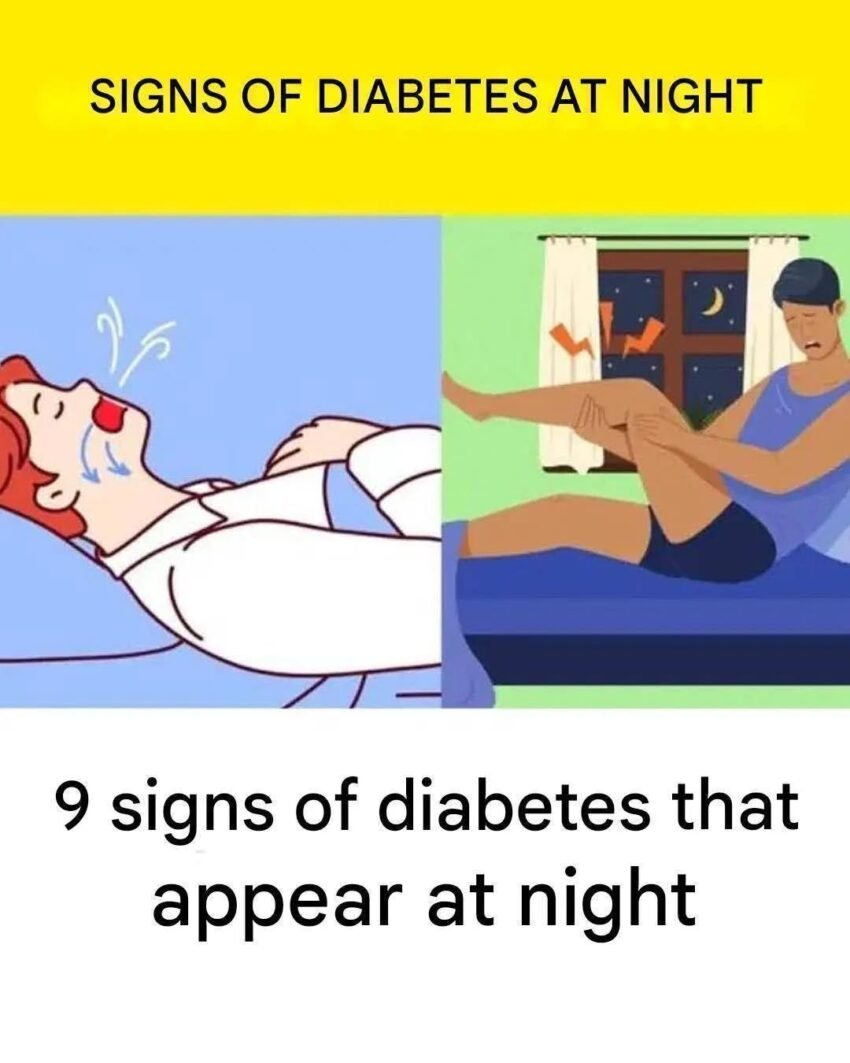
9 Signs of Diabetes That Appear at Night
Introduction: Why Diabetes Symptoms Often Show Up After Dark
Diabetes doesn’t always announce itself during the day.
For many people, the earliest warning signs appear at night, when the body is resting and blood sugar regulation becomes more noticeable. These nighttime symptoms are easy to ignore or blame on aging, stress, poor sleep, or room temperature.
But paying attention to what happens at night can provide important clues about blood sugar health—sometimes before a diagnosis is made.
This article explains 9 common signs of diabetes that tend to appear or worsen at night, why they happen, and when they should prompt medical attention.
⚠️ This content is for educational purposes only and does not replace professional medical advice.
Why Nighttime Symptoms Matter
At night:
-
Hormones that regulate blood sugar change
-
Insulin sensitivity may drop
-
The body is not distracted by activity
-
Subtle symptoms become more noticeable
As a result, blood sugar imbalances can cause distinct nighttime signals that shouldn’t be ignored.
1. Frequent Nighttime Urination (Nocturia)
Waking up multiple times at night to urinate is one of the most common early signs of diabetes.
Why It Happens
High blood sugar forces the kidneys to work harder to remove excess glucose through urine. This leads to increased urine production, even at night.
When to Pay Attention
-
Waking up two or more times nightly to urinate
-
No recent increase in evening fluid intake
-
Sudden change from your normal pattern
2. Excessive Thirst at Night
Many people with diabetes feel intensely thirsty, especially during the night.
Why It Happens
Frequent urination causes fluid loss, triggering dehydration. The body responds by creating strong thirst signals.
Common Clues
-
Dry mouth that wakes you up
-
Needing water repeatedly overnight
-
Thirst that doesn’t improve with small sips
3. Night Sweats
Unexplained sweating during sleep can sometimes be linked to blood sugar fluctuations.
Why It Happens
-
Low blood sugar (hypoglycemia) can trigger adrenaline release
-
This causes sweating, shaking, and restlessness
What It Feels Like
-
Waking up with damp sheets
-
Sweating despite a cool room
-
Sweats accompanied by vivid dreams or anxiety
4. Restless or Tingling Legs at Night
Many people notice tingling, burning, or crawling sensations in their legs or feet when lying down.
Why It Happens
High blood sugar over time can damage nerves, a condition known as diabetic neuropathy.
Typical Patterns
-
Symptoms worsen at night
-
Relief comes with movement
-
Sensations may interfere with falling asleep
5. Leg Cramps During Sleep
Painful leg cramps that strike at night can be another warning sign.
Why It Happens
-
Poor circulation
-
Electrolyte imbalances
-
Nerve irritation related to blood sugar issues
Key Indicators
-
Sudden, intense calf or foot cramps
-
Repeated episodes over weeks or months
6. Trouble Falling or Staying Asleep
Sleep disturbances are common in people with blood sugar imbalance.
Why It Happens
-
Frequent urination
-
Thirst
-
Nerve discomfort
-
Blood sugar highs or lows
Over time, poor sleep can further worsen insulin sensitivity, creating a cycle.
7. Unusual Fatigue in the Evening or Morning
Feeling extremely tired at night—or waking up exhausted—can be related to how the body handles glucose.
Why It Happens
When cells can’t efficiently use glucose for energy, fatigue increases, even after rest.
Warning Signs
-
Heavy tiredness after dinner
-
Difficulty staying awake in the evening
-
Waking up unrefreshed
8. Blurred Vision at Night
Some people notice vision changes that are more noticeable in low light.
Why It Happens
Fluctuating blood sugar levels can temporarily affect the eye’s lens, leading to blurred or distorted vision.
Important Note
Vision changes that come and go should always be evaluated, especially if persistent.
9. Nighttime Hunger or Shakiness
Waking up hungry, shaky, or anxious during the night may signal low blood sugar episodes.
Why It Happens
-
Blood sugar drops during sleep
-
The body releases stress hormones to correct it
Possible Signs
-
Sudden hunger
-
Trembling or sweating
-
Rapid heartbeat
-
Feeling uneasy or confused
Why These Symptoms Are Often Missed
Nighttime diabetes symptoms are commonly mistaken for:
-
Aging
-
Stress or anxiety
-
Menopause
-
Poor sleep habits
-
Dehydration
Because they don’t feel dramatic, many people delay evaluation.
When to See a Doctor
You should consider medical evaluation if you experience:
-
Multiple nighttime symptoms
-
Symptoms lasting more than a few weeks
-
Symptoms that worsen over time
-
A family history of diabetes
Early testing is simple and can provide peace of mind.
How Diabetes Is Diagnosed
Doctors may use:
-
Fasting blood glucose tests
-
A1C blood tests
-
Oral glucose tolerance tests
Early detection allows for better management and fewer complications.
Frequently Asked Questions
1. Can diabetes symptoms appear only at night?
Yes. Some people notice nighttime symptoms before daytime ones.
2. Are night sweats always caused by diabetes?
No, but frequent unexplained night sweats should be evaluated.
3. Can poor sleep cause diabetes?
Chronic poor sleep increases insulin resistance over time.
4. Do these symptoms mean I have diabetes?
Not necessarily, but they warrant medical attention.
5. Is nighttime urination normal with age?
Occasional changes are normal, but sudden or frequent urination is not.
6. Can diet affect nighttime symptoms?
Yes. Large or high-sugar evening meals can worsen symptoms.
7. Are these signs different for men and women?
They are generally similar, though individual experiences vary.
8. Can prediabetes cause nighttime symptoms?
Yes. Early blood sugar imbalance can cause subtle signs.
Conclusion: Listen to What Happens at Night
Your body communicates even while you sleep.
Frequent urination, thirst, night sweats, leg discomfort, and sleep disturbances are not just inconveniences—they may be early signals of blood sugar imbalance.
Catching diabetes early can:
-
Prevent complications
-
Protect nerve and blood vessel health
-
Improve sleep and energy
-
Support long-term well-being
If nighttime symptoms feel persistent or unusual, don’t ignore them. A simple check can make a powerful difference.
Final Thought
Good sleep is not just rest—it’s feedback. Pay attention to what your nights are telling you.