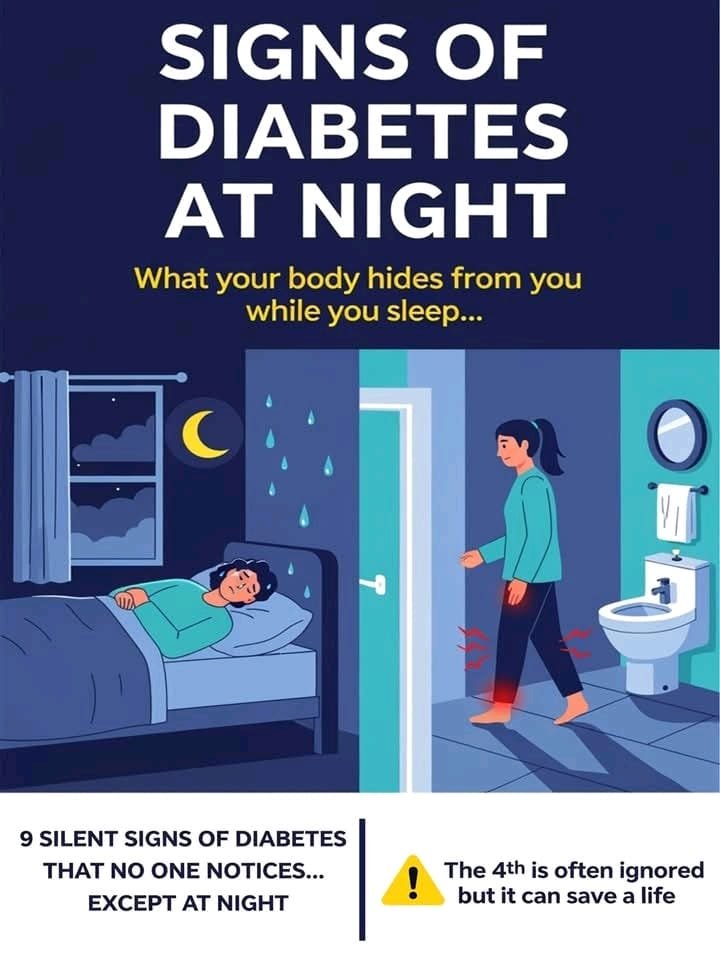
9 Signs of Diabetes That Appear at Night: What You Need to Know
Night time symptoms could be early signs of diabetes. Learn the 9 warning signals, why they happen, and how to take action for your health.
Introduction
Diabetes often reveals itself in subtle ways, and some of the earliest signs occur at night. Many people notice symptoms when they’re sleeping or waking up, but don’t realize these could be red flags.
Ignoring nighttime indicators can lead to serious complications such as nerve damage, kidney issues, and heart problems. Recognizing these warning signs early gives you the chance to take control of your health before long-term damage occurs.
In this guide, we’ll cover:
-
9 nighttime symptoms of diabetes
-
The reasons they happen
-
What you can do to manage or prevent them
9 Nighttime Signs of Diabetes
1. Frequent Nighttime Urination (Nocturia)
-
High blood sugar forces your kidneys to remove excess glucose, resulting in frequent trips to the bathroom at night.
-
If you wake multiple times, it can disrupt sleep and lead to dehydration.
2. Excessive Thirst
-
Often follows frequent urination.
-
Persistent nighttime thirst is your body’s way of replacing fluids lost due to elevated blood sugar.
3. Night Sweats
-
Low blood sugar (hypoglycemia) during sleep may trigger sweating, chills, or a rapid heartbeat.
-
Common in people taking insulin or diabetes medications.
4. Restless Sleep or Insomnia
-
Blood sugar spikes and dips can disrupt your natural sleep cycle.
-
You may wake repeatedly or have difficulty falling asleep.
5. Tingling or Numbness in Hands and Feet
-
High blood sugar damages nerves, a condition known as diabetic neuropathy.
-
Tingling, burning, or numbness often worsens at night, disrupting rest.
6. Morning Dry Mouth or Headaches
-
Elevated blood sugar can cause dehydration overnight, leading to dry mouth and headaches upon waking.
7. Blurred Vision in the Morning
-
Fluctuations in blood sugar affect fluid levels in the eyes.
-
Blurry vision that improves after eating may indicate uncontrolled glucose levels.
8. Late-Night Hunger
-
Blood sugar dips can trigger intense nighttime cravings, often for sugary foods.
-
Persistent hunger at night may indicate that your body is struggling to regulate glucose.
9. Waking Up Fatigued
-
Even after a full night’s sleep, you may feel tired.
-
Causes include sleep disruption from urination, night sweats, or nerve discomfort.
Why These Symptoms Happen
-
Hormonal changes at night affect blood sugar regulation.
-
Kidneys and nerves respond to excess glucose or fluctuations.
-
Sleep disruption amplifies fatigue, thirst, and hunger.
Early recognition is key to preventing long-term complications like kidney disease, neuropathy, and cardiovascular issues.
Practical Tips for Managing Nighttime Symptoms
-
Monitor blood sugar levels, especially before bed.
-
Eat balanced meals with protein, fiber, and controlled carbs.
-
Stay hydrated during the day to reduce nighttime thirst.
-
Avoid late-night sugary snacks that spike blood sugar.
-
Exercise regularly, but avoid intense workouts right before bedtime.
-
Create a sleep-friendly environment: dark, cool, and quiet to stabilize overnight glucose.
-
Consult a healthcare professional if symptoms persist or worsen.
Common Mistakes
-
Ignoring frequent nighttime urination or thirst as “normal aging.”
-
Failing to track overnight blood sugar trends.
-
Overlooking subtle symptoms like tingling, dry mouth, or fatigue.
FAQs
Q1: Can diabetes first appear at night?
Yes. Nighttime urination, thirst, or tingling can be early warning signs.
Q2: Are these symptoms the same for type 1 and type 2 diabetes?
Mostly yes, but type 1 can progress faster and may involve more severe nighttime hypoglycemia.
Q3: How do I know if these symptoms are due to diabetes?
A doctor can confirm with blood tests like fasting glucose, A1C, or oral glucose tolerance tests.
Q4: Can lifestyle changes prevent nighttime symptoms?
Yes. Balanced meals, hydration, exercise, and proper sleep help regulate blood sugar.
Q5: When should I see a doctor?
If frequent nighttime urination, excessive thirst, tingling, or fatigue occurs, seek medical advice promptly.
Final Thoughts
Nighttime diabetes symptoms are often subtle but significant. Paying attention to urination, thirst, hunger, fatigue, and nerve sensations can allow early detection and management.
Taking action now helps you stabilize blood sugar, improve sleep quality, and prevent long-term complications.
Call-to-Action
Start tracking your nighttime symptoms tonight. Share your experiences or questions in the comments and take proactive steps to protect your health. Your body gives signals for a reason—don’t ignore them!