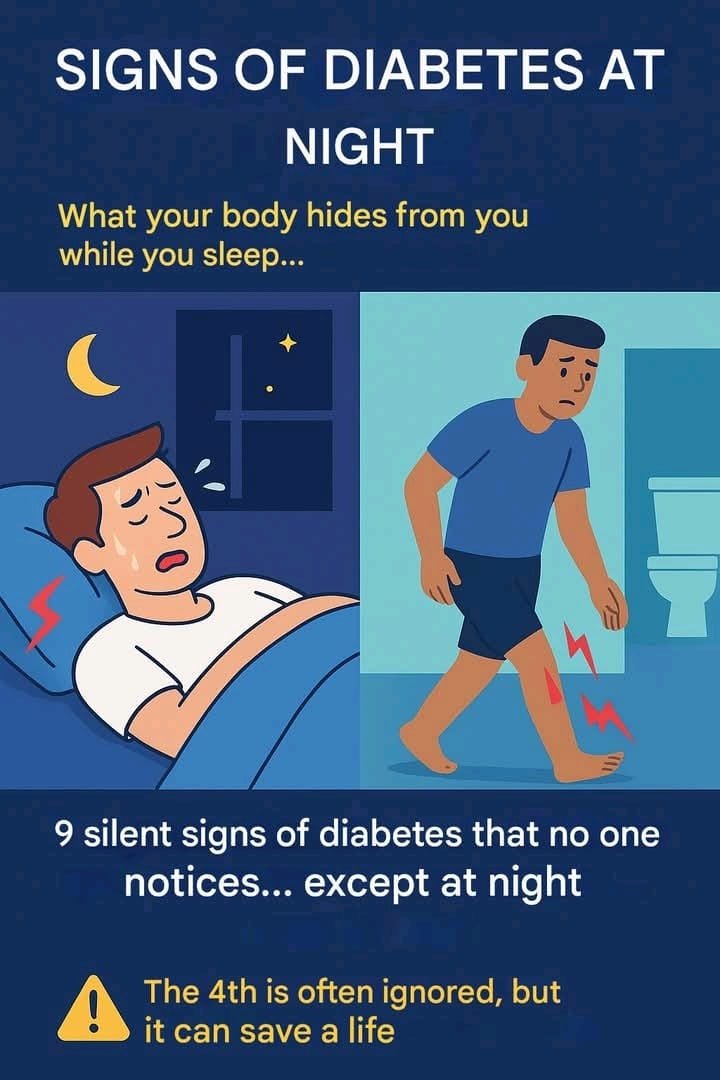
9 Signs of Diabetes That Appear at Night: What You Need to Know!
Discover 9 warning signs of diabetes that often appear at night. Learn why they happen, when to worry, and when to see a doctor for early diagnosis.
Introduction
Diabetes is a chronic condition that affects how the body regulates blood sugar. While many people are aware of daytime symptoms such as fatigue or excessive thirst, some of the earliest and most telling signs of diabetes appear at night—often disrupting sleep without an obvious explanation.
Nighttime symptoms are easy to ignore or blame on stress, aging, or poor sleep habits. However, recognizing these signs early can lead to timely diagnosis, better management, and fewer complications.
In this article, we explore 9 important signs of diabetes that may appear at night, why they occur, and when you should consider seeing a healthcare professional.
⚠️ This article is for informational purposes only and does not replace medical advice.
Why Do Diabetes Symptoms Worsen at Night?
At night, the body undergoes hormonal changes that affect blood sugar regulation. In people with diabetes or prediabetes:
-
Blood sugar may rise or fall unpredictably
-
Insulin effectiveness can decrease
-
Dehydration becomes more noticeable
-
Nerve sensitivity may increase
These factors can make certain symptoms more noticeable during sleep or nighttime rest.
1. Frequent Urination at Night (Nocturia)
Waking up multiple times to urinate is one of the most common nighttime signs of diabetes.
Why It Happens
High blood sugar forces the kidneys to work harder to remove excess glucose, producing more urine.
🚨 Warning sign: Needing to urinate more than 2 times per night consistently.
2. Excessive Nighttime Thirst
Many people with diabetes experience intense thirst during the night, often waking up with a dry mouth.
Possible Causes
-
Dehydration from frequent urination
-
High blood glucose pulling fluid from tissues
If you constantly need water beside your bed, it may be worth investigating.
3. Night Sweats
Unexplained sweating during sleep can be linked to blood sugar fluctuations, especially low blood sugar (hypoglycemia).
Signs Include:
-
Waking up soaked in sweat
-
Chills after sweating
-
Damp bedding or pajamas
Night sweats should not be ignored, especially if they happen frequently.
4. Tingling, Burning, or Numbness in Hands and Feet
Peripheral neuropathy—nerve damage caused by high blood sugar—often becomes more noticeable at night.
Common Sensations:
-
Pins and needles
-
Burning pain
-
Numbness or aching feet
These sensations can interfere with sleep and worsen over time if untreated.
5. Restless Sleep or Insomnia
Blood sugar imbalances can interfere with sleep quality.
Possible Reasons:
-
Frequent urination
-
Nerve discomfort
-
Night sweats
-
Blood sugar highs or lows
Poor sleep can then worsen insulin resistance, creating a harmful cycle.
6. Sudden Hunger at Night
Waking up hungry, especially with cravings for carbohydrates or sugar, may signal low nighttime blood sugar.
This May Happen When:
-
Diabetes medications lower blood sugar too much
-
Meals are skipped or poorly balanced
-
Insulin timing is off
Repeated nighttime hunger should be discussed with a doctor.
7. Leg Cramps During Sleep
Painful leg cramps or muscle spasms at night may be linked to:
-
Poor circulation
-
Electrolyte imbalances
-
Nerve damage
While common, frequent cramps may indicate early diabetic complications.
8. Blurred Vision When Waking Up
Fluctuating blood sugar can cause fluid shifts in the eyes, leading to temporary blurred vision, especially upon waking.
Important Note:
If vision problems persist throughout the day, seek medical attention immediately.
9. Nighttime Anxiety or Racing Heartbeat
Low blood sugar during sleep can trigger the body’s stress response.
Symptoms May Include:
-
Sudden awakening with anxiety
-
Rapid heartbeat
-
Shaking or sweating
-
Confusion
These symptoms are sometimes mistaken for panic attacks.
Who Is Most at Risk?
You may be at higher risk for diabetes if you:
-
Are over age 45
-
Are overweight or obese
-
Have a family history of diabetes
-
Have high blood pressure or cholesterol
-
Lead a sedentary lifestyle
-
Had gestational diabetes
When Should You See a Doctor?
Consult a healthcare professional if:
-
Nighttime symptoms occur regularly
-
You experience multiple symptoms together
-
Symptoms worsen over time
-
There is unexplained weight loss or fatigue
Early testing can prevent serious complications.
How Is Diabetes Diagnosed?
Doctors may use:
-
Fasting blood glucose test
-
HbA1c test
-
Oral glucose tolerance test
Diagnosis is simple, and early detection can significantly improve outcomes.
Can Nighttime Diabetes Symptoms Be Prevented?
While not all cases are preventable, risk can be reduced by:
-
Maintaining a healthy diet
-
Staying physically active
-
Managing stress
-
Getting quality sleep
-
Monitoring blood sugar if at risk
Frequently Asked Questions (FAQs)
Do nighttime symptoms mean I definitely have diabetes?
No, but persistent symptoms should be evaluated by a healthcare provider.
Can prediabetes cause nighttime symptoms?
Yes. Prediabetes can cause mild but noticeable nighttime changes.
Are nighttime symptoms more common in type 2 diabetes?
Yes, though they can occur in both type 1 and type 2 diabetes.
Final Thoughts
Nighttime symptoms are easy to dismiss—but they can be your body’s early warning system. Paying attention to what happens while you sleep may help uncover diabetes before serious complications develop.
👉 Listening early can make all the difference.
Medical Disclaimer
This content is for informational purposes only and does not substitute professional medical advice, diagnosis, or treatment.