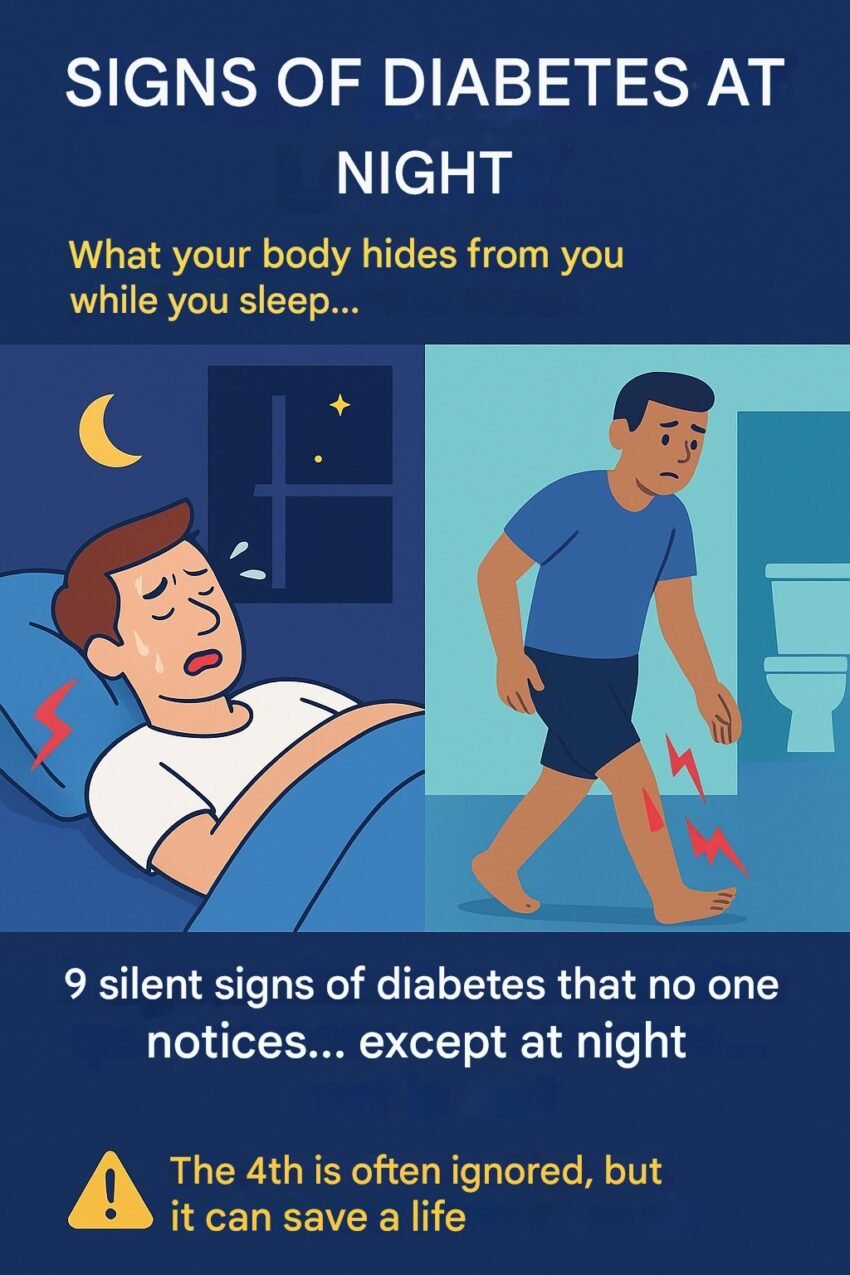
9 Signs of Diabetes That Appear at Night: What You Need to Know
Learn the 9 night time warning signs of diabetes and how to manage blood sugar while you sleep. Early detection can prevent serious complications.
Introduction: Why Nighttime Symptoms Matter
Diabetes can be sneaky. While daytime symptoms are often noticed, blood sugar imbalances at night can go undetected, affecting your sleep, energy, and long-term health.
Recognizing nighttime warning signs is critical because uncontrolled blood sugar can lead to complications such as heart disease, nerve damage, and kidney issues.
This guide explains the 9 signs of diabetes that appear at night, why they happen, and steps to manage blood sugar effectively.
How Diabetes Affects Sleep and Nighttime Health
High or low blood sugar levels can disrupt your sleep in several ways:
-
Hyperglycemia (high blood sugar): Causes frequent urination and thirst
-
Hypoglycemia (low blood sugar): Leads to sweating, shakiness, and nightmares
-
Poor glucose control: Can worsen snoring, sleep apnea, and fatigue
By identifying these symptoms early, you can take preventive measures and improve both your sleep and overall health.
1. Frequent Nighttime Urination (Nocturia)
What Happens:
-
Waking up multiple times to urinate
-
Can lead to poor-quality sleep
Why It Happens:
-
High blood sugar makes kidneys work harder to remove excess glucose
-
Fluid imbalance leads to increased urination
Tip: Track your urination pattern. Frequent nighttime urination is often one of the earliest signs of diabetes.
2. Excessive Thirst at Night
What Happens:
-
Feeling very thirsty before bed or waking up thirsty
-
Drinking large amounts of water
Why It Happens:
-
High blood sugar pulls water from cells, causing dehydration
-
Body signals you to drink more
Tip: Stay hydrated, but check blood sugar levels if this becomes persistent.
3. Night Sweats
What Happens:
-
Sweating excessively during sleep
-
Sheets soaked despite normal room temperature
Why It Happens:
-
Often a sign of nocturnal hypoglycemia (low blood sugar)
-
Can occur in people taking insulin or diabetes medication
Tip: Keep a snack nearby if you are prone to low blood sugar at night.
4. Tingling or Numbness in Feet and Hands
What Happens:
-
Pins-and-needles sensation while lying down
-
Discomfort can disturb sleep
Why It Happens:
-
High blood sugar can damage nerves (diabetic neuropathy)
-
Symptoms often appear first at night
Tip: Monitor glucose levels and consult a doctor if persistent neuropathy occurs.
5. Restless Legs Syndrome (RLS)
What Happens:
-
Strong urge to move legs at night
-
Difficulty falling or staying asleep
Why It Happens:
-
Linked to peripheral neuropathy and blood sugar fluctuations
-
Iron deficiency (common in diabetes) can worsen RLS
Tip: Stretching, moderate exercise, and glucose control can help reduce symptoms.
6. Nighttime Hunger or Cravings
What Happens:
-
Waking up hungry despite eating dinner
-
Craving high-sugar foods
Why It Happens:
-
Low blood sugar episodes trigger hunger
-
Body signals the need for quick energy
Tip: Balanced dinner with protein, fiber, and healthy fats can help stabilize blood sugar overnight.
7. Insomnia or Poor Sleep Quality
What Happens:
-
Difficulty falling asleep or frequent awakenings
-
Feeling unrested in the morning
Why It Happens:
-
High or low blood sugar disrupts circadian rhythm
-
Frequent urination and thirst interrupt sleep cycles
Tip: Check blood sugar before bed and avoid sugary snacks at night.
8. Nighttime Headaches
What Happens:
-
Waking up with headaches, especially in the morning
Why It Happens:
-
High blood sugar causes dehydration
-
Low blood sugar triggers stress hormones that increase pain sensitivity
Tip: Keep a water bottle nearby and monitor blood sugar trends.
9. Bedwetting or Accidental Urination
What Happens:
-
Adults waking up wet during the night (rare, but possible)
Why It Happens:
-
Severe hyperglycemia may overwhelm the bladder
-
Can indicate poorly controlled diabetes
Tip: Seek medical advice immediately; this can indicate significant glucose imbalance.
How to Manage Nighttime Blood Sugar
-
Monitor glucose levels before bed and upon waking
-
Eat balanced evening meals with complex carbs and protein
-
Stay hydrated but avoid excessive sugary drinks
-
Exercise regularly (but avoid strenuous activity right before bed)
-
Take prescribed medications on schedule
-
Track symptoms to discuss with your doctor
Frequently Asked Questions (FAQs)
Can these symptoms occur in prediabetes?
Yes. Many nighttime signs can appear before full diabetes develops, so early screening is important.
Should I see a doctor if I notice one symptom?
Persistent symptoms warrant consultation. Blood tests like fasting glucose or HbA1c can confirm diagnosis.
Can diabetes affect sleep quality long-term?
Yes. Poor sleep can worsen blood sugar control and increase cardiovascular risk.
Are there lifestyle changes that help overnight symptoms?
Yes. Healthy diet, exercise, hydration, and regular sleep routines all help.
Final Thoughts: Don’t Ignore Nighttime Warning Signs
Nighttime diabetes symptoms are often overlooked, but recognizing them early can prevent serious complications. From frequent urination to restless legs, paying attention to your body at night is as important as daytime monitoring.
Early detection, combined with lifestyle changes and medical management, can significantly improve your quality of life.
Call to Action
If you notice any of these nighttime signs, schedule a checkup and monitor your blood sugar. Share this article with loved ones—early awareness can save lives. ❤️