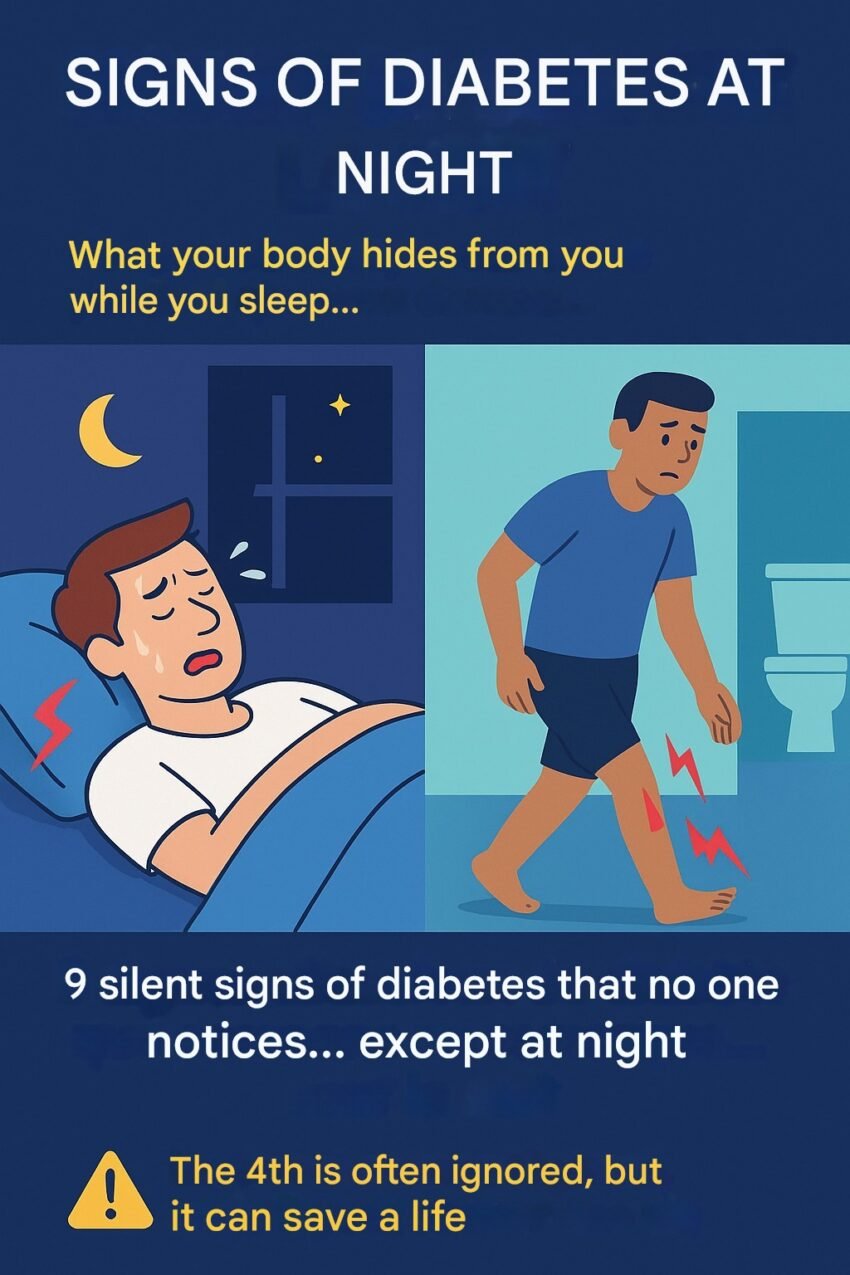
9 Signs of Diabetes That Appear at Night: What You Need to Know!
Many people think diabetes only shows symptoms during the day—like frequent urination or sudden fatigue—but your body can send subtle warning signs at night that often go unnoticed. Recognizing these early signals can help you take action sooner and protect your health.
Why Diabetes Symptoms Appear at Night
Blood sugar naturally fluctuates throughout the day. At night, these changes can make certain symptoms more pronounced, especially if your blood sugar is too high (hyperglycemia) or too low (hypoglycemia).
Some common triggers for nighttime diabetes symptoms include:
-
Eating late or large meals
-
Skipping medication or insulin doses
-
Hormonal changes affecting blood sugar
-
Dehydration or low water intake
9 Nighttime Signs of Diabetes
1. Frequent Nighttime Urination (Nocturia)
High blood sugar causes your kidneys to work overtime, leading to urination several times during the night.
Tip: Keep track of nightly bathroom trips—they’re an early warning signal.
2. Unquenchable Thirst at Night
If you wake up parched despite drinking enough water, your body might be trying to flush out excess glucose.
3. Leg or Foot Cramps
Low magnesium, dehydration, or nerve damage from diabetes can cause painful leg cramps, often noticeable during sleep.
Tip: Stretch gently before bed and stay hydrated.
4. Night Sweats
Excessive sweating during sleep may be a sign of blood sugar fluctuations, particularly hypoglycemia (low blood sugar).
5. Restless Legs or Tingling
High blood sugar can damage nerves, causing tingling, numbness, or restless legs at night.
6. Waking Up Tired
Even with enough sleep, fluctuating blood sugar can prevent deep, restorative rest, leaving you groggy in the morning.
7. Frequent Nighttime Hunger
If you often wake up hungry, your body may not be efficiently using glucose, signaling insulin issues.
8. Blurred Vision or Headaches
Nighttime high blood sugar can cause fluid shifts in the eyes, leading to blurred vision or morning headaches.
9. Slow Healing or Infections
Diabetes affects circulation and immune response, so minor cuts or infections may become more noticeable or bothersome at night.
What to Do If You Notice These Symptoms
-
Monitor Your Blood Sugar: Keep a log of readings, especially before bed and upon waking.
-
Maintain a Balanced Diet: Focus on low-glycemic foods, protein, and fiber in the evening.
-
Stay Hydrated: Water supports kidney function and helps manage blood sugar levels.
-
Exercise Safely: Gentle evening walks can stabilize blood sugar.
-
Consult Your Doctor: Persistent symptoms require professional evaluation and possibly blood tests for diabetes.
When to Seek Immediate Help
-
Severe nighttime dizziness, confusion, or weakness
-
Rapid heartbeat or sweating
-
Vomiting or abdominal pain
These could indicate dangerous blood sugar fluctuations and need urgent medical attention.
Lifestyle Tips to Prevent Nighttime Blood Sugar Spikes
-
Avoid high-sugar snacks before bed
-
Stick to a consistent sleep schedule
-
Take prescribed medications or insulin on time
-
Incorporate regular physical activity during the day
-
Manage stress, which can affect blood sugar levels
Final Thoughts
Nighttime symptoms of diabetes are subtle but telling. Paying attention to your body, tracking patterns, and acting early can help prevent complications and improve your overall quality of life.
💬 Share Your Story
Have you experienced nighttime signs of diabetes or managed them successfully?
Comment below and share your tips for better sleep and stable blood sugar.