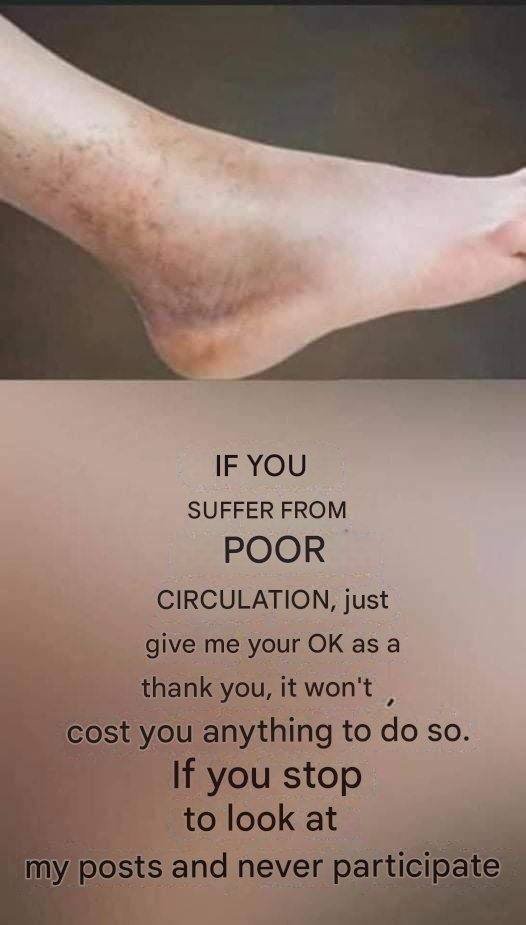
If You Suffer from Poor Circulation and Your Legs Feel Like This, Here Is the Solution
Poor circulation can make your legs feel heavy, numb, or swollen. Discover effective solutions to improve blood flow, reduce pain, and regain comfort.
Introduction: Why Poor Circulation Matters
Poor circulation in the legs is a common issue that can affect anyone, especially those who sit or stand for long periods. When blood flow is restricted, it can lead to symptoms like:
-
Heaviness or fatigue in the legs
-
Swelling or fluid retention
-
Tingling or numbness
-
Cold feet and toes
If left untreated, poor circulation can increase the risk of varicose veins, blood clots, or chronic leg pain. Fortunately, there are practical solutions to improve circulation and relieve discomfort.
1. Leg Elevation
-
How it helps: Elevating your legs above heart level improves blood return to the heart.
-
Technique:
-
Lie down and place pillows under your legs.
-
Hold for 15–20 minutes, 2–3 times a day.
-
-
Benefit: Reduces swelling and relieves leg heaviness.
2. Regular Movement and Exercise
-
Why it matters: Muscles help pump blood back to the heart, so sedentary behavior worsens circulation problems.
-
Recommended activities:
-
Walking or brisk walking for 20–30 minutes daily
-
Cycling or swimming
-
Leg stretches and calf raises throughout the day
-
-
Tip: Set reminders to move every hour if you sit long hours.
3. Compression Socks
-
How it helps: Gently squeezes the legs to promote blood flow and prevent swelling.
-
Best for:
-
People with varicose veins
-
Long hours of standing or sitting
-
-
Tip: Choose medical-grade socks with guidance from your doctor.
4. Massage and Foam Rolling
-
Benefits:
-
Stimulates blood flow
-
Reduces muscle tension
-
Helps lymphatic drainage
-
-
Method:
-
Massage calves, thighs, and feet daily
-
Use a foam roller for 5–10 minutes, moving slowly
-
-
Tip: Combine with warm compresses for better results.
5. Diet and Hydration
-
Why it matters: Poor circulation can worsen with inflammation and thick blood.
-
Foods that help:
-
Fatty fish (salmon, mackerel) for omega-3s
-
Leafy greens and citrus for vitamin C
-
Garlic and ginger to support circulation
-
-
Tip: Drink plenty of water to avoid blood thickening and swelling.
6. Avoiding Risk Factors
-
Sedentary lifestyle: Take breaks and walk every hour.
-
Tight clothing: Avoid restrictive pants or shoes.
-
Smoking: Reduces blood flow and damages vessels.
-
Excess weight: Increases pressure on leg veins.
7. When to See a Doctor
Seek medical help if you notice:
-
Persistent swelling that doesn’t improve
-
Pain, redness, or warmth in one leg (possible clot)
-
Numbness or tingling that worsens
-
Open sores or slow-healing wounds
Early evaluation can prevent complications like deep vein thrombosis or peripheral artery disease.
Frequently Asked Questions
1. Can poor circulation cause cold feet?
Yes, restricted blood flow reduces warmth, making feet and toes feel cold.
2. Will exercise really help?
Absolutely. Movement helps the muscles pump blood back to the heart efficiently.
3. Are supplements helpful?
Supplements like omega-3s or ginkgo biloba may support circulation, but consult your doctor first.
4. Can poor circulation be reversed?
With lifestyle changes, exercise, diet, and medical guidance, circulation can improve significantly.
Conclusion: Take Action for Healthy Legs
Poor circulation doesn’t have to control your life. With movement, leg elevation, proper nutrition, and supportive accessories like compression socks, you can restore comfort, reduce swelling, and prevent serious complications.
Your legs work hard every day—give them the care they deserve.
Call to Action
Start incorporating these solutions today. Elevate your legs, move regularly, and eat to support circulation. Share this guide to help friends and family enjoy healthier, pain-free legs!