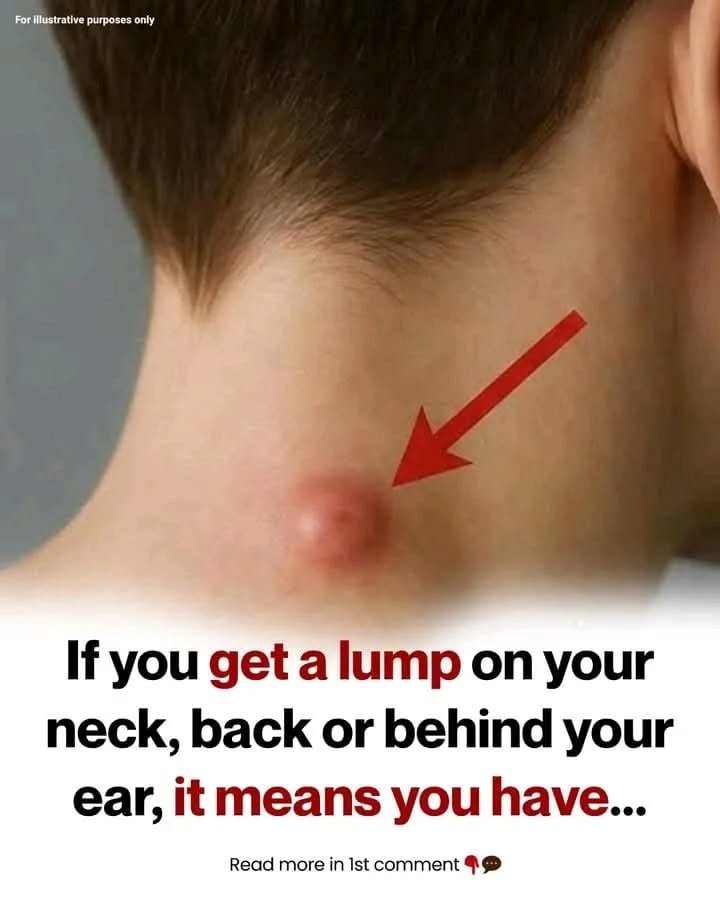
If You Get a Lump on Your Neck, Back, or Behind Your Ear, It Means This: A Complete, Doctor-Backed Guide
Introduction: Finding a Lump Can Be Scary—But Context Matters
Discovering a lump on your neck, back, or behind your ear can instantly trigger anxiety. Many people jump to worst-case scenarios, while others ignore it completely, hoping it will disappear on its own.
The truth lies somewhere in between.
Most lumps in these areas are harmless and temporary, often linked to infections or minor conditions. However, some lumps do need medical attention, especially if they persist or change over time.
This in-depth guide explains:
-
What these lumps usually mean
-
Common and less common causes
-
How to tell if a lump is harmless or concerning
-
When to see a doctor
-
What tests or treatments may be involved
This article is informational only and not a diagnosis. Its goal is awareness, not fear.
First Things First: What Is That Lump?
In most cases, a lump on the neck, upper back, or behind the ear is one of the following:
-
A swollen lymph node
-
A benign cyst
-
A muscle knot or soft tissue swelling
-
A localized infection or inflammation
Understanding which one it is starts with knowing how your body works.
The Most Common Cause: Swollen Lymph Nodes
What Are Lymph Nodes?
Lymph nodes are small, bean-shaped glands that are part of your immune system. They help your body:
-
Fight infections
-
Filter harmful substances
-
Activate immune responses
You have clusters of lymph nodes in the:
-
Neck
-
Behind the ears
-
Jawline
-
Upper shoulders
-
Groin
When they swell, it’s usually a sign your immune system is doing its job.
Why Lymph Nodes Swell
Lymph nodes can enlarge due to:
-
Colds or flu
-
Sore throat
-
Ear infections
-
Sinus infections
-
Dental issues
-
Skin infections or acne nearby
-
Minor viral illnesses
What a Typical Swollen Lymph Node Feels Like
-
Soft or rubbery
-
Slightly tender or painful
-
Movable under the skin
-
Pea-sized to grape-sized
-
Shrinks within 1–3 weeks
These features usually indicate a benign, temporary cause.
Lumps Behind the Ear: What They Often Mean
Lumps behind the ear are especially common and usually related to:
1. Ear or Scalp Infections
Even mild irritation or dandruff can cause nearby lymph nodes to swell.
2. Sebaceous or Epidermoid Cysts
These are blocked oil glands and are very common.
Typical signs:
-
Smooth and round
-
Slow-growing
-
Usually painless
-
Can become red or tender if infected
3. Allergic Reactions
Seasonal allergies can sometimes trigger lymph node enlargement.
Lumps on the Neck: More Common Than You Think
Neck lumps are often linked to:
-
Recent respiratory infections
-
Tonsillitis
-
Dental problems
-
Thyroid enlargement (in some cases)
Because the neck contains many lymph nodes, even mild illnesses can cause noticeable swelling.
Lumps on the Upper Back or Shoulder Area
Lumps on the back are less often lymph nodes and more commonly:
1. Muscle Knots or Tension
Caused by:
-
Poor posture
-
Stress
-
Repetitive movements
They often:
-
Feel firm
-
Are sore when pressed
-
Improve with massage or rest
2. Lipomas (Fatty Lumps)
Benign growths of fat tissue.
Characteristics:
-
Soft
-
Painless
-
Slow-growing
-
Harmless in most cases
When a Lump Should NOT Be Ignored
While most lumps are harmless, you should see a healthcare professional if a lump:
-
Lasts longer than 2–3 weeks
-
Continues to grow
-
Feels hard or stone-like
-
Is fixed and doesn’t move
-
Is painless but persistent
-
Comes with unexplained weight loss
-
Is associated with night sweats or ongoing fever
-
Appears without any recent illness
These signs do not automatically mean cancer, but they do require evaluation.
Could a Lump Mean Cancer?
This is the question most people fear—and the answer requires balance.
Important Facts:
-
The vast majority of lumps in these areas are not cancer
-
Cancer-related lumps are far less common than benign ones
-
Risk increases with age, but most cases are still non-cancerous
Lumps That Are More Concerning Tend to Be:
-
Hard
-
Non-tender
-
Fixed in place
-
Slowly enlarging
-
Present for weeks or months
Only a medical professional can determine the cause with certainty.
How Doctors Evaluate a Lump
If you visit a doctor, they may:
-
Ask about your symptoms
-
Duration
-
Pain
-
Recent infections
-
-
Perform a physical exam
-
Size
-
Texture
-
Mobility
-
-
Monitor it over time
-
Many lumps are observed before testing
-
-
Order tests if needed
-
Blood tests
-
Ultrasound
-
Imaging
-
Biopsy (rare, if necessary)
-
Common Mistakes People Make
-
Ignoring a lump for months
-
Panicking immediately without observing changes
-
Constantly pressing or squeezing it
-
Self-diagnosing online without context
The best approach is calm awareness.
What You Can Do at Home
Observe, Don’t Obsess
Take note of:
-
Size changes
-
Pain level
-
Duration
Support Your Immune System
-
Stay hydrated
-
Get enough rest
-
Manage stress
Avoid Irritation
Don’t poke or squeeze the lump repeatedly—it can worsen inflammation.
Frequently Asked Questions
Is a painful lump a good sign?
Pain often suggests infection or inflammation, which is usually benign.
Can stress cause lumps?
Stress can weaken immunity or cause muscle knots, which may feel like lumps.
How big is too big?
Lumps larger than a grape or steadily growing should be checked.
Can lumps come and go?
Yes—especially lymph nodes reacting to infections.
Are lumps in children common?
Yes, and they’re usually linked to infections.
Should I massage a lump?
Gentle massage may help muscle knots but avoid massaging swollen lymph nodes.
Do antibiotics always help?
Only if the cause is bacterial—never self-medicate.
Is imaging always required?
No. Many lumps are diagnosed clinically without tests.
Final Thoughts: Awareness Without Panic
If you get a lump on your neck, back, or behind your ear, it usually means:
👉 Your body is responding to infection, inflammation, or minor tissue changes
Most lumps are harmless and temporary, but persistence is the key factor to watch.
Listening to your body doesn’t mean assuming the worst—it means giving yourself the care and attention you deserve.
Call to Action
If this article helped ease your concerns or clarified what to watch for:
-
Share it with someone who might be worried about a lump
-
Pay attention to your body without fear
-
Seek medical advice when something doesn’t feel right
Awareness protects. Panic doesn’t.