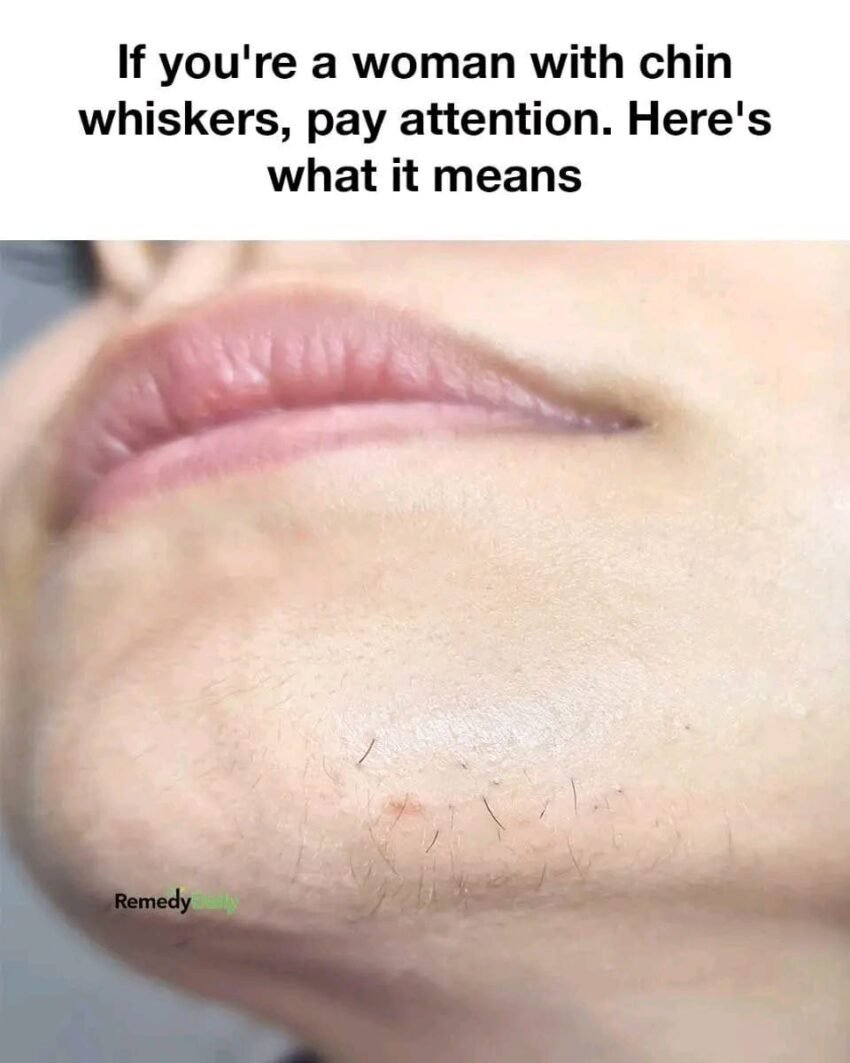
What Your Chin Whiskers Could Tell You About Your Health
Small hairs, bigger clues — when your body is trying to communicate
Introduction: Why Chin Whiskers Get More Attention Than They Should
Noticing a few coarse hairs on your chin can be surprising, frustrating, or even embarrassing—especially if they seem to appear overnight. Many people immediately reach for tweezers and move on, but chin whiskers can sometimes offer useful insight into what’s happening inside your body.
This doesn’t mean every stray hair is a health problem. In most cases, chin whiskers are completely normal. However, changes in hair growth patterns—especially sudden, excessive, or worsening growth—can occasionally signal hormonal or metabolic shifts worth paying attention to.
This article is informational, not diagnostic. It’s about awareness, not alarm.
First: What Are Chin Whiskers, Really?
Chin whiskers are usually:
-
Terminal hairs (thicker, darker hairs)
-
Influenced by androgens (male-type hormones present in all genders)
-
More noticeable due to facial skin sensitivity and contrast
Everyone has facial hair follicles. The difference lies in how active they become.
The Role of Hormones in Chin Hair Growth
Androgens: The Key Players
Hormones like testosterone and DHT (dihydrotestosterone) stimulate coarse hair growth. Even small hormonal shifts can activate facial hair follicles.
When androgen levels are:
-
Balanced → minimal or stable hair growth
-
Elevated or more active → thicker, darker hairs may appear
Importantly, it’s not always about how much hormone you have—sometimes it’s about how sensitive your hair follicles are.
What Chin Whiskers May Be Telling You
1. Normal Hormonal Fluctuations
Most common and harmless cause
Chin hairs often appear during:
-
Puberty
-
Menstrual cycle changes
-
Pregnancy
-
Postpartum period
-
Perimenopause or menopause
These stages involve natural hormone shifts that can temporarily increase facial hair.
Key sign:
Hair growth is mild, slow, and stable over time.
2. Polycystic Ovary Syndrome (PCOS)
PCOS is one of the most common conditions linked to increased chin hair growth.
Possible accompanying signs:
-
Irregular periods
-
Acne or oily skin
-
Weight gain or difficulty losing weight
-
Thinning scalp hair
-
Increased body or facial hair
Not everyone with chin whiskers has PCOS—but persistent, worsening facial hair plus other symptoms should be evaluated.
3. Insulin Resistance or Blood Sugar Imbalance
Insulin resistance can stimulate androgen production.
Possible clues:
-
Chin whiskers plus darkened skin folds
-
Fatigue after meals
-
Sugar cravings
-
Difficulty losing weight
Over time, insulin resistance may affect hormone balance.
4. Perimenopause or Menopause
As estrogen levels decline, androgens may become more dominant—even if their levels don’t rise.
Common signs include:
-
New chin or upper lip hairs
-
Thinning hair on the scalp
-
Hot flashes
-
Sleep changes
-
Mood fluctuations
This is extremely common and often benign.
5. Genetics and Ethnicity
Sometimes, chin whiskers simply run in the family.
If:
-
Close relatives have similar hair patterns
-
Hair growth has been stable for years
…it’s likely genetic and not health-related.
6. Medication Effects
Some medications can influence hair growth by altering hormone balance or follicle sensitivity.
Examples include:
-
Certain hormonal treatments
-
Some steroids
-
Medications affecting insulin or adrenal function
Always review medication changes if hair growth shifts suddenly.
7. Stress and Cortisol Imbalance
Chronic stress can disrupt hormonal signaling.
High cortisol may:
-
Affect insulin sensitivity
-
Influence androgen activity
-
Worsen existing hormonal imbalances
Stress alone rarely causes chin whiskers—but it can amplify underlying tendencies.
When Chin Whiskers Are Usually NOT a Health Concern
Chin hairs are generally harmless if:
-
There are only a few
-
They’ve been present for years
-
There are no other symptoms
-
Growth is slow and stable
In these cases, hair removal is a cosmetic choice, not a medical one.
When You Should Consider Seeing a Doctor
It’s reasonable to seek medical advice if chin whiskers are accompanied by:
-
Sudden increase in hair growth
-
Rapid worsening over months
-
Irregular or absent periods
-
Severe acne
-
Voice deepening
-
Unexplained weight changes
-
Hair thinning on the scalp
These combinations deserve evaluation—not panic.
Common Myths About Chin Whiskers
❌ “Plucking makes hair grow back thicker”
❌ “Only older women get chin hair”
❌ “It means something is seriously wrong”
❌ “You should ignore it completely”
✔ Truth: Chin whiskers are common, multifactorial, and usually manageable
Hair Removal Does NOT Cause the Problem
Shaving, waxing, or plucking:
-
Does not change hormone levels
-
Does not increase hair growth rate
-
Does not make hair truly thicker
Hair may feel coarser due to blunt ends—but growth patterns are hormonal, not mechanical.
Supporting Hormonal Balance Naturally (General Wellness Tips)
While not medical treatment, these habits support overall hormonal health:
-
Prioritize regular sleep
-
Manage chronic stress
-
Eat balanced meals with protein and fiber
-
Avoid extreme dieting
-
Maintain a healthy weight
-
Stay physically active
Always consult a professional before making major health changes.
Frequently Asked Questions
Do chin whiskers mean I have a hormone disorder?
Not necessarily. Many people have chin hairs without any disorder.
Can chin hair appear suddenly?
Yes—especially during hormonal transitions or stress.
Is it normal after 40?
Very common, especially around menopause.
Should I get hormone testing?
Only if there are additional symptoms or rapid changes.
Can diet affect facial hair?
Indirectly, by influencing insulin and hormones.
Are chin whiskers permanent?
They can be managed, and growth patterns may change over time.
Is laser removal safe?
Generally yes, when done professionally.
Should I stop plucking?
That’s a personal choice—not a medical necessity.
Final Thoughts: Observation Beats Obsession
Your chin whiskers aren’t something to fear—or ignore entirely. Most of the time, they’re simply a reflection of normal biology and life-stage changes.
But your body is always communicating.
When hair growth changes noticeably or comes with other symptoms, it’s worth listening.
Awareness isn’t about panic—it’s about paying attention with curiosity and care.
Gentle Takeaway
-
A few chin whiskers are common
-
Sudden changes deserve attention
-
Your body’s signals matter
-
You deserve answers without shame