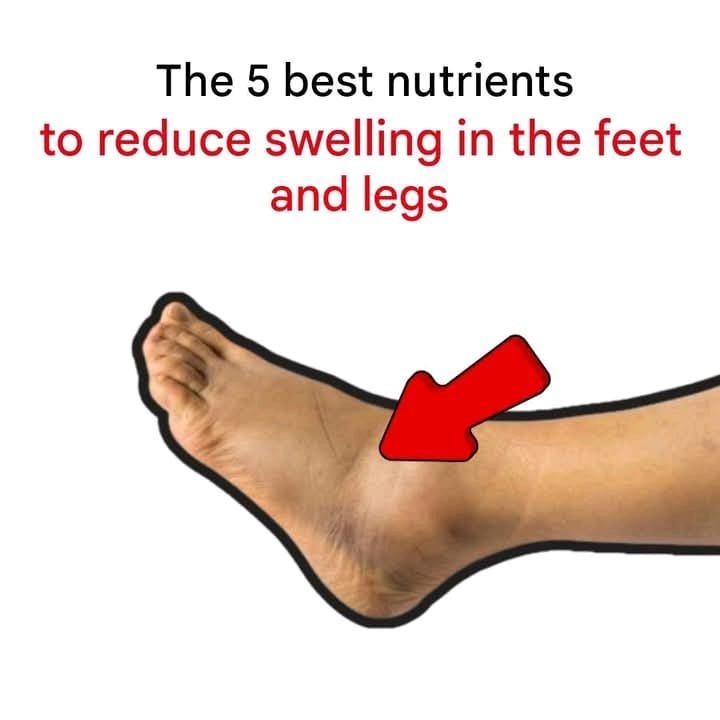
The 5 Best Nutrients to Help Reduce Swelling in the Feet and Legs
Swelling in the feet and legs—also known as fluid retention or edema—is a common issue. It can happen after long periods of sitting or standing, during hot weather, with aging, or alongside certain health conditions.
While nutrients are not a medical cure, the right ones can play a powerful supportive role by helping the body manage fluids, inflammation, circulation, and blood vessel health.
Below are five of the most important nutrients known to help reduce leg and foot swelling naturally and safely.
First: Why Swelling Happens
Before diving into nutrients, it helps to understand the basics.
Swelling in the lower limbs usually occurs because of:
-
Poor circulation
-
Weak vein function
-
Inflammation
-
Excess sodium
-
Gravity pulling fluid downward
-
Prolonged inactivity
That’s why swelling often worsens:
-
At the end of the day
-
In hot weather
-
After long travel
-
During pregnancy or aging
Nutrients work by supporting the systems involved—not by “flushing” fluid unnaturally.
1. Potassium – The Fluid Balance Regulator
Potassium is one of the most important nutrients for reducing swelling.
Why Potassium Helps
Potassium works opposite sodium. It helps:
-
Balance fluids in the body
-
Reduce water retention
-
Support healthy muscle and nerve function
-
Improve circulation efficiency
Low potassium levels are commonly linked to ankle and foot swelling.
Best Food Sources
-
Bananas
-
Avocados
-
Sweet potatoes
-
Spinach
-
Beans and lentils
-
Coconut water
💡 Many people consume too much sodium and too little potassium—this imbalance alone can worsen swelling.
2. Magnesium – The Circulation and Relaxation Mineral
Magnesium deficiency is surprisingly common and often overlooked.
Why Magnesium Helps
Magnesium:
-
Relaxes blood vessels
-
Improves blood flow
-
Reduces inflammation
-
Helps prevent fluid buildup in tissues
-
Supports muscle relaxation (reducing cramping and heaviness)
It’s especially helpful for people who experience:
-
Leg swelling with cramps
-
Swelling related to long sitting
-
Swelling during hot weather
Best Food Sources
-
Pumpkin seeds
-
Almonds
-
Cashews
-
Dark leafy greens
-
Whole grains
Some people also benefit from magnesium-rich baths (like Epsom salt foot soaks), which may temporarily reduce discomfort.
3. Omega-3 Fatty Acids – The Inflammation Reducer
Chronic inflammation plays a major role in persistent swelling.
Why Omega-3s Help
Omega-3 fatty acids:
-
Reduce inflammation
-
Improve blood vessel function
-
Support vein health
-
Help prevent excessive fluid leakage into tissues
They are especially helpful for swelling linked to:
-
Inflammation
-
Circulatory issues
-
Joint stiffness
Best Food Sources
-
Fatty fish (salmon, sardines, mackerel)
-
Chia seeds
-
Flaxseeds
-
Walnuts
Consistent intake matters more than large doses.
4. Vitamin C – The Blood Vessel Strengthener
Vitamin C isn’t just for immunity—it plays a major role in circulation.
Why Vitamin C Helps
Vitamin C:
-
Strengthens blood vessel walls
-
Supports collagen production
-
Reduces capillary leakage
-
Helps prevent fluid from pooling in the legs
Weak blood vessels can allow fluid to seep into surrounding tissues, causing swelling.
Best Food Sources
-
Oranges
-
Lemons
-
Kiwi
-
Bell peppers
-
Strawberries
-
Broccoli
Vitamin C works even better when combined with bioflavonoids found naturally in fruits.
5. Vitamin B6 – The Water-Retention Helper
Vitamin B6 is particularly known for helping regulate fluid balance.
Why Vitamin B6 Helps
Vitamin B6:
-
Supports kidney function
-
Helps reduce water retention
-
Aids protein metabolism (important for fluid balance)
-
Supports circulation and nerve health
It’s often helpful for:
-
Hormonal-related swelling
-
Mild edema
-
Premenstrual fluid retention
Best Food Sources
-
Chickpeas
-
Poultry
-
Fish
-
Potatoes
-
Bananas
How These Nutrients Work Best (Important)
Nutrients work best when combined with healthy habits.
To maximize results:
-
Move your legs regularly
-
Elevate legs when resting
-
Stay hydrated
-
Reduce excess salt intake
-
Avoid sitting or standing too long
-
Wear comfortable, non-restrictive clothing
Nutrition supports circulation—it doesn’t replace movement.
Common Mistakes People Make
-
Taking random supplements without deficiency
-
Ignoring sodium intake
-
Expecting overnight results
-
Staying inactive
-
Ignoring persistent or painful swelling
Consistency beats intensity.
When Swelling Needs Medical Attention
Nutrients are supportive—but see a healthcare professional if swelling is:
-
Sudden
-
One-sided
-
Painful
-
Associated with skin color changes
-
Accompanied by shortness of breath
-
Not improving at all
These can signal conditions that require medical evaluation.
Frequently Asked Questions
Can nutrients alone stop leg swelling?
They help support the body, but lifestyle and movement are just as important.
How long before nutrients help?
Many people notice improvement within days to weeks of consistent intake.
Is drinking more water helpful?
Yes—hydration helps reduce fluid retention paradoxically.
Are supplements necessary?
Not always. Food sources are often enough unless a deficiency exists.
Can salt cause swollen feet?
Yes—excess sodium is a common trigger.
Does age affect swelling?
Yes, circulation efficiency can decline with age.
Can weight affect swelling?
Yes—extra weight increases pressure on veins.
Do these nutrients help everyone?
Most people benefit, but individual responses vary.
Final Thoughts
Swelling in the feet and legs is often the body’s way of asking for better balance, not extreme solutions.
The five most helpful nutrients are:
-
Potassium
-
Magnesium
-
Omega-3 fatty acids
-
Vitamin C
-
Vitamin B6
When paired with movement, hydration, and consistent habits, these nutrients can make a real, noticeable difference in comfort and leg health over time.
Call to Action
If this article helped you understand swelling better, share it with someone who spends long hours sitting or standing. Sometimes relief starts with simple, informed choices—made consistently.