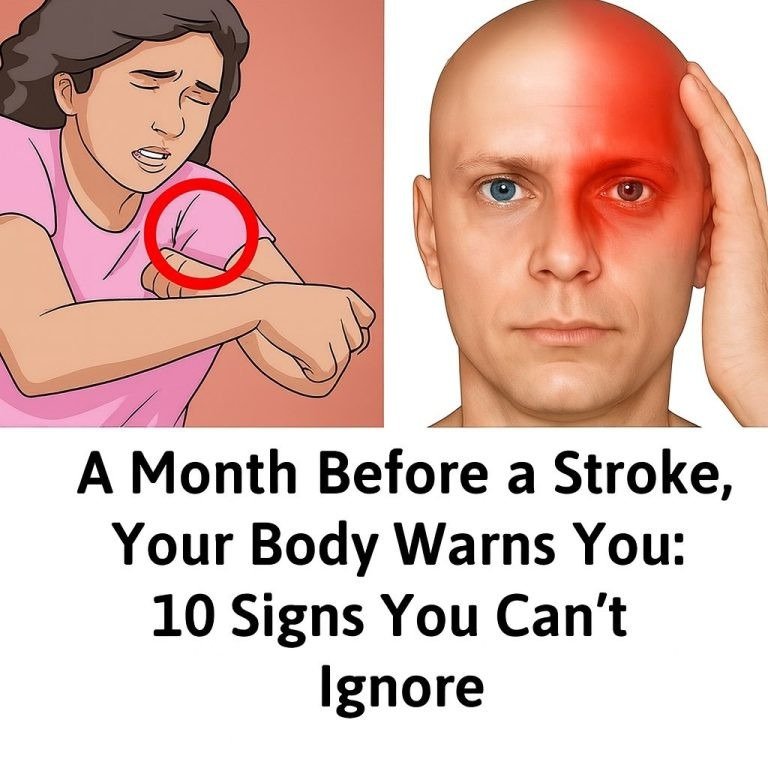
Strokes rarely happen without warning—but those warnings are often subtle, inconsistent, or misunderstood. Many people dismiss early symptoms as stress, fatigue, or aging, only to realize later that their body was asking for help.
It’s important to be clear from the start:
There is no guaranteed timeline that predicts a stroke one month in advance.
However, weeks or days before a stroke, many people experience early warning signs—especially mini-strokes or circulation changes—that deserve immediate attention.
Recognizing these signals early can save brain function, mobility, and life.
This article explains 10 warning signs that may appear weeks before a stroke, why they happen, and when to act—without exaggeration or fear.
First: What Is a Stroke (Briefly)?
A stroke occurs when blood flow to part of the brain is interrupted, either by:
-
A blocked artery (ischemic stroke), or
-
A ruptured blood vessel (hemorrhagic stroke)
Brain cells begin to suffer damage within minutes, which is why early action is critical.
Why Early Warning Signs Are Often Missed
Early stroke-related symptoms are often:
-
Temporary
-
Mild
-
Intermittent
-
Painless
Many people experience a transient ischemic attack (TIA)—sometimes called a “mini-stroke”—which can occur days or weeks before a major stroke.
A TIA is a medical emergency, not a harmless event.
10 Warning Signs That Should Never Be Ignored
1. Sudden Weakness or Numbness (Especially on One Side)
This may affect:
-
Face
-
Arm
-
Hand
-
Leg
It may come and go, which makes it easy to ignore.
⚠️ One-sided symptoms are a classic red flag.
2. Unexplained Dizziness or Loss of Balance
Feeling:
-
Unsteady
-
Lightheaded
-
Disoriented
-
Unable to coordinate movements
This can indicate reduced blood flow to parts of the brain that control balance.
3. Sudden Vision Changes
These may include:
-
Blurred vision
-
Double vision
-
Partial or complete vision loss in one eye
Vision problems are frequently dismissed as eye strain—but they can signal brain circulation issues.
4. Trouble Speaking or Understanding Speech
Warning signs include:
-
Slurred speech
-
Difficulty finding words
-
Confusion during conversation
-
Trouble understanding others
Even if it resolves quickly, it requires urgent evaluation.
5. Severe or Unusual Headache
A sudden headache that:
-
Feels different from past headaches
-
Comes on rapidly
-
Is intense without clear cause
This can be especially concerning when combined with other symptoms.
6. Facial Drooping or Uneven Smile
If one side of the face:
-
Feels numb
-
Appears droopy
-
Doesn’t move symmetrically
This is a well-recognized stroke warning sign and should never be ignored.
7. Sudden Confusion or Mental Fog
This may show up as:
-
Difficulty concentrating
-
Memory lapses
-
Feeling “out of it”
-
Trouble following simple tasks
Cognitive changes can precede larger neurological events.
8. Unexplained Fatigue or Sudden Weakness
Extreme, unusual fatigue—especially when combined with other symptoms—can be a warning sign of vascular strain or reduced oxygen delivery to the brain.
9. Numbness or Tingling That Comes and Goes
Intermittent tingling in:
-
Face
-
Hands
-
Arms
-
Legs
can reflect temporary disruptions in nerve signaling caused by reduced blood flow.
10. Brief Episodes That Resolve Quickly (The Most Dangerous Ones)
The most dangerous warning signs are those that:
-
Appear suddenly
-
Last minutes to hours
-
Completely resolve
These are often TIAs, and they significantly increase the risk of a major stroke soon after.
Why “Temporary” Symptoms Are NOT Harmless
Many people don’t seek help because symptoms disappear.
But medically:
-
Temporary symptoms ≠ minor problem
-
TIAs are strong predictors of stroke
-
Early treatment dramatically lowers future risk
Ignoring early signs is one of the biggest stroke-related mistakes.
Who Is at Higher Risk?
Stroke risk increases with:
-
High blood pressure
-
Diabetes
-
High cholesterol
-
Smoking
-
Obesity
-
Sedentary lifestyle
-
Heart disease
-
Family history
-
Age (but strokes can occur at any age)
However, anyone can experience a stroke, including young adults.
What To Do If You Notice These Signs
Act Immediately
-
Do not wait to see if it passes
-
Do not self-diagnose
-
Seek urgent medical evaluation
Remember FAST:
-
Face drooping
-
Arm weakness
-
Speech difficulty
-
Time to call emergency services
Time lost = brain lost.
What Helps Reduce Stroke Risk Long-Term
While this article focuses on warning signs, prevention matters too.
Protective actions include:
-
Managing blood pressure
-
Staying physically active
-
Eating a balanced, low-salt diet
-
Managing blood sugar
-
Avoiding smoking
-
Getting regular checkups
Prevention and awareness work together.
Common Myths About Stroke Warning Signs
Myth: Only older people have strokes
Truth: Stroke can occur at any age
Myth: If symptoms go away, it’s not serious
Truth: Temporary symptoms are often the most dangerous
Myth: Strokes always cause pain
Truth: Many strokes are painless
Frequently Asked Questions
Can a stroke be predicted exactly one month before?
No. There is no exact timeline—but warning signs can appear weeks or days prior.
Are TIAs serious?
Yes. They are medical emergencies.
Can stress cause stroke-like symptoms?
Stress can mimic symptoms, but stroke must always be ruled out first.
Should I go to the hospital if symptoms stop?
Yes. Especially if symptoms were sudden or neurological.
Can lifestyle changes help after warning signs?
Yes—but only after medical evaluation.
Are women’s symptoms different?
Some symptoms may be subtler, which increases risk of being overlooked.
Does high blood pressure cause warning signs?
It may contribute to symptoms and increases stroke risk.
Can dehydration cause stroke symptoms?
Dehydration can worsen circulation but does not rule out stroke.
Final Thoughts
Your body often whispers before it screams.
Stroke warning signs are not always dramatic—but they are serious, even when temporary. Recognizing them early can mean the difference between full recovery and permanent damage.
Never ignore sudden neurological changes.
Never wait for certainty.
Never assume it’s “nothing.”
When it comes to strokes, early action saves lives.
Call to Action
If this article increased your awareness, share it with family and friends—especially those with high blood pressure, diabetes, or a sedentary lifestyle. One informed decision at the right time can change everything.