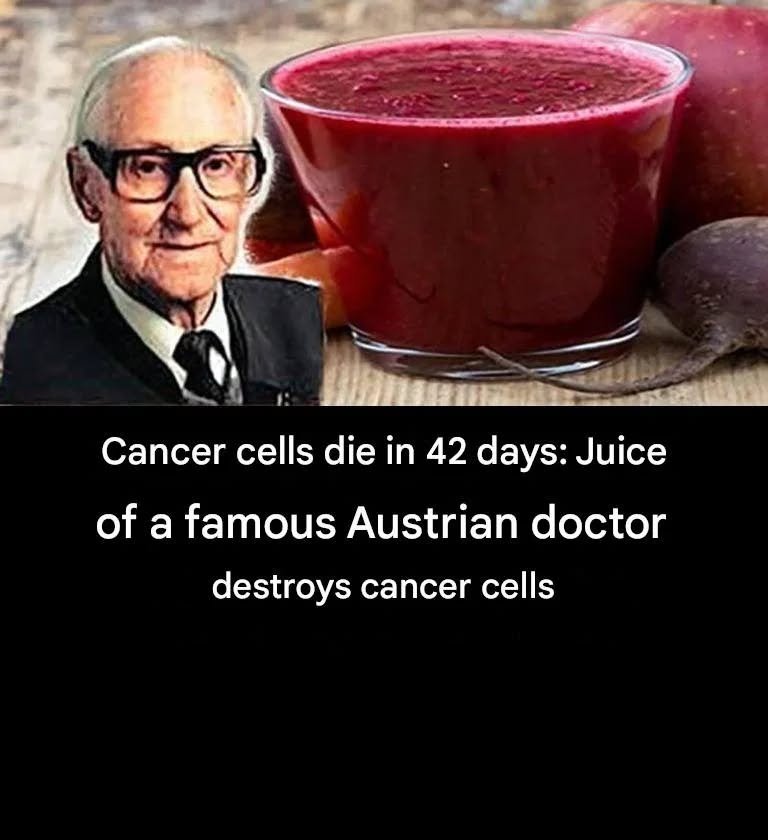
The Truth Behind the Claim: Can Juice Really Kill Cancer Cells in 42 Days?
Introduction: Where This Claim Comes From—and Why It’s Misleading
You may have seen headlines online claiming:
“Cancer cells die in 42 days by drinking a special juice created by a famous Austrian doctor.”
These statements spread fast—especially among people looking for hope, natural solutions, or alternatives to harsh treatments.
But here’s the truth:
👉 No juice can cure or destroy cancer on its own
👉 No doctor has proven cancer dies in 42 days
👉 Such claims oversimplify a very complex disease
What does exist is a nutritional protocol developed by Dr. Rudolf Breuss, an Austrian naturopath, which is often misunderstood and dangerously misrepresented.
Let’s look at the facts—clearly, honestly, and responsibly.
Who Was the Austrian Doctor Behind This Claim?
Dr. Rudolf Breuss (1899–1990) was an Austrian naturopath who believed that certain dietary approaches could support the body during illness, including cancer.
He developed what became known as the Breuss Juice Protocol, involving:
-
Vegetable juices
-
Herbal teas
-
Periods of fasting (under supervision)
⚠️ Important clarification:
Breuss never proved that his method cured cancer, and his approach is not recognized as a medical treatment by modern oncology.
Where the “42 Days” Claim Comes From
Breuss suggested that cancer cells rely heavily on solid foods for energy and believed fasting with vegetable juices could weaken them.
Over time, this idea was distorted online into claims such as:
-
“Cancer dies in 42 days”
-
“Juice destroys cancer cells”
-
“Doctors don’t want you to know this”
❌ None of these statements are supported by scientific evidence.
Cancer cells do not simply starve while the rest of the body remains unaffected. In reality, prolonged fasting can be dangerous—especially for people already weakened by illness.
What Science Actually Says About Juice and Cancer
Modern research shows that nutrition plays a supportive role, but not a curative one.
What Vegetable Juices CAN Do
✔ Provide antioxidants
✔ Support hydration
✔ Supply vitamins and minerals
✔ Reduce inflammation
✔ Support immune function
What They CANNOT Do
✖ Kill cancer cells
✖ Replace medical treatment
✖ Guarantee recovery
✖ “Cure” cancer in a fixed time frame
Cancer treatment requires individualized medical care, often involving surgery, chemotherapy, radiation, targeted therapy, or immunotherapy.
The Role of Vegetable Juices in Supportive Care
While juice is not a treatment, it can be part of a healthy diet, especially for people who struggle with appetite.
Common vegetables used in Breuss-style juices include:
-
Beetroot
-
Carrots
-
Celery
-
Potatoes (juice only, traditionally)
-
Radish
These vegetables contain:
-
Antioxidants
-
Phytochemicals
-
Natural nitrates
-
Fiber (when consumed whole)
These compounds help support overall health, not cure disease.
Why “Cancer Cure” Claims Are Dangerous
False cure claims can:
-
Delay proper diagnosis
-
Cause people to stop medical treatment
-
Lead to malnutrition
-
Increase emotional distress
-
Result in worse outcomes
This is why health authorities worldwide strictly warn against “guaranteed” or “miracle” cancer solutions.
What Doctors Actually Recommend
Most medical professionals agree on these principles:
-
Nutrition should support treatment, not replace it
-
Extreme fasting is risky for cancer patients
-
Weight and muscle loss reduce survival
-
Personalized care matters more than rigid protocols
A balanced diet often includes:
-
Vegetables and fruits
-
Whole grains
-
Adequate protein
-
Healthy fats
-
Proper hydration
Myth vs Reality
| Claim | Reality |
|---|---|
| Juice kills cancer cells | No scientific proof |
| Cancer dies in 42 days | False |
| Doctors hide natural cures | Untrue |
| Diet alone cures cancer | Not supported |
| Nutrition supports the body | Yes |
Frequently Asked Questions
1. Did Dr. Breuss cure cancer patients?
There is no verified clinical evidence proving cures.
2. Is vegetable juice healthy?
Yes, as part of a balanced diet.
3. Can fasting cure cancer?
No. Extreme fasting can be harmful.
4. Why do these claims go viral?
They offer hope, simplicity, and certainty—things people crave during illness.
5. Can diet reduce cancer risk?
Yes, long-term healthy eating may lower risk.
6. Should cancer patients drink juice?
Only as advised by their healthcare team.
7. Are natural approaches useless?
No—many support well-being, but they are not cures.
8. What’s the safest approach?
Evidence-based treatment + supportive nutrition + medical supervision.
Conclusion: Hope Must Be Built on Truth
Cancer is complex. There are no shortcuts, countdowns, or miracle juices.
While vegetable juices can be nourishing and supportive, they do not destroy cancer cells, and claiming otherwise is misleading and dangerous.
Real hope comes from:
-
Honest information
-
Early detection
-
Modern medical care
-
Supportive nutrition
-
Informed choices
Truth protects lives. And responsible education empowers people far more than false promises ever could.
Final Thought
If something sounds too good to be true—especially with cancer—it usually is. Choose information rooted in science, not sensational headlines.