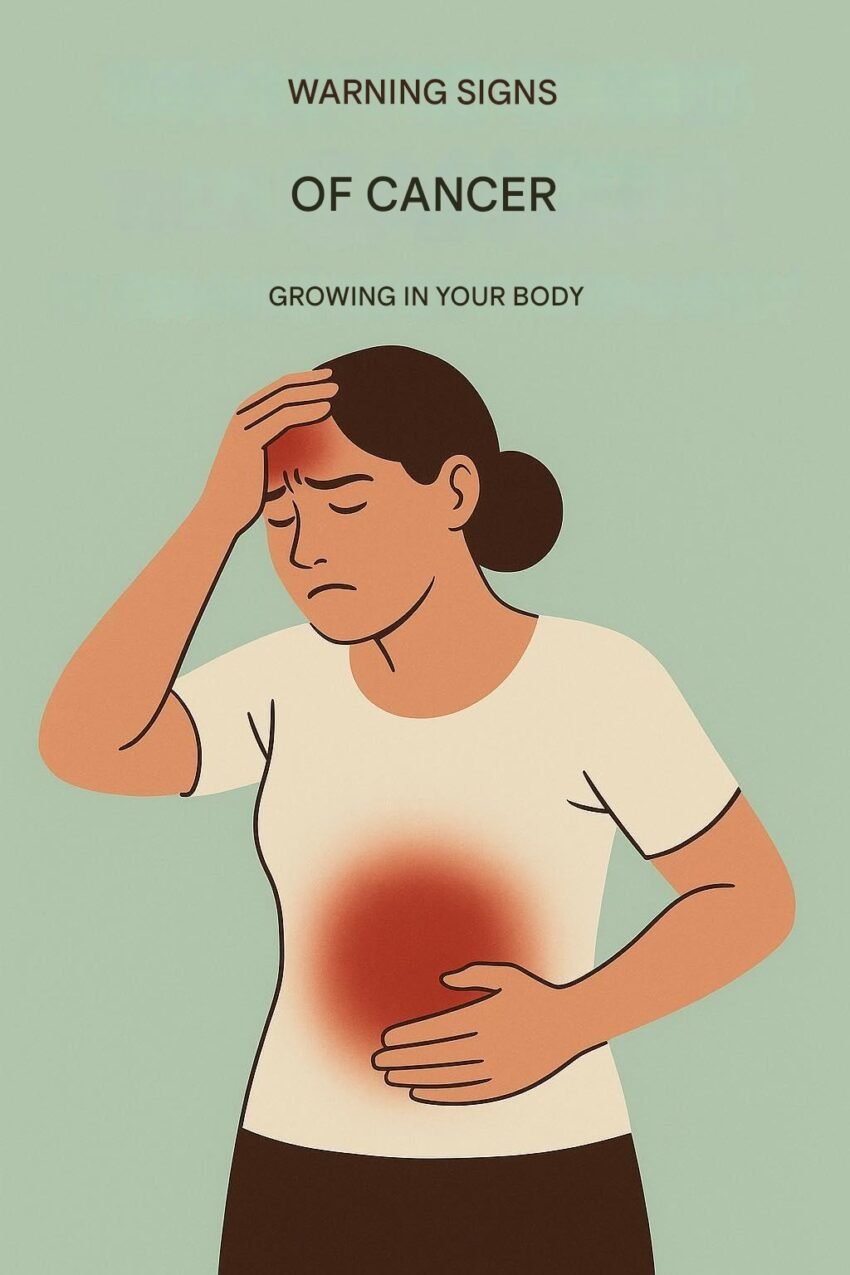
Here are 5 important warning signs that could signal cancer may be developing in the body. These are early indicators, not diagnoses—but they’re signs doctors consistently say should never be ignored.
⚠️ Important: Many of these symptoms can be caused by non-cancerous conditions. The key red flag is when they are persistent, unexplained, or worsening.
1. Unexplained Weight Loss
Losing weight without trying—especially more than 5–10% of your body weight in a few months—can be an early warning sign.
Why it matters:
Cancer can alter how the body uses energy and affects appetite and metabolism.
Often linked with:
-
Stomach cancer
-
Pancreatic cancer
-
Lung cancer
-
Esophageal cancer
When to act:
If weight loss happens without diet or exercise changes.
2. Persistent Fatigue That Doesn’t Improve With Rest
This isn’t normal tiredness. Cancer-related fatigue is deep, constant, and unexplained.
Why it matters:
Some cancers affect blood oxygen levels, nutrient absorption, or immune function.
Often linked with:
-
Leukemia
-
Colon cancer
-
Stomach cancer
When to act:
If fatigue lasts weeks and interferes with daily life.
3. Unusual Lumps, Swelling, or Thickened Areas
A new lump that doesn’t go away—especially if it’s hard, painless, or growing—needs medical attention.
Common areas:
-
Breast
-
Neck
-
Armpit
-
Testicles
-
Groin
Often linked with:
-
Breast cancer
-
Lymphoma
-
Testicular cancer
When to act:
Any lump lasting more than 2 weeks.
4. Changes in Skin, Moles, or Non-Healing Sores
Your skin often shows early internal problems.
Warning changes include:
-
Moles changing size, shape, or color
-
Yellowing of skin or eyes
-
Darkening or redness of skin
-
Sores that don’t heal
Often linked with:
-
Skin cancer
-
Liver cancer
-
Pancreatic cancer
When to act:
If skin changes persist or worsen over time.
5. Persistent Pain or Unusual Bleeding
Pain that has no clear cause or bleeding that is unexpected should never be ignored.
Examples:
-
Blood in stool or urine
-
Vaginal bleeding outside normal cycles
-
Chronic headaches
-
Ongoing chest, bone, or abdominal pain
Often linked with:
-
Colon cancer
-
Cervical cancer
-
Bladder cancer
-
Brain tumors
When to act:
If symptoms last more than 2–3 weeks.
Key Takeaway
Cancer often develops silently, and early symptoms can be subtle. The most important rule is:
Persistent + unexplained = get checked
Early detection dramatically improves treatment success and survival rates.