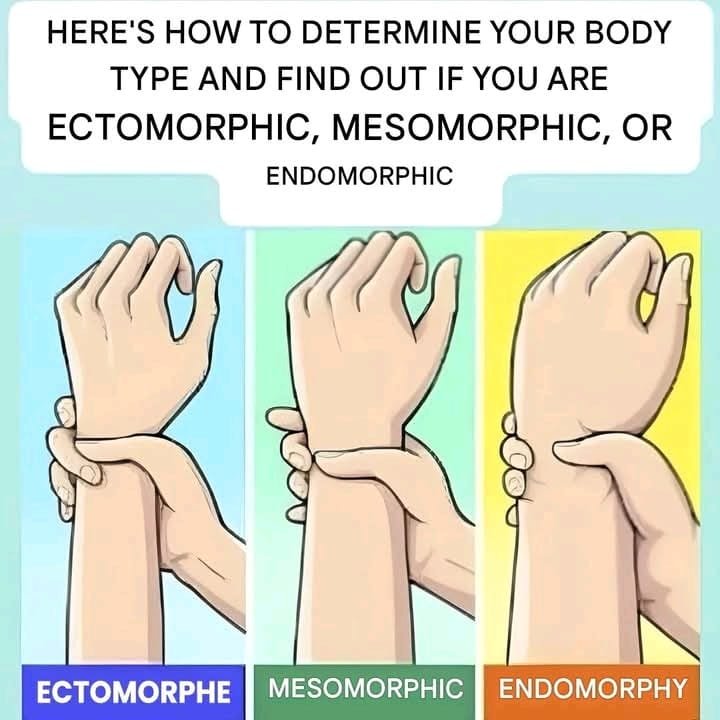
Are You an Ectomorph, Mesomorph, or Endomorph?
Discover Your Body Type—and How to Make the Most of It
You’ve probably heard people say things like “I’m naturally skinny” or “I gain muscle easily”. Those differences are often explained using body type theory, commonly grouped into three categories: ectomorph, mesomorph, and endomorph.
While no one fits perfectly into just one box, understanding your dominant body type can help you train smarter, eat better, and stop fighting your genetics.
Let’s break it down in a practical, realistic way.
First: What Is a Body Type?
Body types (also called somatotypes) describe how your body tends to:
-
Store fat
-
Build muscle
-
Respond to exercise and food
Most people are a blend of two types, but one usually stands out more than the others.
1. Ectomorph: Naturally Lean and Light
Common Traits
-
Slim build with narrow shoulders and hips
-
Long limbs
-
Fast metabolism
-
Difficulty gaining weight or muscle
Strengths
-
Naturally low body fat
-
Lean appearance
-
Good endurance potential
Common Challenges
-
Struggling to gain muscle
-
Feeling “too skinny” despite eating often
-
Plateaus in strength training
How to Make the Most of It
Training Tips
-
Focus on strength training 3–4 times per week
-
Prioritize compound lifts (squats, presses, rows)
-
Limit excessive cardio
Nutrition Tips
-
Eat calorie-dense, nutrient-rich foods
-
Include protein at every meal
-
Don’t skip meals—consistency matters
Mindset Shift
Your body isn’t weak—it just responds best to structured, progressive training and enough fuel.
2. Mesomorph: Naturally Athletic and Muscular
Common Traits
-
Broad shoulders, narrow waist
-
Builds muscle easily
-
Responds quickly to training
-
Balanced metabolism
Strengths
-
Gains strength and muscle efficiently
-
Adapts well to most workouts
-
Often athletic by nature
Common Challenges
-
Can gain fat if training or diet slips
-
Overconfidence leading to inconsistency
How to Make the Most of It
Training Tips
-
Combine strength training and moderate cardio
-
Rotate training styles to avoid plateaus
-
Focus on technique and recovery
Nutrition Tips
-
Balanced macronutrients (protein, carbs, fats)
-
Avoid relying on “natural ability” alone
Mindset Shift
Consistency beats talent. Structure keeps results sustainable.
3. Endomorph: Strong, Solid, and Resilient
Common Traits
-
Wider frame, thicker joints
-
Gains muscle and fat easily
-
Slower metabolism
-
Naturally strong
Strengths
-
Excellent strength potential
-
Muscle builds well under resistance
-
Responds well to structured routines
Common Challenges
-
Fat gain occurs easily
-
Weight loss can feel frustrating
-
Inconsistent energy levels
How to Make the Most of It
Training Tips
-
Prioritize strength training
-
Add low-impact cardio or daily movement
-
Keep workouts consistent rather than extreme
Nutrition Tips
-
Focus on whole foods and protein
-
Be mindful of portion sizes
-
Regular meal timing helps regulate appetite
Mindset Shift
Progress may be slower—but it’s often more durable.
How to Identify Your Dominant Body Type
Ask yourself:
-
Do I gain weight easily or struggle to gain at all?
-
How does my body respond to exercise?
-
What does my natural build look like without training?
Remember:
👉 Your current shape is influenced by habits, not just genetics.
Important Truth: Body Types Are a Guide, Not a Rule
Modern science shows that:
-
Body types are not fixed
-
Lifestyle, training, sleep, and stress matter more over time
-
Anyone can build muscle, lose fat, and improve health
Think of somatotypes as starting points, not limitations.
Best Universal Habits for Every Body Type
Regardless of category:
-
Train with progressive resistance
-
Eat enough protein
-
Sleep consistently
-
Manage stress
-
Stay patient and consistent
These principles work for everyone.
Common Mistakes People Make
-
Using body type as an excuse
-
Copying routines without considering recovery
-
Chasing extremes instead of sustainability
-
Ignoring how their body actually responds
Your feedback loop is more important than any label.
Final Thoughts
Whether you’re an ectomorph, mesomorph, endomorph—or a mix of all three—your body is adaptable. The key isn’t changing your structure, but working with it intelligently.
When you understand how your body responds, progress becomes less frustrating and more empowering.
Your body isn’t the problem.
The strategy just needs to match it.
If you found this helpful, share it with someone who’s trying to figure out what works for them.