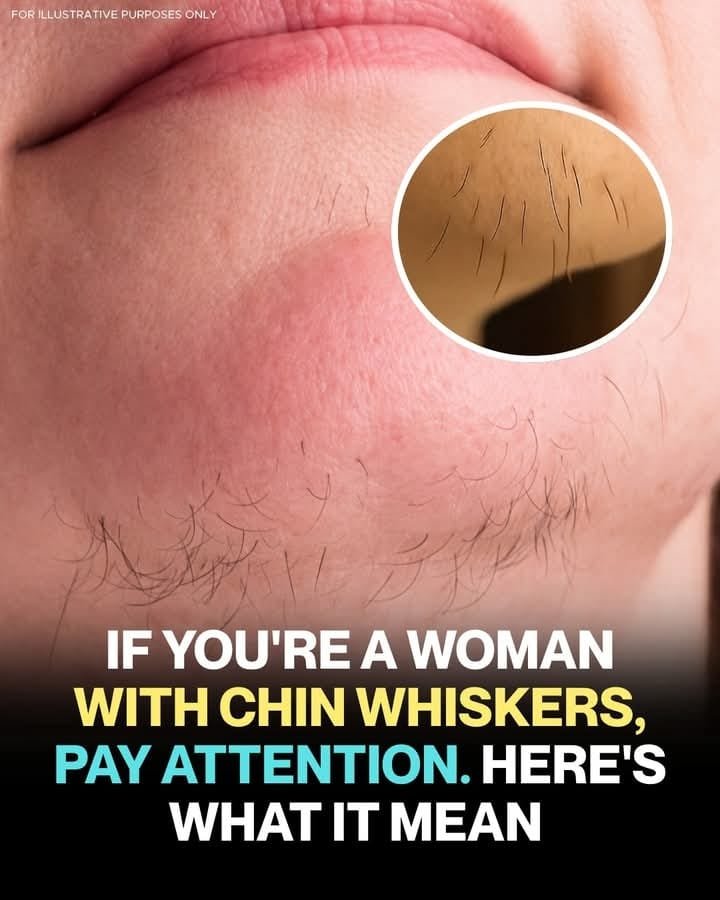
If You’re a Woman With Chin Whiskers, Here’s What It Means (And What It Doesn’t)
Finding coarse or dark hairs on the chin can be surprising, frustrating, or even worrying for many women. Social media and pop culture often attach unnecessary assumptions to chin hair—but most of those claims are misleading or flat-out false.
The truth is much simpler, more common, and far less dramatic.
Let’s break it down calmly and accurately.
First: Chin Hair in Women Is Common
Millions of women experience chin hair at some point in their lives.
It can appear:
-
In your 20s, 30s, 40s, or later
-
Suddenly or gradually
-
As a few stray hairs or more noticeable growth
Having chin whiskers does not automatically mean something is wrong.
The Real Reasons Chin Whiskers Appear
1. Hormonal Sensitivity (Not Always Hormonal Imbalance)
Hair follicles respond to hormones called androgens. Women naturally produce small amounts of these hormones.
Some women’s follicles are simply more sensitive, especially on the chin and jawline.
Important point:
-
Normal hormone levels can still cause chin hair
-
Sensitivity matters more than quantity
2. Genetics Play a Huge Role
If women in your family have chin or facial hair, you’re more likely to have it too.
Genetics influence:
-
Hair thickness
-
Growth patterns
-
Hair color visibility
This is especially common in certain ethnic backgrounds—and is completely natural.
3. Age-Related Changes
As women age, estrogen levels gradually decline.
This can:
-
Reduce estrogen’s balancing effect
-
Make androgen effects more noticeable
-
Lead to coarse hairs appearing on the chin
This is very common during perimenopause and menopause.
4. Polycystic Ovary Syndrome (PCOS) — In Some Cases
PCOS is one possible cause—but not the most common one.
Chin hair related to PCOS usually comes with other signs, such as:
-
Irregular periods
-
Acne
-
Weight changes
-
Excess hair in multiple areas
Chin whiskers alone do not mean PCOS.
5. Hair Texture and Color Contrast
Sometimes the issue isn’t more hair—it’s more visible hair.
Dark, coarse hair against lighter skin:
-
Stands out more
-
Feels thicker
-
Gets noticed faster
The actual number of hairs may be very small.
What Chin Whiskers Do Not Mean
Let’s clear up harmful myths:
Chin hair does not mean:
-
You are unhealthy
-
You are “less feminine”
-
You have high testosterone by default
-
You did something wrong
-
You’re aging “badly”
Body hair is biological, not a personal failure.
Emotional Impact Is Real (And Valid)
Even though chin hair is common, it can still affect confidence.
Many women feel:
-
Self-conscious
-
Frustrated with maintenance
-
Embarrassed due to social stigma
Those feelings are understandable—but they come from cultural expectations, not biology.
Safe and Common Ways Women Manage Chin Hair
There is no obligation to remove chin hair—but if you want to, these options are commonly used:
Temporary Methods
-
Tweezing
-
Shaving (does not make hair grow thicker)
-
Threading
-
Waxing
Longer-Term Options
-
Laser hair reduction
-
Electrolysis
The best method depends on skin type, hair color, and comfort level.
When to Consider Medical Advice
You may want to consult a healthcare professional if chin hair is:
-
Sudden and rapidly increasing
-
Accompanied by missed periods
-
Paired with severe acne or voice changes
This doesn’t mean something is wrong—it just helps rule things out.
A Healthy Perspective
Chin whiskers are:
-
A normal variation of human hair growth
-
Influenced by hormones, genes, and age
-
Experienced by women across all cultures
You are not unusual.
You are not alone.
And you don’t need to “fix” yourself to be valid.
Final Thoughts
If you’re a woman with chin whiskers, what it really means is this:
👉 Your body is doing something completely natural.
Whether you remove them, ignore them, or embrace them is entirely your choice—not a requirement.