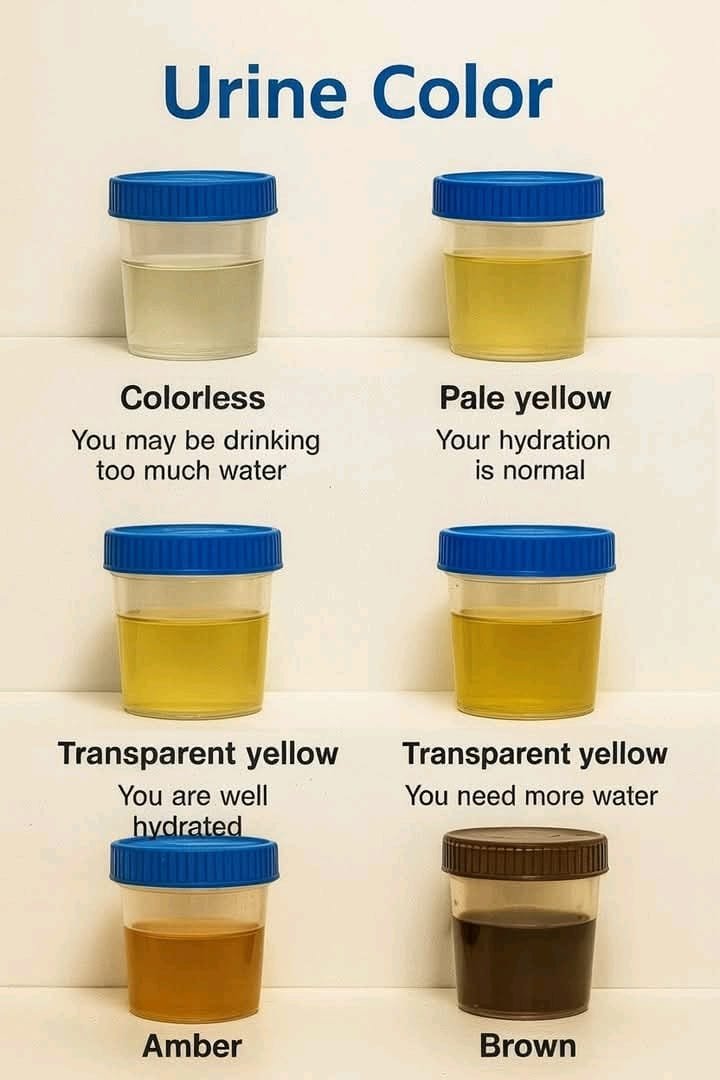
Urine Color Guide: What Your Pee Says About Your Health
Most people flush and forget—but urine color can quietly reveal a lot about what’s going on inside your body.
From hydration levels to diet, medications, and sometimes health conditions, the color of your urine offers useful clues. While color alone is not a diagnosis, paying attention to changes can help you know when everything’s normal—and when it might be time to check in with a healthcare professional.
Let’s break it down in a simple, practical way.
Why Urine Color Changes
Urine is made mostly of water, mixed with waste products your kidneys filter out. The main pigment responsible for urine’s yellow color is urochrome, a byproduct of red blood cell breakdown.
Urine color changes based on:
-
Hydration level
-
Foods and drinks
-
Vitamins and medications
-
Physical activity
-
Certain medical conditions
The more diluted your urine, the lighter it appears. The more concentrated it is, the darker it becomes.
The Urine Color Chart (What Each Shade Usually Means)
Clear or Almost Transparent
What it usually means:
-
You’re very well hydrated
-
Possibly overhydrated if persistent
When to note it:
Occasional clear urine is normal. If it’s constantly clear, you may be drinking more water than your body needs.
Pale Yellow to Light Straw
What it means:
-
Healthy hydration
-
Normal kidney function
This is considered the ideal urine color for most people.
Bright Yellow
Common cause:
-
B-vitamin supplements (especially B2)
This color can look intense but is usually harmless if you feel well otherwise.
Dark Yellow or Amber
What it often indicates:
-
Mild dehydration
Your body is conserving water, making urine more concentrated.
Helpful step:
Drink fluids and monitor whether the color lightens.
Honey or Brownish Yellow
Possible meanings:
-
Significant dehydration
-
After heavy sweating or illness
If hydration doesn’t improve the color, it’s worth paying attention.
Orange
Common causes:
-
Dehydration
-
Certain medications
-
Some foods or food dyes
Less common causes:
-
Liver or bile duct issues (especially if stools are pale)
Persistent orange urine should be discussed with a professional.
Pink or Red
Possible explanations:
-
Foods like beets or berries
-
Certain medications
Important note:
Blood in urine can also cause pink or red coloring and should always be checked, especially if unexplained.
Brown or Cola-Colored
Possible causes:
-
Severe dehydration
-
Muscle breakdown after extreme exercise
-
Liver-related conditions
This color should not be ignored, particularly if accompanied by fatigue or yellowing of the eyes or skin.
Blue or Green
Usually linked to:
-
Food dyes
-
Certain medications or diagnostic dyes
Though rare, it’s often harmless. If it appears suddenly without explanation, ask a professional.
Cloudy or Milky
Possible causes:
-
Dehydration
-
Urinary tract infections
-
Kidney stones
-
Excess protein or minerals
Cloudy urine combined with pain or burning may signal infection.
Urine Odor: A Quick Note
While color gets most of the attention, smell can matter too.
-
Strong ammonia odor → dehydration
-
Sweet or fruity smell → possible blood sugar issues
-
Foul smell with discomfort → possible infection
Occasional odor changes are normal; persistent ones deserve attention.
Common Myths About Urine Color
-
“Dark urine always means disease” → Not true; dehydration is far more common
-
“Clear urine is always best” → Not necessarily
-
“Color alone diagnoses illness” → It doesn’t
Urine color is a signal, not a conclusion.
When to See a Healthcare Professional
Consider medical advice if urine color changes are:
-
Persistent
-
Unexplained
-
Accompanied by pain, fever, fatigue, or swelling
-
Red, brown, or cloudy without a clear reason
Early evaluation is always better than guessing.
Practical Tips for Healthy Urine
-
Drink fluids steadily throughout the day
-
Adjust intake during heat or exercise
-
Notice changes over time, not just once
-
Be aware of supplements and medications
Your body often communicates quietly—urine color is one of those messages.
Frequently Asked Questions
Is morning urine supposed to be darker?
Yes. It’s more concentrated after hours without fluids.
Can diet alone change urine color?
Absolutely—foods and dyes can have noticeable effects.
Does urine color change with age?
Hydration habits and medications often change with age, affecting color.
Should children’s urine be monitored too?
Yes—especially for hydration, but without panic.
Final Thoughts
Your urine doesn’t need constant monitoring—but it does deserve occasional attention.
Most color changes are harmless and temporary. Still, knowing what’s normal for your body helps you recognize when something’s off.
Think of urine color as a daily snapshot of hydration and balance, not a verdict on your health.