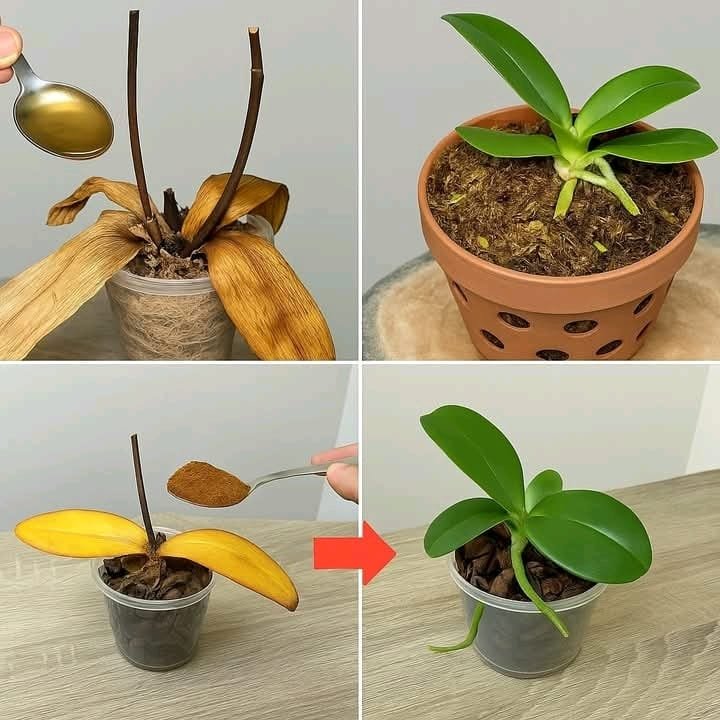
Introduction: When Orchids Look Dead but Aren’t Really Gone
Orchids have a reputation for being delicate, mysterious, and frustrating. One week they’re blooming beautifully, and the next, the roots look dry, shriveled, or completely lifeless. Many plant owners give up at this stage, assuming the orchid is beyond saving.
Here’s the good news: orchids are far more resilient than they look.
While no single ingredient can magically resurrect a dead plant overnight, there is a simple, science-backed method that experienced growers use to support root recovery, prevent rot, and encourage healthier growth—often using just one spoon of a common household ingredient.
In this guide, you’ll learn:
-
What “dead” orchid roots really mean
-
Why orchids lose roots in the first place
-
The exact ingredient professionals use and why it works
-
Step-by-step instructions for safe application
-
Common mistakes that kill orchids faster
-
How to encourage blooming throughout the year
This article is written for beginners and advanced growers alike, with realistic expectations and proven horticultural principles.
Understanding Orchid Roots: Why They Matter More Than Leaves
Orchid roots are not like normal houseplant roots.
What Makes Orchid Roots Unique?
-
They absorb moisture from air as well as water
-
They are covered in a spongy layer called velamen
-
They perform photosynthesis in many species
-
Healthy roots are firm and green or silvery
When roots fail, the orchid can no longer:
-
Absorb nutrients
-
Regulate moisture
-
Support blooming
Root health determines everything.
Are the Roots Really Dead? How to Tell the Difference
Before applying anything, it’s crucial to diagnose correctly.
Signs of Truly Dead Roots
-
Mushy, black, or foul-smelling
-
Hollow or collapsing when squeezed
-
Slipping outer layer
Signs of Stressed but Salvageable Roots
-
Dry, wrinkled appearance
-
Gray or silvery color when dry
-
Firm core
Many orchids labeled “dead” are actually dehydrated or stressed, not dead.
Why Orchid Roots Die in the First Place
Root damage almost always comes from care issues, not plant weakness.
The Most Common Causes
-
Overwatering (number one killer)
-
Poor drainage or compacted media
-
Lack of airflow around roots
-
Old, decomposed potting mix
-
Mineral buildup from tap water
-
Fungal or bacterial infections
Fixing the cause is just as important as treating the symptoms.
The “One Spoon” Ingredient: Cinnamon Powder (Used Correctly)
Yes—plain cinnamon powder.
Not a fertilizer.
Not a pesticide.
Not a miracle cure.
But when used correctly, cinnamon acts as a natural antifungal and antibacterial agent, which is exactly what struggling orchid roots often need.
Why Cinnamon Helps Orchids
Cinnamon contains natural compounds that:
-
Suppress fungal growth
-
Reduce bacterial spread
-
Help dry out rotting tissue
-
Protect fresh cuts on roots
This makes it especially useful after trimming dead or rotting roots.
Horticultural experts and orchid societies frequently mention cinnamon as a natural root-protection aid, not a growth stimulant.
Important Warning Before You Start
Cinnamon is powerful — too much will damage roots.
-
Never coat all roots
-
Never mix into potting media
-
Never use repeatedly on healthy roots
One spoon is enough for multiple plants, not one root system.
Step-by-Step: How to Use 1 Spoon of Cinnamon on Orchid Roots (Safely)
Step 1: Remove the Orchid from the Pot
Gently remove the plant and rinse the roots under lukewarm water to see their condition clearly.
Step 2: Trim Dead or Rotted Roots
Use sterilized scissors to cut:
-
Black, mushy, or hollow roots
-
Soft sections that collapse easily
Leave all firm roots intact.
Step 3: Let the Roots Air-Dry
Allow the orchid to dry for 20–30 minutes. This prevents moisture from trapping pathogens.
Step 4: Apply Cinnamon (Lightly)
-
Place 1 spoon of cinnamon powder in a small dish
-
Dip a cotton swab or fingertip
-
Gently dab only on the cut ends of removed roots
Do not coat healthy roots.
Step 5: Repot Properly
Use:
-
Fresh orchid bark or moss
-
A pot with excellent drainage
-
Loose packing for airflow
Wait 24 hours before watering.
What Cinnamon Does—and What It Doesn’t
What It Helps With
-
Prevents infection
-
Stops rot from spreading
-
Protects open wounds
-
Supports recovery environment
What It Does NOT Do
-
It does not fertilize
-
It does not regrow roots directly
-
It does not force blooms
Healthy growth comes from proper care afterward.
How Orchids Actually Recover After Root Treatment
Recovery happens in stages.
Stage 1: Stabilization (Weeks 1–2)
-
No visible growth
-
Plant conserves energy
-
Infection risk drops
Stage 2: Root Regrowth (Weeks 3–6)
-
New root tips emerge
-
Leaves regain firmness
Stage 3: Vegetative Growth (Months 2–4)
-
New leaves appear
-
Root system strengthens
Stage 4: Blooming Readiness (Months Later)
-
Flower spikes form under correct conditions
Patience is essential.
How to Encourage Orchids to Bloom Throughout the Year
Cinnamon alone won’t do this — environmental consistency will.
Key Blooming Requirements
-
Bright, indirect light
-
Day/night temperature difference
-
Proper feeding schedule
-
Healthy roots
Practical Blooming Tips
-
Use diluted orchid fertilizer (weekly, weak)
-
Flush pot monthly to remove salts
-
Rotate plant for even light
-
Reduce watering slightly before bloom cycles
Some orchids bloom once a year, others multiple times. Genetics matter.
Common Mistakes That Kill Orchids After Treatment
Mistake 1: Overwatering After Repotting
Roots need air more than water during recovery.
Mistake 2: Applying Cinnamon Repeatedly
This dries roots and blocks nutrient absorption.
Mistake 3: Using Garden Soil
Orchids suffocate in dense soil.
Mistake 4: Chasing “Miracle” Fixes
Orchids thrive on consistency, not hacks.
Pros and Cons of Using Cinnamon on Orchid Roots
Pros
-
Natural and chemical-free
-
Readily available
-
Prevents fungal spread
-
Affordable and easy
Cons
-
Can damage healthy roots if misused
-
Not a growth stimulant
-
Requires correct diagnosis
Used wisely, benefits outweigh risks.
Frequently Asked Questions (FAQs)
Can cinnamon revive completely dead orchids?
No. If all roots and the crown are dead, recovery isn’t possible.
How often can I use cinnamon?
Only after cutting diseased roots — not as routine care.
Can I mix cinnamon with water?
No. Wet cinnamon becomes pasty and harmful.
Does this work for all orchid types?
Yes, especially Phalaenopsis, Cattleya, and Dendrobium.
Can I use cinnamon sticks instead?
No. Powder is required for surface protection.
Is this safe for other houseplants?
Yes, when used sparingly on cut wounds.
Will it help prevent root rot?
It helps prevent spread, not poor watering habits.
When should I expect new growth?
Usually within 3–6 weeks under proper conditions.
Latest Orchid Care Trends Among Expert Growers
Modern orchid care focuses on:
-
Root-first health
-
Airflow and breathable media
-
Minimal intervention
-
Observation-based watering
Experienced growers treat orchids less, not more.
Final Thoughts: Simple Ingredient, Smart Application
Sprinkling one spoon of cinnamon on dead orchid roots won’t perform magic — but used correctly, it can protect, stabilize, and support recovery, giving your orchid a genuine second chance at life.
The real secret to year-round blooms isn’t a trick. It’s:
-
Healthy roots
-
Proper light
-
Consistent care
-
Patience
Get those right, and your orchid will reward you—again and again.
Call-To-Action
If this guide helped save your orchid, share it with fellow plant lovers who are about to give up on theirs.
Sometimes, all a plant needs is the right care at the right moment. 🌱