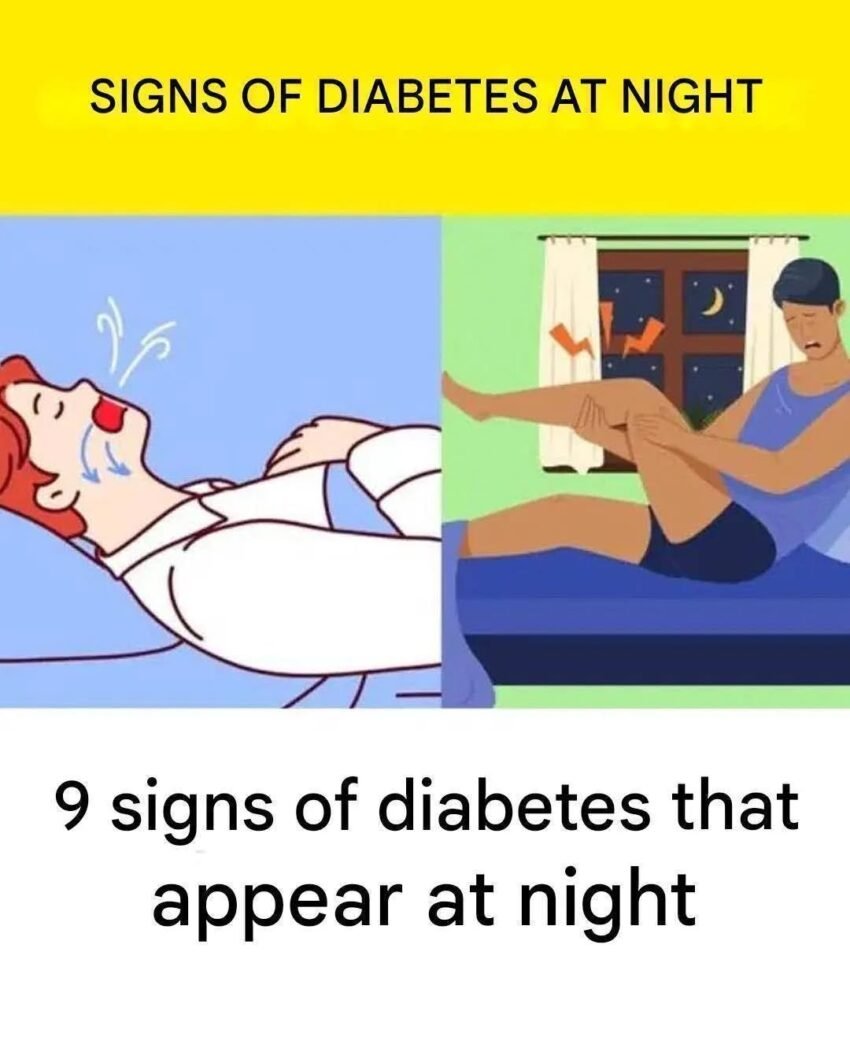
9 Signs of Diabetes That Appear at Night
Diabetes doesn’t always show obvious symptoms during the day. In fact, some of the earliest and most telling signs appear at night, when the body is at rest and blood sugar levels fluctuate differently.
Many people ignore nighttime symptoms, assuming they’re caused by stress, aging, or poor sleep. But if these signs happen repeatedly, they could be your body’s way of warning you about a blood sugar problem.
Here are nine signs of diabetes that commonly appear at night, what they mean, and why you shouldn’t ignore them.
Why Diabetes Symptoms Can Be Worse at Night
At night:
-
The body goes several hours without food
-
Hormone levels change
-
Blood sugar may rise or drop unexpectedly
These changes can make diabetes-related symptoms more noticeable while you’re trying to sleep.
1. Frequent Urination During the Night (Nocturia)
Waking up multiple times to urinate is one of the most common nighttime signs of diabetes.
Why It Happens
High blood sugar forces the kidneys to work harder to remove excess glucose, producing more urine.
When to Be Concerned
-
You wake up to urinate more than once every night
-
The problem persists for weeks
2. Excessive Thirst at Night
You may feel an intense need to drink water, especially during the night.
Why It Happens
Frequent urination leads to dehydration, triggering constant thirst.
Drinking water helps—but the thirst often returns if blood sugar remains high.
3. Night Sweats
Unexplained sweating while sleeping, even in a cool room, can be a warning sign.
Why It Happens
Low blood sugar during the night (nocturnal hypoglycemia) can activate stress hormones, causing sweating.
Night sweats are especially common in people already managing diabetes, but they can also be an early symptom.
4. Tingling or Burning Sensation in Hands and Feet
A tingling, burning, or numb feeling—especially noticeable when lying still—can point to nerve involvement.
Why It Happens
Persistently high blood sugar can damage nerves, a condition known as diabetic neuropathy.
This discomfort often feels worse at night.
5. Leg Cramps or Restless Legs at Night
Painful leg cramps or an uncontrollable urge to move your legs may disrupt sleep.
Possible Reasons
-
Poor circulation
-
Nerve irritation
-
Electrolyte imbalance linked to blood sugar issues
These symptoms are commonly overlooked but can be diabetes-related.
6. Blurry Vision Before Bed or During the Night
Some people notice blurred or fluctuating vision at night.
Why It Happens
High blood sugar can cause fluid shifts in the eye, affecting the lens and temporarily altering vision.
If vision changes come and go, it’s a red flag worth checking.
7. Trouble Falling or Staying Asleep
Diabetes can interfere with sleep quality in several ways:
-
Blood sugar highs or lows
-
Frequent bathroom trips
-
Nerve pain or discomfort
Poor sleep can then worsen blood sugar control, creating a cycle.
8. Dry Mouth and Dry Skin at Night
Waking up with a dry mouth or itchy, dry skin can be another nighttime clue.
Why It Happens
Dehydration from high blood sugar reduces moisture in the body, especially noticeable after hours of sleep.
9. Nighttime Headaches or Feeling Shaky
Waking up with a headache, shakiness, or feeling unusually weak may signal low blood sugar during the night.
These symptoms may improve after eating or drinking something sugary, which is an important clue.
When to Take These Signs Seriously
You should consider seeing a healthcare professional if:
-
Multiple symptoms occur together
-
Symptoms happen frequently at night
-
You have a family history of diabetes
-
You feel constantly tired during the day
Early detection can prevent serious complications.
What You Can Do Next
If you notice these signs:
-
Track your symptoms and sleep patterns
-
Don’t self-diagnose
-
Ask your doctor about blood sugar testing
-
Focus on balanced meals and regular physical activity
Simple tests can provide clarity and peace of mind.
Frequently Asked Questions
Can diabetes really cause symptoms only at night?
Yes. Some symptoms are more noticeable at night due to hormonal and metabolic changes.
Are night sweats always related to diabetes?
No, but frequent, unexplained night sweats should be evaluated.
Can poor sleep cause diabetes symptoms?
Poor sleep can worsen blood sugar control, but it doesn’t cause diabetes on its own.
Do these signs mean I definitely have diabetes?
Not necessarily. They are warning signs, not a diagnosis.
Is nighttime urination normal with aging?
Occasionally, yes. But frequent nighttime urination should be checked.
Final Thoughts
Nighttime symptoms are easy to dismiss—but your body often speaks the loudest when things slow down.
If you’re experiencing frequent thirst, night sweats, tingling sensations, or disrupted sleep, don’t ignore them. Paying attention now could protect your health in the long run.
Early awareness leads to early action—and that can make all the difference.