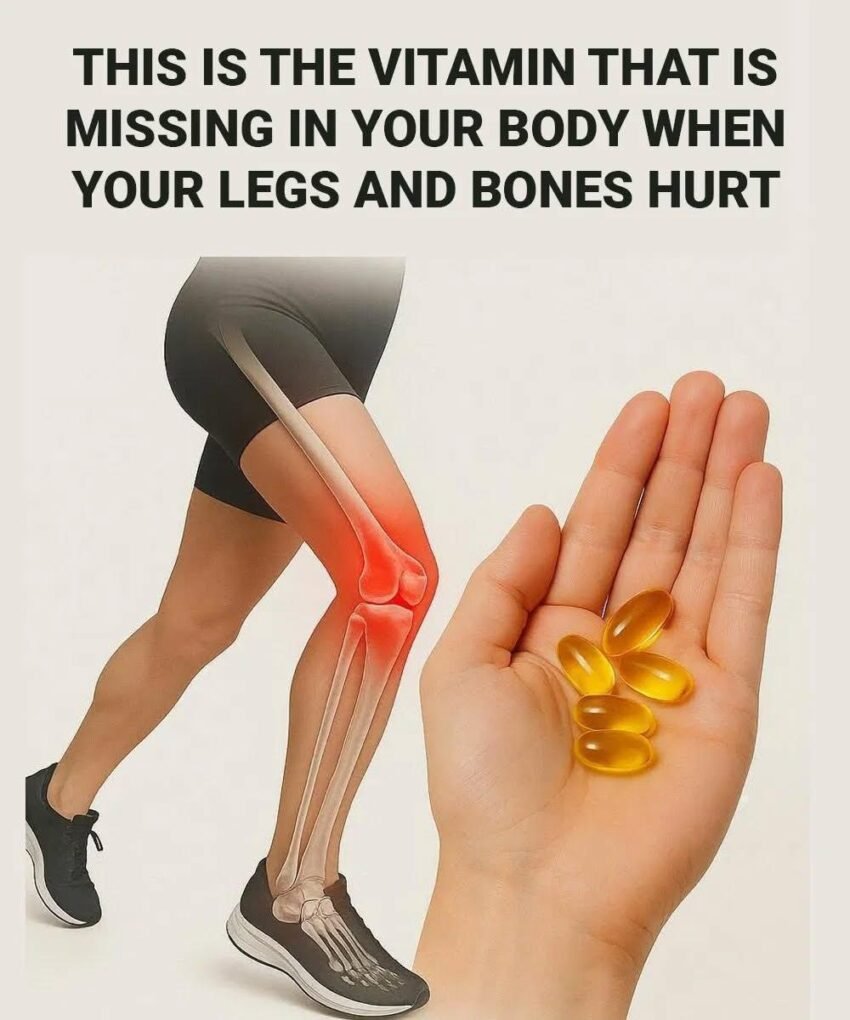
The Vitamin Your Body Is Missing When Your Legs and Bones Hurt
Do you often feel aching legs, joint pain, or bone discomfort? Many people chalk it up to aging, overexertion, or arthritis—but sometimes the root cause is a hidden vitamin deficiency. Knowing which vitamin your body is missing can help restore energy, strengthen bones, and relieve pain naturally.
Understanding Bone and Leg Pain
Bones, muscles, and joints rely on nutrients to stay strong and flexible. When key vitamins are lacking:
-
Bones can become fragile or weak
-
Muscles may cramp or ache more easily
-
Joints may feel stiff or inflamed
Chronic pain in the legs, lower back, or knees can sometimes be an early warning signal that your body is missing essential nutrients.
The Main Vitamin Linked to Bone and Leg Health: Vitamin D
Why Vitamin D Matters
-
Helps your body absorb calcium, which is critical for bone strength
-
Supports muscle function, reducing cramps and weakness
-
Plays a role in immune function and inflammation control
Without enough vitamin D, the body cannot maintain healthy bones, leading to:
-
Osteomalacia (softening of bones)
-
Increased fracture risk
-
Muscle weakness and leg discomfort
Signs You May Be Low in Vitamin D
-
Persistent bone or leg pain
-
Frequent muscle cramps or weakness
-
Fatigue and low energy
-
Difficulty recovering from minor injuries
-
Mood changes or low mood (vitamin D is linked to serotonin)
Fun fact: Low vitamin D is surprisingly common in the United States, especially in winter months or for people who spend little time outdoors.
Other Vitamins That Affect Bones and Legs
While vitamin D is crucial, other nutrients work in tandem to support skeletal and muscular health:
1. Vitamin K2
-
Directs calcium to bones instead of soft tissues
-
Supports bone density
2. Calcium
-
Vital for bone structure and muscle contractions
-
Works best when paired with vitamin D
3. Magnesium
-
Helps with muscle relaxation and nerve function
-
Low magnesium can cause cramps and spasms
4. Vitamin B12
-
Supports nerve health, reducing leg tingling or numbness
-
Low B12 can mimic pain or weakness in the legs
How to Safely Boost Vitamin D
Sunlight
-
10–30 minutes of sun exposure several times a week can stimulate vitamin D production
-
Fair-skinned individuals need less time, darker skin may need more
Diet
Include vitamin D-rich foods like:
-
Fatty fish (salmon, mackerel, sardines)
-
Egg yolks
-
Fortified milk, cereals, or plant-based alternatives
Supplements
-
Vitamin D3 supplements are commonly recommended, but consult your doctor for dosage
-
Blood tests can confirm deficiency before supplementation
Lifestyle Tips for Strong Bones and Legs
-
Exercise regularly – weight-bearing and resistance training strengthen bones
-
Maintain a balanced diet – ensure sufficient calcium, magnesium, and vitamin K2
-
Stretch and move often – reduce stiffness and improve circulation
-
Avoid smoking and excessive alcohol – these reduce bone density
When to See a Doctor
Seek medical advice if you notice:
-
Persistent leg or bone pain despite lifestyle changes
-
Muscle weakness affecting mobility
-
Frequent fractures or severe cramping
Early intervention can prevent long-term complications and improve quality of life.
Final Thoughts
Vitamin D deficiency is a common but often overlooked cause of leg and bone pain. By combining sun exposure, diet, supplements, and supportive nutrients, you can strengthen bones, reduce discomfort, and improve mobility naturally.
💬 Share Your Experience
Have you ever had leg or bone pain that improved after addressing a vitamin deficiency?
Comment below and let others know what worked for you—it might help someone suffering in silence.