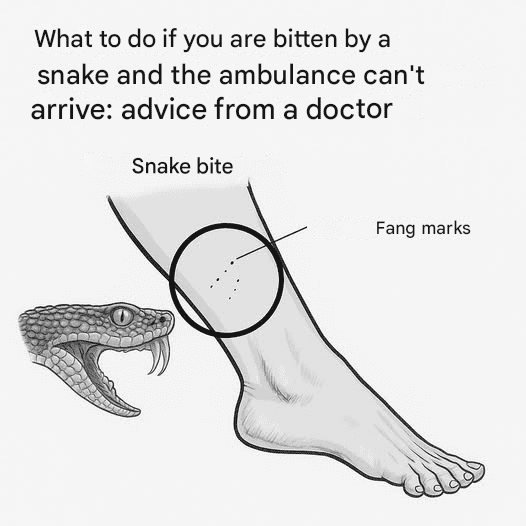
If you’re bitten by a snake and medical help can’t reach you quickly, what you do in the first minutes can make a real difference. The goal is to slow the spread of venom, avoid complications, and stay alive until professional care is available.
This guidance is first aid only, not a substitute for emergency treatment. Any snakebite should be treated as a medical emergency.
First: Stay Calm and Get Safe
1. Move Away From the Snake
-
Do not try to catch, kill, or identify it closely
-
Many bites happen from a second strike
If you can describe the snake later (color, size, pattern), that’s helpful—but don’t risk another bite.
2. Stay As Calm and Still As Possible
-
Panic increases heart rate
-
Faster circulation spreads venom more quickly
Sit or lie down and limit movement, especially of the bitten limb.
Immediate First Aid Steps (What to Do)
3. Keep the Bite Area Still and Below Heart Level
-
Immobilize the affected arm or leg
-
Use a splint or sling if available
-
Keep it at or slightly below heart level, not raised high
This slows venom movement through the lymphatic system.
4. Remove Tight Items Immediately
Swelling can happen quickly.
Remove:
-
Rings
-
Watches
-
Bracelets
-
Tight shoes or clothing near the bite
Do this before swelling starts.
5. Clean the Bite Gently (If Possible)
-
Rinse with clean water
-
Do not scrub aggressively
-
Do not use chemicals, alcohol, or herbal substances
The goal is basic cleanliness, not “neutralizing” venom.
6. Apply a Firm Pressure Bandage (Only if Trained)
If you know how and are in an area with venomous snakes that spread venom via lymphatic flow:
-
Use an elastic or cloth bandage
-
Wrap firmly (not cutting off blood flow)
-
Start at the bite and wrap upward
This is not a tourniquet.
If unsure, immobilization alone is safer.
What NOT to Do (Very Important)
❌ Do NOT cut the wound
❌ Do NOT try to suck out venom (mouth or pump)
❌ Do NOT apply a tourniquet
❌ Do NOT use ice or electric shock
❌ Do NOT give alcohol or caffeine
❌ Do NOT take painkillers unless directed by a professional
These methods do not help and can cause serious harm.
Monitor and Prepare While Waiting for Help
7. Note the Time of the Bite
Write it down or remember it. Doctors need this information.
Also track:
-
Onset of swelling
-
Pain progression
-
Nausea, dizziness, or trouble breathing
8. Watch for Emergency Warning Signs
If any of the following occur, this is life-threatening:
-
Difficulty breathing
-
Swelling of face, lips, or throat
-
Severe weakness or confusion
-
Uncontrolled bleeding
-
Loss of consciousness
Do everything possible to get emergency help immediately.
If You Must Move to Get Help
Only move if staying put is more dangerous.
-
Move slowly and calmly
-
Keep the bitten limb immobilized
-
Avoid walking if the leg was bitten—use assistance if possible
Exertion accelerates venom spread.
Special Situations
If the Bite Is From a Non-Venomous Snake
-
Clean the wound thoroughly
-
Control bleeding
-
Watch for infection
-
Still seek medical care (infection risk is real)
If You’re Unsure Whether the Snake Was Venomous
Assume it was and follow venomous bite protocol.
Common Myths That Can Make Things Worse
-
“You must identify the snake” → False
-
“Venom can be sucked out” → False
-
“Ice stops venom” → False
-
“Tourniquets save lives” → False and dangerous
Modern emergency medicine strongly advises against these.
After You Reach Medical Care
Be prepared to tell providers:
-
Time of bite
-
Location of bite
-
Symptoms experienced
-
Any first aid done
-
Allergies or medical conditions
Antivenom, when needed, must be given by professionals.
Final Takeaway
If you’re bitten by a snake and help is delayed:
Stay calm. Stay still. Immobilize. Avoid harmful myths. Get medical care as soon as possible.
Snakebite survival is about time, calm decisions, and avoiding dangerous “old-school” advice.