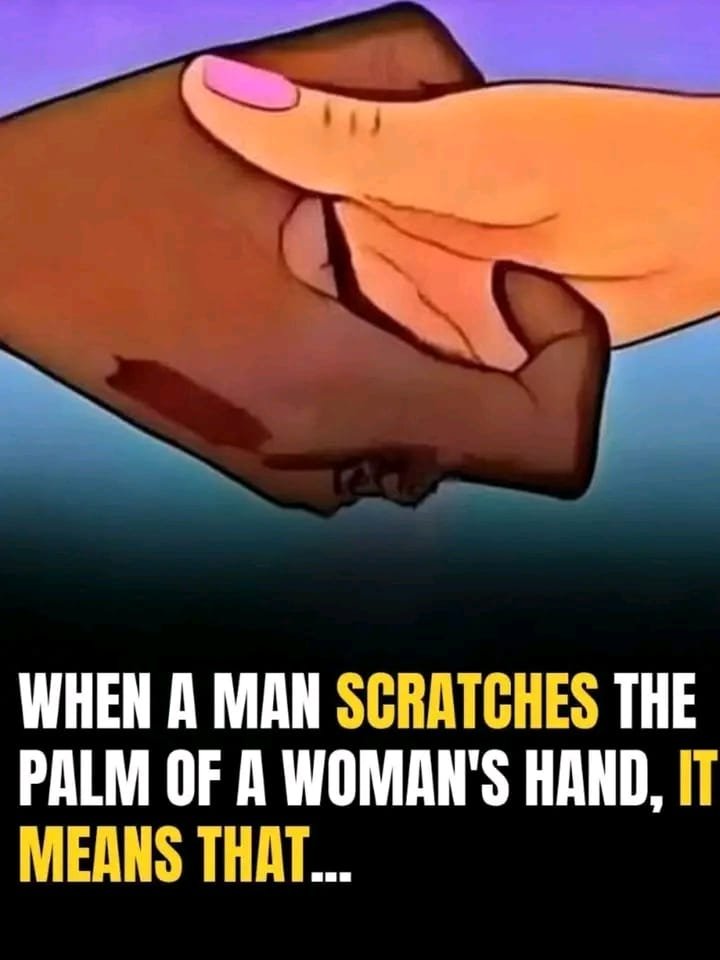
Scratching or tracing the palm of another person’s hand is one of those gestures that feels loaded—even if it lasts only a second. People notice it because it sits right at the intersection of touch, intimacy, culture, and intention.
The meaning isn’t universal. It changes depending on context, relationship, culture, and delivery. Still, there are a few well-recognized interpretations that explain why this gesture feels intriguing (or confusing).
Why the Palm Is Such a Powerful Place to Touch
The palm is not a neutral body part.
-
It’s highly sensitive (dense nerve endings)
-
It’s usually private, not casually touched
-
It’s involved in trust-based actions (handshakes, holding hands)
Touching the palm—especially deliberately—almost always carries intent.
That’s why this gesture gets noticed immediately.
Common Meanings of Scratching the Palm of Someone Else’s Hand
1. A Subtle Signal of Romantic or Sexual Interest
This is the most widely recognized interpretation.
In many cultures, lightly scratching or tracing the palm is a covert flirtation signal, often used when:
-
Words aren’t appropriate
-
Others are present
-
The person wants deniability (“Maybe it was accidental…”)
It can communicate:
-
Attraction
-
Curiosity
-
“I’m interested—are you?”
This meaning is especially likely if:
-
The touch is slow and intentional
-
Eye contact or a smile follows
-
The people already have some chemistry
2. A Test of Boundaries
Sometimes the gesture is less about desire and more about gauging reaction.
The person may be subconsciously asking:
-
“Are you comfortable with my touch?”
-
“Will you pull away?”
-
“Is this welcome?”
Your response—pulling back, freezing, smiling, reciprocating—often determines what happens next.
3. A Playful or Teasing Gesture
In casual or friendly settings, palm scratching can be:
-
Playful
-
Mischievous
-
Lightly provocative without serious intent
This is more likely when:
-
The interaction is already joking or relaxed
-
The person does similar gestures with others
-
The touch is brief and accompanied by laughter
Even here, though, it still carries more meaning than a neutral touch.
4. A Cultural or Symbolic Signal
In some cultures and social subgroups, scratching the palm has specific coded meanings, including:
-
Indicating interest without speaking
-
Signaling secrecy or “we understand each other”
-
Older folk or regional traditions tied to courtship
Because these meanings aren’t universal, misunderstandings are common—especially across cultures.
5. Nervous or Unconscious Touch
Not every palm scratch is intentional communication.
It can also happen when someone is:
-
Nervous
-
Unsure what to do with their hands
-
Fidgeting during close contact
This interpretation is more likely if:
-
The motion is quick or awkward
-
There’s no follow-up behavior
-
The person seems unaware they did it
What the Gesture Does Not Automatically Mean
It’s important to avoid over-interpretation.
Scratching the palm does not automatically mean:
-
A promise of romantic intent
-
Sexual consent
-
Deep emotional attachment
Meaning comes from pattern + context, not one isolated action.
How to Read the Gesture Accurately
Ask yourself:
-
Was it slow and deliberate or quick and absent-minded?
-
Did it happen once or repeatedly?
-
Was there eye contact, tone change, or smiling?
-
Did the person continue engaging afterward?
Body language speaks in clusters, not single words.
Your Reaction Matters More Than the Gesture
The most important part of this interaction is how you respond.
-
Pulling your hand away → usually signals disinterest or discomfort
-
Leaving your hand → signals openness or neutrality
-
Returning the gesture → often escalates intimacy
Most people use this gesture precisely because your response gives them information without forcing a verbal exchange.
Why This Gesture Feels So Memorable
Psychologically, palm scratching stands out because it is:
-
Unexpected
-
Ambiguous
-
Physically intimate
-
Easy to replay mentally
The brain flags it as “potentially meaningful,” which is why people often think about it long after it happens.
Scratching the palm of another person’s hand is rarely meaningless.
Most often, it’s a quiet signal—of interest, curiosity, testing boundaries, or playful connection. But its true meaning depends entirely on who did it, how it was done, and what followed.
If you’re unsure what it meant, that uncertainty is part of the design.
The gesture invites awareness, not conclusions.