Did You Know Your Kidneys Work Silently to Keep You Alive?
For years, the human body has been viewed as something automatic—it breathes, filters, eliminates waste, and keeps going without us having to think much about it. However, some organs work so quietly that we only notice them when something goes wrong. The kidneys are a perfect example.
These vital organs operate discreetly, performing life-sustaining functions 24 hours a day, yet many people overlook their importance until kidney damage has already progressed.
Why the Kidneys Are More Than Just Filters
At first glance, the kidneys may seem like simple filtration units. In reality, they are complex control centers responsible for several critical tasks, including:
-
Filtering waste and toxins from the blood
-
Regulating fluid levels in the body
-
Balancing essential minerals such as sodium, potassium, and calcium
-
Supporting red blood cell production
-
Helping regulate blood pressure
When the kidneys are functioning properly, you rarely feel them working. The danger lies in the fact that early kidney damage often has no obvious symptoms.
The Hidden Warning Signs of Kidney Problems
Kidney disease is often called a “silent condition” because symptoms may not appear until significant damage has occurred. Early signs can include:
-
Persistent fatigue
-
Swelling in the hands, feet, or face
-
Changes in urination (frequency, color, or foaminess)
-
High blood pressure
-
Difficulty concentrating
Because these symptoms are easy to dismiss, many people are diagnosed late.
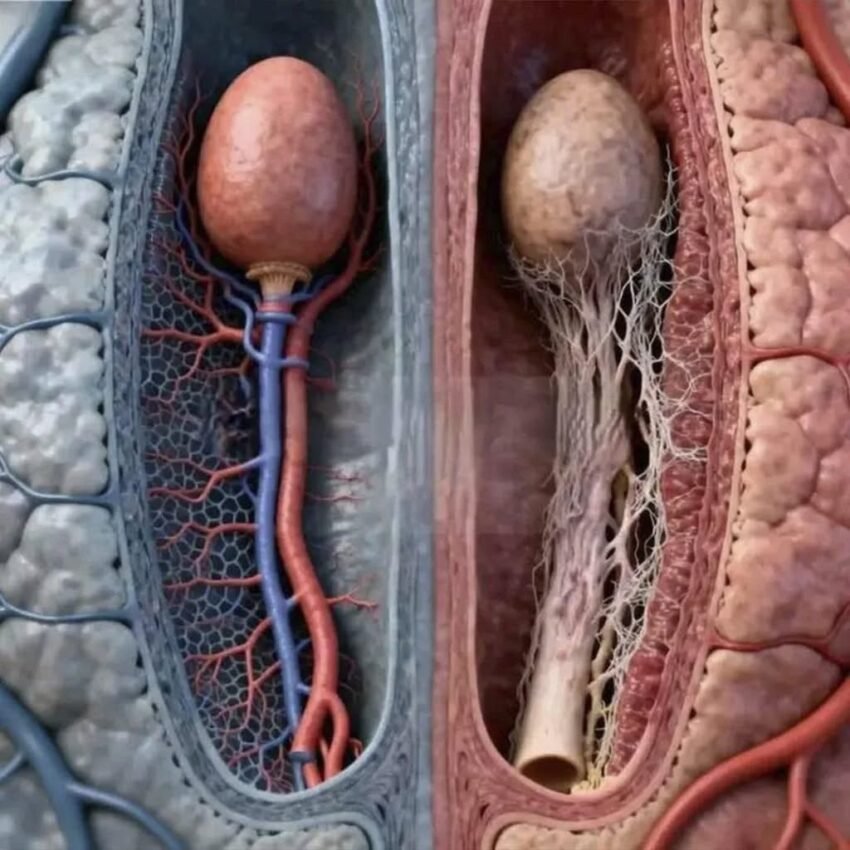
Healthy vs. Damaged Kidneys: What Happens Inside
Medical images comparing a healthy kidney to a damaged one can be alarming. A damaged kidney may show:
-
Narrowed or blocked blood vessels
-
Scarred or deteriorated tissue
-
Reduced filtering units (nephrons)
-
Impaired blood flow
These changes reduce the kidney’s ability to clean the blood efficiently, allowing toxins to accumulate in the body.
How Modern Lifestyle Habits Harm the Kidneys
One of the biggest threats to kidney health is the modern lifestyle. Common contributors include:
1. Excessive Salt Intake
High sodium levels force the kidneys to work harder, increasing the risk of high blood pressure and kidney strain.
2. High Sugar Consumption
Excess sugar damages blood vessels, including those that supply the kidneys, raising the risk of diabetes-related kidney disease.
3. Ultra-Processed Foods
These foods often contain hidden sodium, preservatives, and additives that overload kidney function over time.
4. Dehydration
Not drinking enough water reduces the kidneys’ ability to flush out toxins effectively.
How to Protect Your Kidneys Naturally
The good news is that kidney damage is often preventable with simple lifestyle adjustments:
-
Drink adequate water daily
-
Reduce salt and processed food intake
-
Maintain healthy blood pressure and blood sugar levels
-
Exercise regularly
-
Avoid excessive use of painkillers
-
Get routine medical checkups
Small, consistent habits can make a significant difference over time.
Why Kidney Health Deserves More Attention
Kidneys are essential to overall health, yet they rarely get the attention they deserve. By the time pain or severe symptoms appear, the condition may already be advanced.
Understanding how your kidneys work—and what harms them—is the first step toward long-term health and prevention.
Frequently Asked Questions (FAQs)
Can kidney damage be reversed?
Early-stage kidney damage can often be slowed or managed, but advanced damage is usually irreversible.
How much water should I drink daily for kidney health?
Needs vary, but most adults benefit from drinking enough water to keep urine light yellow.
Are kidney problems common?
Yes. Millions of people worldwide live with some form of kidney disease, often without knowing it.
Final Thoughts
Your kidneys work silently every day to keep your body balanced, clean, and functioning. Paying attention to them before problems arise can help you avoid serious health complications later in life.
Protecting your kidneys means protecting your overall well-being.