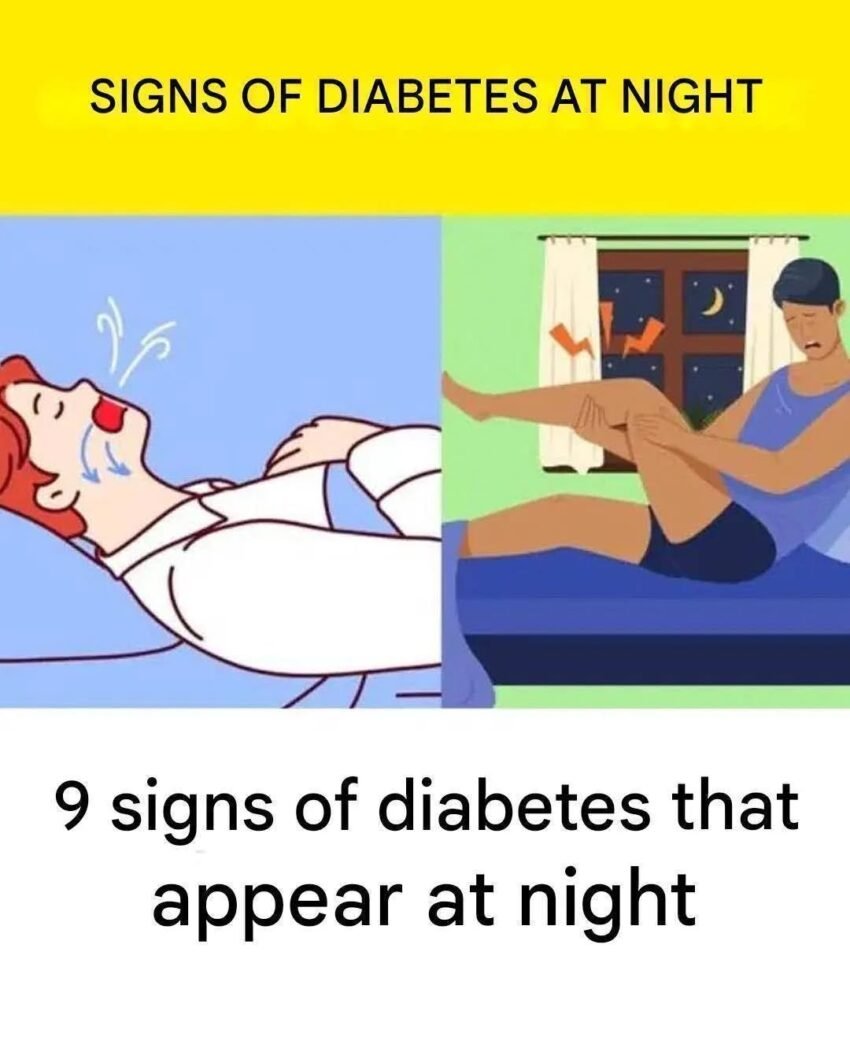
9 Signs of Diabetes That Appear at Night (Don’t Ignore These Warning Signals)
Diabetes is a chronic condition that often develops silently, with early symptoms appearing when you least expect them — especially at night. Many people dismiss nighttime discomfort as stress, aging, or poor sleep, but in some cases, these signs may be your body signaling blood sugar imbalance.
In this article, we’ll explore 9 common signs of diabetes that often appear at night, why they happen, and when you should consider seeking medical advice.
⚠️ This article is for informational purposes only and does not replace professional medical diagnosis or treatment.
Why Do Diabetes Symptoms Appear at Night?
At night, your body is in a fasting and resting state. Blood sugar fluctuations, insulin resistance, and nerve or kidney stress can become more noticeable, leading to symptoms that disrupt sleep.
Nighttime symptoms are especially common in:
-
Undiagnosed diabetes
-
Prediabetes
-
Poorly managed blood sugar levels
1. Frequent Nighttime Urination (Nocturia)
Waking up multiple times to urinate is one of the earliest and most common signs of diabetes.
Why it happens:
High blood sugar causes the kidneys to work overtime to remove excess glucose through urine, increasing urine production — especially at night.
Watch out if:
-
You wake up more than 2 times per night
-
The urge feels sudden or urgent
2. Excessive Thirst During the Night
If you often wake up with a dry mouth or intense thirst, it may be related to elevated blood sugar.
Why it happens:
Frequent urination leads to dehydration, triggering strong thirst signals — even while sleeping.
3. Night Sweats (Unexplained Sweating)
Waking up drenched in sweat without a hot room or heavy blankets can be concerning.
Possible causes:
-
Low blood sugar (hypoglycemia) during sleep
-
Hormonal fluctuations caused by glucose imbalance
Night sweats may be accompanied by:
-
Rapid heartbeat
-
Anxiety
-
Nightmares
4. Tingling, Burning, or Numbness in Feet and Hands
This symptom, known as diabetic neuropathy, often becomes noticeable at night.
Why it worsens at night:
-
Less distraction makes nerve discomfort more noticeable
-
Reduced circulation while lying down
You may feel:
-
Pins and needles
-
Burning sensation
-
Numbness in toes or fingers
5. Restless Sleep or Insomnia
People with diabetes often experience poor sleep quality.
Possible reasons include:
-
Blood sugar highs or lows
-
Frequent urination
-
Nerve pain or itching
Poor sleep can also worsen insulin resistance, creating a harmful cycle.
6. Leg Cramps or Muscle Pain at Night
Painful leg cramps or aching muscles may strike during sleep.
Possible link to diabetes:
-
Dehydration
-
Electrolyte imbalance
-
Poor blood circulation
These cramps often affect:
-
Calves
-
Feet
-
Thighs
7. Itchy Skin, Especially at Night
Persistent nighttime itching can be related to:
-
Dry skin from dehydration
-
Poor circulation
-
Yeast or fungal infections (more common with high blood sugar)
The itching may be worse around:
-
Feet
-
Groin
-
Underarms
8. Sudden Hunger Late at Night
Waking up feeling extremely hungry may signal a nighttime drop in blood sugar.
This can occur if:
-
Diabetes medications are not well balanced
-
Meals earlier in the day were insufficient
Hunger may be paired with:
-
Shakiness
-
Sweating
-
Confusion
9. Fatigue Despite a Full Night’s Sleep
If you sleep 7–8 hours but still wake up exhausted, blood sugar imbalance may be interfering with your body’s ability to rest and recover.
High or unstable glucose levels can prevent deep, restorative sleep, leading to:
-
Morning headaches
-
Brain fog
-
Low energy throughout the day
When Should You See a Doctor?
You should consider medical testing if:
-
You experience multiple nighttime symptoms
-
Symptoms persist for several weeks
-
You have risk factors like obesity, family history, or sedentary lifestyle
Early diagnosis can help prevent serious complications such as:
-
Heart disease
-
Kidney damage
-
Vision problems
-
Nerve damage
How to Reduce Nighttime Diabetes Symptoms (General Tips)
✔ Maintain balanced meals
✔ Avoid heavy sugar intake at night
✔ Stay hydrated
✔ Follow a consistent sleep schedule
✔ Monitor blood sugar if advised by a healthcare professional
Final Thoughts
Nighttime symptoms are often overlooked, but your body doesn’t rest from sending warning signs. Recognizing these 9 nighttime signs of diabetes early may help you take action before complications develop.
If something feels off, trust your instincts and consult a qualified healthcare provider.
Frequently Asked Questions (FAQ)
Q: Can prediabetes cause nighttime symptoms?
Yes. Prediabetes can cause mild versions of these symptoms, especially frequent urination and thirst.
Q: Are nighttime symptoms always diabetes-related?
No. Many conditions can cause similar symptoms, which is why medical testing is important.
Q: Can lifestyle changes improve nighttime symptoms?
In many cases, yes — especially with improved diet, activity, and sleep habits.