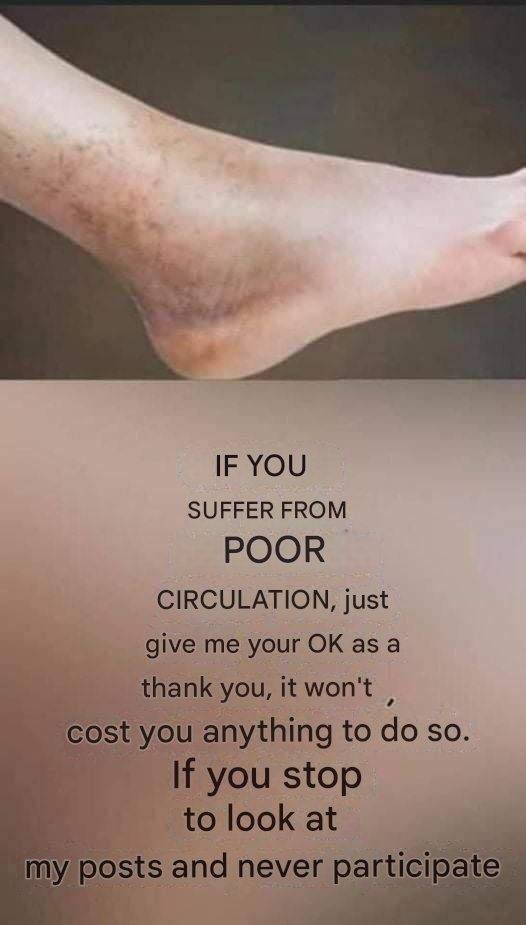
If You Suffer From Poor Circulation and Your Legs Feel Like This, Here Are Helpful Solutions
Poor circulation in the legs is a common problem that can affect people of all ages. It often develops gradually and may be mistaken for simple fatigue or aging. However, when circulation problems persist, they can interfere with daily comfort, mobility, and overall quality of life.
In this article, we’ll explain how poor circulation feels in the legs, what may cause it, and practical, safe solutions that can help improve blood flow and reduce discomfort.
⚠️ This article is for informational purposes only and does not replace professional medical advice.
How Poor Circulation in the Legs Often Feels
If blood flow to your legs is reduced, you may experience one or more of the following sensations:
-
Cold feet or legs, even in warm weather
-
Tingling or “pins and needles”
-
Numbness or reduced sensation
-
Heaviness or tightness in the calves
-
Leg cramps, especially at night
-
Swelling in the ankles or feet
-
Fatigue or aching after standing or walking
These symptoms may worsen after long periods of sitting or standing.
Common Causes of Poor Leg Circulation
Poor circulation can result from several underlying factors, including:
-
Sedentary lifestyle
-
Smoking
-
Obesity
-
Diabetes
-
High blood pressure
-
Varicose veins
-
Peripheral artery disease (PAD)
-
Prolonged sitting or poor posture
Identifying the cause is essential for proper management.
Why Improving Circulation Is Important
Healthy blood flow helps:
-
Deliver oxygen and nutrients to muscles
-
Remove waste products
-
Maintain nerve function
-
Support skin and tissue health
When circulation is poor, tissues may not receive what they need to function properly.
Solutions That May Help Improve Leg Circulation
1. Move Your Body Regularly
Physical movement is one of the most effective ways to stimulate circulation.
Helpful activities include:
-
Walking
-
Gentle cycling
-
Swimming
-
Light stretching
Even short movement breaks every 30–60 minutes can make a difference.
2. Elevate Your Legs
Raising your legs above heart level for 15–20 minutes can help blood flow back toward the heart.
This is especially useful if you experience:
-
Swelling
-
Heaviness
-
Aching after standing
3. Wear Compression Stockings
Compression stockings gently squeeze the legs, helping veins move blood more efficiently.
They may help reduce:
-
Swelling
-
Fatigue
-
Discomfort
Consult a healthcare professional to choose the correct type and fit.
4. Stay Hydrated
Dehydration can thicken the blood, making circulation less efficient.
Tips:
-
Drink water regularly
-
Limit excessive caffeine and alcohol
-
Eat water-rich foods like fruits and vegetables
5. Improve Your Diet
A circulation-friendly diet supports blood vessel health.
Focus on:
-
Fruits and vegetables
-
Whole grains
-
Healthy fats (olive oil, nuts, fish)
-
Foods rich in antioxidants
Reducing excess salt may also help minimize swelling.
6. Avoid Sitting or Standing Too Long
Prolonged immobility can slow blood flow.
Helpful habits:
-
Stand up and stretch regularly
-
Avoid crossing your legs for long periods
-
Use a footrest if sitting for extended hours
7. Keep Your Legs Warm
Cold temperatures can cause blood vessels to constrict.
Try:
-
Wearing warm socks
-
Avoiding cold floors
-
Gentle leg massages
Warmth helps relax blood vessels and promote flow.
8. Gentle Massage and Stretching
Massage and stretching can:
-
Stimulate circulation
-
Reduce muscle stiffness
-
Relieve tension
Always use gentle pressure, especially if you have sensitive skin or vein issues.
When to See a Doctor
You should seek medical advice if you experience:
🚩 Persistent leg pain
🚩 Sudden swelling or color changes
🚩 Non-healing sores or ulcers
🚩 Severe numbness or weakness
🚩 Symptoms that worsen over time
These may indicate a more serious circulatory condition.
Final Thoughts
Poor circulation in the legs can cause uncomfortable and frustrating symptoms, but simple lifestyle changes often make a meaningful difference. Staying active, maintaining healthy habits, and paying attention to early warning signs can help protect your leg health and overall well-being.
If symptoms persist, professional evaluation is always the safest next step.
Frequently Asked Questions (FAQ)
Q: Can poor circulation be reversed?
In many cases, symptoms can improve with lifestyle changes and proper medical care.
Q: Does walking really help circulation?
Yes. Walking activates leg muscles, which helps push blood back toward the heart.
Q: Are cold feet always a sign of poor circulation?
Not always, but persistent coldness should be evaluated.