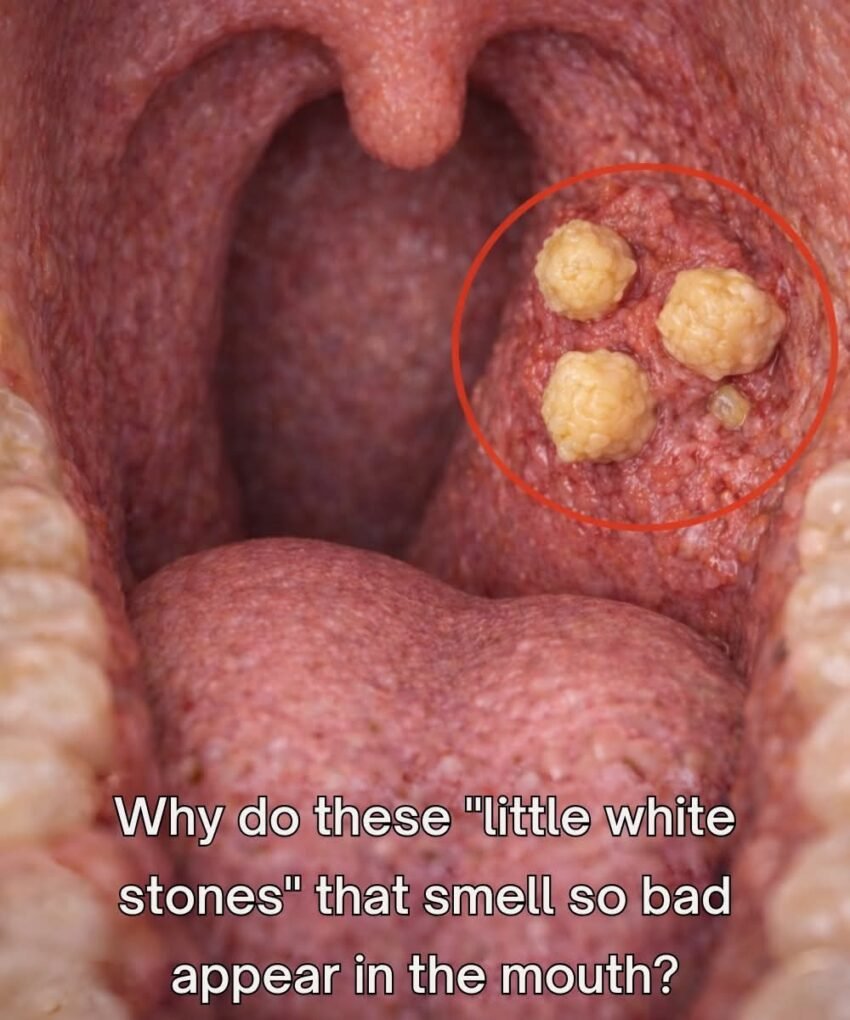
Why Do Small, Smelly White Stones Appear in the Mouth? 🦷
Have you ever noticed small, white or yellowish stones in the back of your throat or mouth, sometimes accompanied by a bad smell? These are commonly known as tonsil stones, or tonsilloliths, and they can be uncomfortable, embarrassing, and confusing.
⚠️ This article is for informational purposes only. Consult a healthcare professional for persistent or severe symptoms.
What Are Tonsil Stones?
Tonsil stones are small, calcified deposits that form in the crevices of your tonsils. They are usually made of:
-
Dead cells
-
Food particles
-
Bacteria
-
Mucus
Over time, these materials harden into small stones, often white or yellowish in color.
Why Tonsil Stones Smell
The unpleasant odor associated with tonsil stones comes from bacterial activity:
-
Bacteria break down trapped debris in the tonsils
-
This produces sulfur compounds, causing a foul smell
-
This is why tonsil stones can lead to bad breath (halitosis)
Common Causes of Tonsil Stones
-
Poor Oral Hygiene
-
Food particles and bacteria accumulate in the mouth
-
Plaque buildup can worsen tonsil stone formation
-
-
Chronic Tonsillitis or Large Tonsils
-
Inflamed or large tonsils have deeper crypts where debris can get trapped
-
-
Post-Nasal Drip
-
Mucus from sinus infections or allergies can collect in tonsil crevices
-
-
Dry Mouth
-
Saliva helps wash away bacteria; reduced saliva increases the risk of tonsil stones
-
Symptoms of Tonsil Stones
-
Small, white or yellowish lumps in the tonsils
-
Bad breath
-
Sore throat or discomfort
-
Difficulty swallowing in severe cases
-
Ear pain (referred pain from the throat)
💡 Many tonsil stones are asymptomatic and may only be noticed when dislodged.
How to Prevent Tonsil Stones
-
Maintain Good Oral Hygiene
-
Brush teeth and tongue at least twice a day
-
Floss daily to remove trapped food particles
-
-
Gargle Regularly
-
Warm saltwater or antibacterial mouthwash can reduce bacteria
-
-
Stay Hydrated
-
Drinking water helps prevent dry mouth and flushes debris
-
-
Avoid Smoking
-
Smoking contributes to bacterial growth and dryness
-
-
Remove Stones Safely
-
Gentle gargling or using a cotton swab can dislodge small stones
-
Avoid aggressive poking that may cause infection
-
When to See a Doctor
Seek medical advice if you notice:
-
Large, persistent tonsil stones
-
Severe pain or difficulty swallowing
-
Recurrent tonsillitis or chronic bad breath
-
Swelling or signs of infection
In some cases, a tonsillectomy may be recommended for severe, recurrent cases.
Final Thoughts
Small, smelly white stones in the mouth are usually tonsil stones caused by trapped debris, bacteria, and mucus. While they are generally harmless, they can cause bad breath, discomfort, and sore throat. Maintaining good oral hygiene, gargling regularly, and staying hydrated are key ways to prevent them.
FAQ: Tonsil Stones
Q: Can tonsil stones go away on their own?
Yes, small tonsil stones may dislodge naturally during swallowing or coughing.
Q: Are tonsil stones dangerous?
Rarely. They are usually harmless but can cause discomfort or infection if untreated.
Q: Can mouthwash prevent tonsil stones?
Antibacterial mouthwash helps reduce bacterial growth and may reduce stone formation.