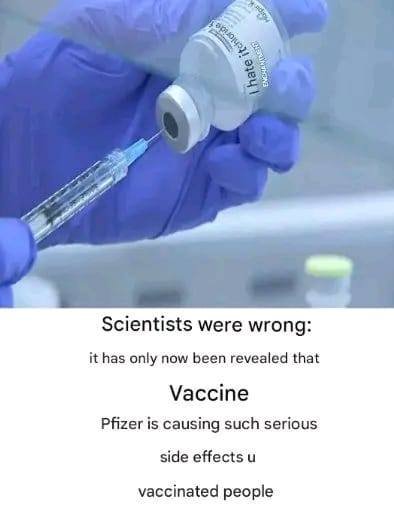
Scientists Discover New Side Effects of Pfizer Vaccine? Study Shows Effect on Eyes
In recent years, COVID‑19 vaccines, including the Pfizer–BioNTech mRNA vaccine (Comirnaty), have played a central role in controlling the pandemic. These vaccines have been administered to billions of people worldwide, and extensive safety monitoring continues as part of ongoing public health research.
Recently, some scientific studies and case reports have explored potential ocular (eye‑related) effects recorded after vaccination. While most findings are rare and generally mild, they have generated interest and warranted research. It’s important to understand what these reports show — and equally important to interpret them correctly.
🧠 What the Research Actually Says
A few peer‑reviewed publications and pharmacovigilance reports have documented eye‑related symptoms reported after vaccination. These include:
-
Transient redness or irritation
-
Dry eye symptoms
-
Blurred vision
-
Uveitis (inflammation inside the eye)
-
Central serous retinopathy (fluid under the retina)
-
Retinal vascular events (rare)
These findings come from case reports, small observational studies, or reports collected through adverse event monitoring systems. They do not prove that the vaccine caused these effects — only that they were observed in some individuals shortly after vaccination.
🔍 Key Points from Scientific Analysis
1. Correlation Does Not Equal Causation
When an effect follows vaccination, it does not necessarily mean the vaccine caused it. Researchers must rule out other possible causes such as infection, stress, underlying disease, or unrelated medical conditions.
2. Reported Ocular Effects Are Very Rare
Large safety databases — including those maintained by the U.S. Centers for Disease Control and Prevention (CDC), the World Health Organization (WHO), and the European Medicines Agency (EMA) — confirm that serious eye conditions following Pfizer vaccination are extremely uncommon.
3. Most Cases Are Mild and Self‑Limiting
When eye symptoms have been reported, many resolved with minimal treatment or observation.
4. Higher Background Rates in General Population
Some conditions, such as uveitis or dry eye syndrome, occur naturally in the population. Without controlled studies, it is difficult to determine whether vaccination increased incidence beyond expected levels.
📊 Examples of Eye‑Related Reports
• Uveitis
Published case reports have documented uveitis (inflammation of the uveal tract) occurring days after vaccination. However, uveitis has many possible triggers, and these reports represent only single cases without large‑scale confirmation.
• Central Serous Retinopathy (CSR)
A few individual cases of CSR have been described in the scientific literature in the weeks following vaccination. Again, CSR occurs naturally and is linked to stress and hormones as well as other factors.
• Dry Eye & Irritation
Some vaccine recipients have reported transient dry eye, redness, or mild irritation. These symptoms are common in the general population and may result from environmental factors as well.
🧪 Ongoing Research and Monitoring
Regulatory agencies and independent researchers continue to monitor vaccine safety. Ocular events are tracked in systems such as:
-
VAERS (Vaccine Adverse Event Reporting System) in the United States
-
EudraVigilance in Europe
-
WHO’s VigiBase global database
These systems collect reports from healthcare professionals, patients, and manufacturers. Signal detection algorithms help identify patterns that may warrant further investigation.
However, reports alone do not establish cause; only carefully controlled epidemiological studies can assess whether a real increase in risk exists.
👁️ What Experts Say
Leading ophthalmology societies and vaccine safety researchers emphasize:
- Eye conditions reported after vaccination are rare and not conclusively linked to the vaccine.
- The benefits of vaccination — preventing severe illness, hospitalization, and death from COVID‑19 — far outweigh the risks of rare side effects.
- People with pre‑existing eye diseases should continue routine eye care and discuss any new symptoms with a healthcare provider.
🧠 How to Interpret Headlines
Headlines like “Scientists discover new side effects of Pfizer vaccine” can be misleading if not read in context. Scientific studies rarely “discover” definitive effects from single case reports; rather, researchers report observations that may prompt further investigation.
Responsible interpretation involves:
-
Reading the original study, not just summaries
-
Looking for controlled comparison groups
-
Understanding the difference between case reports and statistical evidence
👩⚕️ What to Do if You Experience Eye Symptoms After Vaccination
If you notice new or unusual eye symptoms within weeks of vaccination:
-
Don’t panic — serious events are rare
-
Contact an eye care professional promptly
-
Report the event to your local vaccine safety monitoring system
-
Continue regular follow‑up if you have pre‑existing conditions
📊 Final Considerations
-
Rare eye‑related events have been reported after Pfizer vaccination, but current evidence does not prove causation.
-
Ongoing monitoring and research are crucial for long‑term safety assessment.
-
The overall safety profile of the Pfizer vaccine remains strong, with the vast majority of people experiencing no serious side effects.