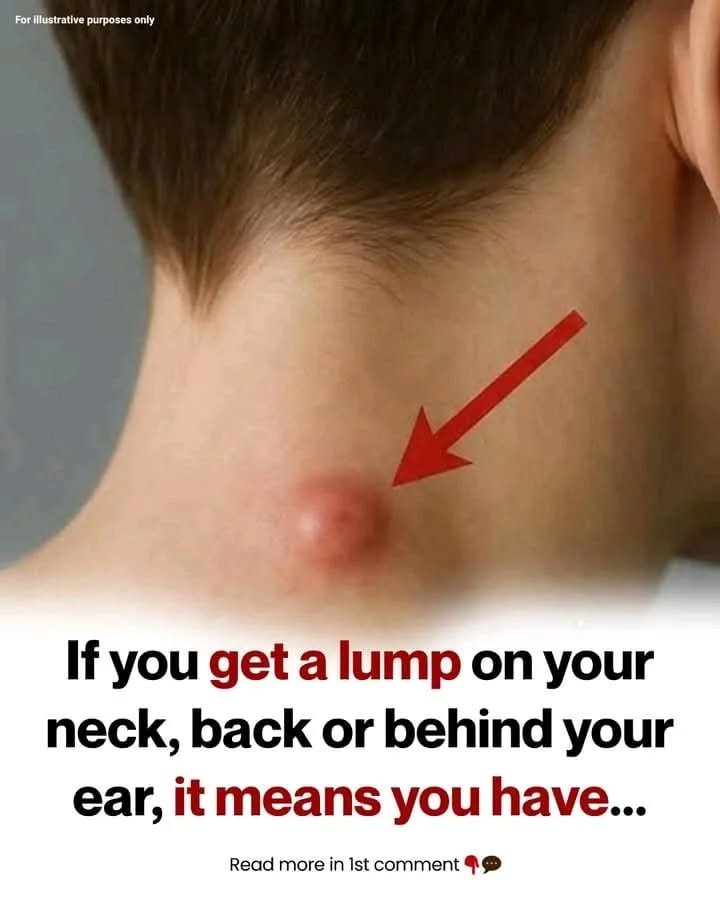
If You Get a Lump on Your Neck, Back, or Behind Your Ear, It Could Mean This
Found a lump on your neck, back, or behind your ear? Learn the common causes, when it’s harmless, and when you should see a doctor.
Finding a lump anywhere on your body can be unsettling—especially when it appears on your neck, back, or behind your ear. Many people immediately fear the worst, but the truth is far more reassuring in most cases.
Lumps in these areas are very common and are usually caused by benign, temporary conditions. However, understanding what they mean, why they appear, and when they need medical attention is essential for peace of mind and good health.
This article explains the most common reasons these lumps occur, what your body may be signaling, and how to respond wisely—without panic or misinformation.
First Things First: Don’t Jump to Conclusions
Not every lump is dangerous. In fact, most lumps are harmless and resolve on their own.
Common characteristics of non-serious lumps:
-
Soft or rubbery texture
-
Tender or painful to touch
-
Moves slightly under the skin
-
Appears during or after illness
Serious causes are far less common, especially in otherwise healthy individuals.
Why Lumps Commonly Appear in These Areas
The neck, back, and area behind the ear contain:
-
Lymph nodes
-
Oil glands
-
Fatty tissue
-
Hair follicles
-
Muscle and connective tissue
Because of this, these regions are especially prone to temporary swelling and benign growths.
Most Common Causes of Lumps
1. Swollen Lymph Nodes
This is by far the most common reason for lumps in the neck and behind the ear.
What It Means
Lymph nodes are part of your immune system. When your body fights:
-
A cold
-
Flu
-
Throat infection
-
Ear infection
-
Skin infection
…lymph nodes may swell as they filter bacteria and viruses.
Typical Features
-
Size ranges from pea to grape
-
Tender or sore
-
Appears suddenly
-
Shrinks after illness resolves
This is usually a good sign—it means your immune system is working.
2. Cysts
Cysts are closed pockets of tissue filled with fluid or semi-solid material.
Common Types
-
Sebaceous cysts
-
Epidermoid cysts
Where They Appear
-
Back of the neck
-
Upper back
-
Behind the ear
What They’re Like
-
Slow-growing
-
Firm or soft
-
Usually painless
-
Non-cancerous
Cysts are generally harmless unless they become infected.
3. Lipomas (Fatty Lumps)
Lipomas are benign growths made of fat cells.
Key Characteristics
-
Soft and rubbery
-
Move easily under the skin
-
Painless
-
Slow-growing
They are more common on the back and neck and usually require no treatment unless they cause discomfort.
4. Skin Infections or Boils
Sometimes a lump forms due to:
-
Blocked hair follicles
-
Bacterial infections
-
Ingrown hairs
These lumps are often:
-
Red
-
Warm
-
Painful
-
Filled with pus
They may improve with proper hygiene or medical treatment.
5. Acne or Blocked Oil Glands
Behind-the-ear lumps are frequently linked to:
-
Acne
-
Excess oil production
-
Irritation from glasses or headphones
These lumps are usually small and temporary.
Less Common but Important Causes
While uncommon, some lumps require closer attention.
Enlarged Lymph Nodes Without Infection
If lymph nodes:
-
Remain swollen for weeks
-
Continue growing
-
Are hard and immobile
…it may indicate a need for medical evaluation.
Benign Tumors
Non-cancerous tumors can form in soft tissues, nerves, or glands. They grow slowly and are often painless.
Rare Serious Conditions
In rare cases, lumps may be associated with more serious conditions, especially if accompanied by:
-
Unexplained weight loss
-
Persistent fever
-
Night sweats
-
Fatigue
It’s important to note that these symptoms do not automatically mean cancer, but they do warrant professional evaluation.
How to Assess a Lump at Home (Safely)
You can observe a lump without poking or squeezing it excessively.
Pay Attention To
-
Size changes
-
Pain or tenderness
-
Texture (soft vs hard)
-
Mobility
-
Skin changes
Avoid self-diagnosing—observation is not the same as diagnosis.
When You Should See a Doctor
Seek medical advice if a lump:
-
Lasts longer than 2–3 weeks
-
Continues to grow
-
Is hard and fixed in place
-
Causes pain, fever, or redness
-
Appears without any infection
-
Comes with unexplained symptoms
Early evaluation is always safer than waiting.
What a Doctor May Do
Medical evaluation may include:
-
Physical examination
-
Medical history review
-
Blood tests
-
Imaging (ultrasound or scan)
-
Biopsy (only if necessary)
Most cases are resolved without invasive procedures.
Common Myths About Lumps
“All lumps are cancer”
False. Most lumps are benign.
“Painful lumps are worse”
Pain often indicates infection, not cancer.
“If it moves, it’s dangerous”
Movable lumps are usually less concerning.
“Squeezing helps”
Squeezing can worsen infection and inflammation.
Prevention Tips
While not all lumps are preventable, you can reduce risk by:
-
Practicing good hygiene
-
Treating infections promptly
-
Avoiding skin irritation
-
Maintaining a healthy immune system
-
Not ignoring persistent changes
Frequently Asked Questions
Are lumps behind the ear usually serious?
No. They are commonly swollen lymph nodes or cysts.
How long should swollen lymph nodes last?
They usually shrink within a few weeks after illness.
Can stress cause lumps?
Stress itself doesn’t cause lumps but can weaken immunity.
Should I massage a swollen lump?
Gentle touch is fine, but avoid frequent manipulation.
Do children get these lumps too?
Yes, especially during infections.
Can allergies cause swollen lymph nodes?
Yes, in some cases.
Are hard lumps always dangerous?
Not always, but they should be checked.
Can poor posture cause neck lumps?
Posture doesn’t cause lumps but can cause muscle knots.
Current Medical Perspective
Healthcare professionals emphasize:
-
Observation over panic
-
Early evaluation if changes persist
-
Avoiding online self-diagnosis
Education and awareness are key to preventing unnecessary fear.
Final Thoughts
A lump on your neck, back, or behind your ear is usually your body reacting to something minor, like an infection or irritation. In most cases, it’s temporary and harmless.
What matters most is:
-
Monitoring changes
-
Understanding common causes
-
Knowing when to seek help
Staying informed is far more powerful than assuming the worst.
Conclusion
If you discover a lump, don’t panic—but don’t ignore it either. Your body communicates in many ways, and lumps are often just signals that your immune system is doing its job.
When in doubt, a medical professional can provide clarity and reassurance.
Call to Action
If this article helped you understand a worrying symptom, consider sharing it with others.
Accurate health information reduces fear and encourages smarter decisions.