How to Relieve Sciatic Nerve Pain: A Practical Guide to Natural Remedies
Struggling with sciatic nerve pain? Learn safe, natural remedies that can help relieve symptoms, reduce inflammation, and support recovery—backed by science.
Introduction: When Sciatic Pain Takes Over Your Day
Sciatic nerve pain has a way of hijacking everyday life.
One moment you’re fine—
the next, there’s a sharp, burning, or electric pain shooting from your lower back down your leg.
For many Americans, sciatica affects:
-
Sitting comfortably
-
Walking or standing
-
Sleeping through the night
-
Work and daily activities
While medical treatment is sometimes necessary, many cases of sciatic pain improve with conservative, natural approaches—especially when the underlying cause is muscle tension, inflammation, or posture-related nerve compression.
This guide explains:
-
What sciatica really is
-
Why natural remedies can help
-
Evidence-based ways to relieve pain safely
-
Common mistakes that slow recovery
No miracle cures. Just realistic, body-friendly strategies.
First, an Important Clarification
Let’s set expectations clearly:
-
Sciatica is a symptom, not a disease
-
There is no instant “cure” for all cases
-
Natural remedies aim to relieve pain, reduce inflammation, and support healing
-
Severe or persistent sciatica should always be evaluated by a healthcare professional
Many people recover fully—but the path depends on the cause.
What Is Sciatic Nerve Pain?
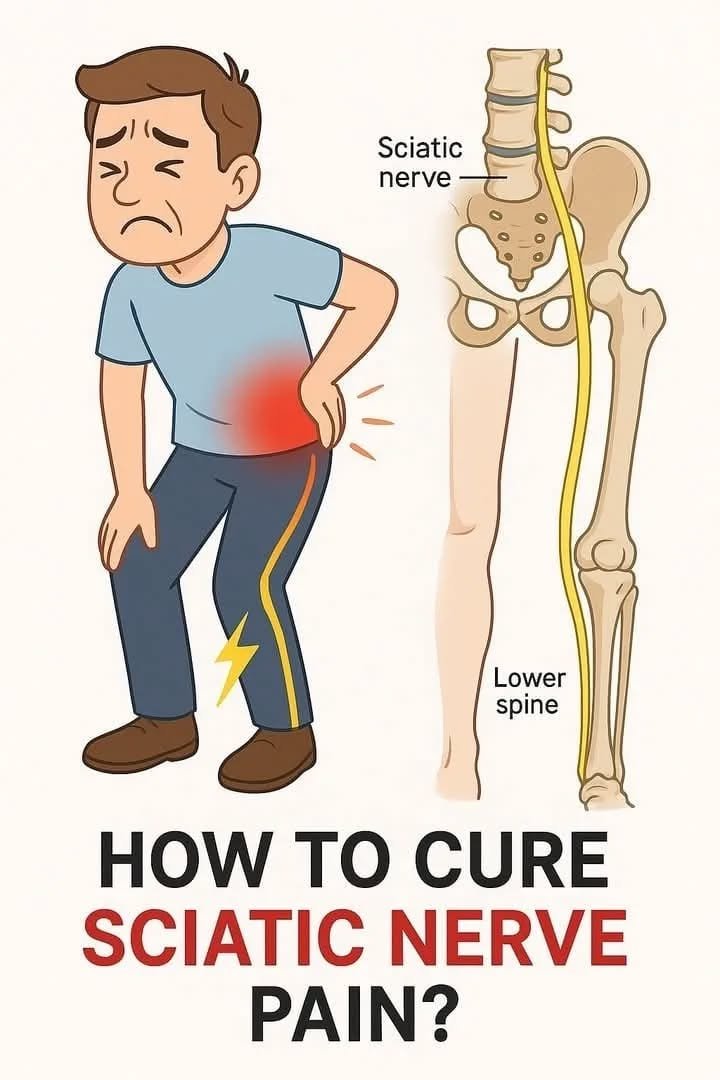
The sciatic nerve is the largest nerve in the body, running from the lower spine through the hips and down each leg.
Sciatic pain occurs when the nerve is:
-
Compressed
-
Irritated
-
Inflamed
Common Causes Include:
-
Herniated or bulging discs
-
Muscle tightness (especially piriformis muscle)
-
Spinal stenosis
-
Poor posture or prolonged sitting
-
Injury or overuse
Symptoms may include:
-
Shooting or burning pain
-
Tingling or numbness
-
Weakness in the leg or foot
Why Natural Remedies Can Be Effective
In many cases, sciatica is worsened by:
-
Inflammation
-
Muscle tension
-
Reduced mobility
-
Poor movement patterns
Natural remedies work by:
-
Improving circulation
-
Reducing inflammation
-
Relaxing tight muscles
-
Restoring healthy movement
When applied consistently, they often reduce pain and speed recovery.
1. Gentle Stretching (One of the Most Effective Tools)
Why Stretching Helps
Tight muscles—especially in the hips and glutes—can compress the sciatic nerve.
Stretching helps:
-
Reduce pressure on the nerve
-
Improve flexibility
-
Restore normal movement patterns
Helpful Stretches
-
Piriformis stretch
-
Knee-to-chest stretch
-
Seated spinal twist
-
Hamstring stretch
Stretch slowly, never force movement, and stop if pain increases.
2. Heat and Cold Therapy
When to Use Cold
Cold packs help:
-
Reduce inflammation
-
Numb sharp pain
Best during:
-
Acute flare-ups
-
First 48–72 hours of pain
When to Use Heat
Heat helps:
-
Relax muscles
-
Increase blood flow
Best for:
-
Muscle tightness
-
Chronic stiffness
Many people benefit from alternating both.
3. Walking and Gentle Movement
Why Rest Alone Can Backfire
Extended bed rest can:
-
Stiffen muscles
-
Slow healing
-
Increase pain sensitivity
Short, frequent walks:
-
Promote circulation
-
Reduce nerve irritation
-
Improve mobility
Even 5–10 minutes at a time helps.
4. Posture and Sitting Adjustments
Why Sitting Often Triggers Sciatica
Sitting increases pressure on:
-
Lower spinal discs
-
Sciatic nerve pathway
Simple Fixes That Help
-
Sit with feet flat and hips level
-
Avoid crossing legs
-
Use lumbar support
-
Stand up every 30–45 minutes
Small posture changes add up.
5. Anti-Inflammatory Foods and Hydration
How Diet Affects Nerve Pain
Inflammation can worsen nerve sensitivity.
Foods that may help:
-
Fatty fish (omega-3s)
-
Leafy greens
-
Berries
-
Olive oil
-
Nuts and seeds
Also:
-
Stay well-hydrated
-
Limit excess sugar and ultra-processed foods
Nutrition won’t fix sciatica alone—but it supports healing.
6. Massage and Soft Tissue Work
Why It Helps
Massage can:
-
Reduce muscle tension
-
Improve circulation
-
Decrease pain signaling
Helpful options:
-
Professional massage therapy
-
Foam rolling (gently)
-
Massage balls for glutes and hips
Avoid direct pressure on the spine.
7. Mind–Body Techniques (Often Overlooked)
The Pain–Stress Connection
Stress increases:
-
Muscle tension
-
Pain sensitivity
-
Inflammation
Helpful practices include:
-
Deep breathing
-
Mindfulness meditation
-
Gentle yoga
-
Progressive muscle relaxation
Calming the nervous system can significantly reduce pain intensity.
Common Mistakes That Worsen Sciatica
❌ Pushing Through Sharp Pain
Pain is information—not a challenge.
❌ Staying Completely Inactive
Too much rest slows recovery.
❌ Ignoring Sleep Position
Sleeping on your side with a pillow between knees can help.
❌ Expecting Instant Results
Nerves heal slowly—consistency matters.
When Natural Remedies May Not Be Enough
Seek medical evaluation if you experience:
-
Worsening pain despite weeks of care
-
Significant leg weakness
-
Loss of bowel or bladder control
-
Numbness in the groin or inner thighs
These can signal serious conditions requiring urgent care.
FAQs (People Also Ask)
Can sciatica go away on its own?
Yes, many cases improve within weeks.
How long does sciatic pain usually last?
Anywhere from a few days to several weeks, depending on cause.
Is walking good for sciatica?
Yes—gentle walking is often helpful.
Can stretching make it worse?
Aggressive or improper stretching can—gentle is key.
Is heat or ice better?
Both can help, depending on timing and symptoms.
Does weight affect sciatica?
Excess weight can increase spinal pressure in some cases.
Can stress trigger sciatica?
Stress can worsen muscle tension and pain perception.
Should I avoid exercise?
Avoid painful movements—but gentle activity is encouraged.
Final Thoughts: Relief Is a Process, Not a Switch
Sciatic nerve pain can feel overwhelming—but most cases improve without invasive treatment.
The most effective approach is usually:
-
Gentle movement
-
Consistent self-care
-
Patience with your body
Natural remedies don’t force healing—they support it.
And when your body feels supported, it often does exactly what it’s designed to do.
Your Next Step
If this guide helped you:
-
Share it with someone dealing with sciatica
-
Leave a comment with what’s helped you most
-
Explore more pain-relief and mobility resources
Because relief doesn’t come from one perfect fix—it comes from the right combination, applied consistently.