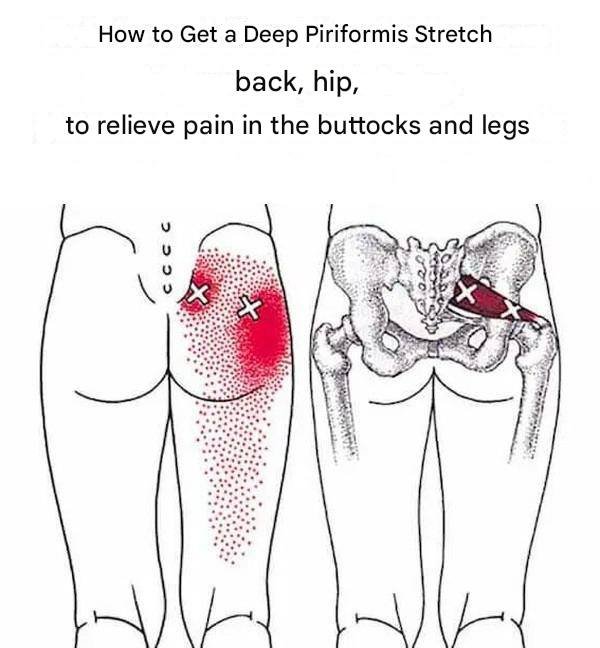
Here’s a safe, effective, and anatomy-based guide to getting a deep piriformis stretch that can help relieve pain in the lower back, hips, glutes, and legs—especially pain linked to tight hips or sciatic nerve irritation.
⚠️ Quick note: If you have sharp pain, numbness, tingling that worsens, or a diagnosed spinal condition, stop and consult a professional. These stretches are for muscle tightness, not injury treatment.
Understanding the Piriformis (Why This Works)
The piriformis is a small but powerful muscle located deep in the glutes. It:
-
Stabilizes the hip
-
Assists in leg rotation
-
Sits very close to the sciatic nerve
When tight or overactive, it can:
-
Compress the sciatic nerve
-
Cause pain in the lower back, buttocks, hips, and down the leg
-
Mimic sciatica symptoms
A deep, controlled stretch helps the muscle relax and reduces pressure in the area.
The Best Deep Piriformis Stretch (Step-by-Step)
⭐ The Seated Figure-4 Stretch (Deep Version)
This is one of the most effective and safest ways to isolate the piriformis.
How to do it:
-
Sit upright on a chair or bench
-
Place your right ankle over your left knee (forming a “4”)
-
Flex your right foot (to protect the knee)
-
Keep your spine straight—do NOT round
-
Slowly hinge forward from the hips
-
Stop when you feel a deep stretch in the glute (not knee pain)
Hold:
-
30–60 seconds
-
Breathe slowly and deeply
-
Repeat 2–3 times per side
👉 Key cue: You should feel this deep in the butt, not the lower back.
Deeper Floor Version (Advanced but Powerful)
🔥 Supine Figure-4 Stretch
Great for people who feel pain while sitting.
Steps:
-
Lie on your back with knees bent
-
Cross right ankle over left knee
-
Thread hands behind left thigh
-
Gently pull the leg toward your chest
-
Keep tailbone heavy on the floor
Hold:
-
45–90 seconds
-
Switch sides
-
2 rounds per side
The “Secret” to Going Deeper (Safely)
✅ Add Gentle Internal Rotation
Once in the stretch:
-
Lightly press the crossed knee away from your chest
-
Keep hips level
-
Move slowly
This targets deeper piriformis fibers without strain.
Bonus: Myofascial Release (Highly Recommended)
Stretching alone isn’t always enough.
🎾 Tennis Ball or Massage Ball Release
-
Sit or lie on the ball under the glute
-
Cross ankle over knee
-
Slowly roll until you find tender spots
-
Hold pressure for 20–40 seconds
Do this before stretching for better results.
How Often to Do This
-
Daily if you sit a lot or exercise frequently
-
After workouts
-
Before bed to reduce nighttime discomfort
Consistency > intensity.
Common Mistakes (Very Important)
❌ Pulling aggressively
❌ Rounding the lower back
❌ Forcing the knee down
❌ Holding breath
❌ Stretching through sharp pain
Pain = stop. Stretch = controlled discomfort.
Signs the Stretch Is Working
-
Reduced hip tightness
-
Less buttock pain when sitting
-
Easier walking or standing
-
Decreased leg pain over time
Results often show in 1–2 weeks with daily practice.
When This Stretch May NOT Be Enough
Seek professional help if you have:
-
Persistent numbness or tingling
-
Weakness in the leg
-
Pain worsening with stretching
-
Known disc or spinal issues
Final Takeaway
A deep piriformis stretch, done correctly and consistently, can dramatically reduce tension that contributes to back, hip, glute, and leg pain. The key is slow positioning, proper alignment, and breath control—not force.