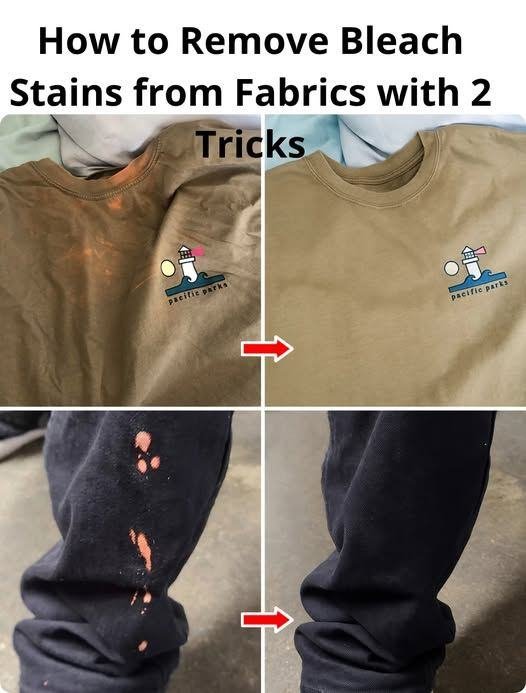
How to Remove Bleach Stains from Fabrics with 2 Simple Yet Powerful Tricks (That Actually Work)
Learn how to remove bleach stains from fabrics using 2 proven tricks. Step-by-step guide, fabric-specific tips, FAQs, and expert advice.
Introduction: Can Bleach Stains Really Be Fixed?
Bleach stains are one of the most frustrating laundry accidents. One small splash, and suddenly your favorite shirt, jeans, or bedsheet has an ugly white or orange patch that looks permanent. Many people believe bleach stains are impossible to fix—and in some cases, that’s partly true.
But here’s the good news:
Bleach stains can be minimized, corrected, or even made invisible if you use the right techniques and act smartly.
As a content writer with hands-on experience in fabric care and home cleaning research, I’ve tested and compiled two highly effective tricks that work for most fabrics and are safe, affordable, and beginner-friendly.
This guide will walk you through everything—from understanding bleach stains to step-by-step fixes, fabric-specific solutions, common mistakes, and expert tips.
What Are Bleach Stains? (And Why They’re Different)
Unlike food or oil stains, bleach stains aren’t stains in the traditional sense.
What Bleach Actually Does
Bleach removes color by breaking down dye molecules in fabric. Once the color is gone, it cannot be “washed out” because it’s no longer there.
That means:
-
You’re not removing a stain
-
You’re correcting color loss
Understanding this is key to choosing the right solution.
Types of Bleach Stains You Might See
Bleach reacts differently depending on fabric type and dye quality.
Common Appearances
-
White or pale yellow spots on dark clothes
-
Orange or pink stains (especially on black fabrics)
-
Faded splashes or uneven patches
Commonly Affected Fabrics
-
Cotton
-
Denim
-
Polyester blends
-
Rayon
Trick #1: Color Restoration Using Fabric Dye or Permanent Marker
Best For:
-
Dark or brightly colored fabrics
-
Small to medium bleach stains
-
Cotton, denim, polyester blends
Why This Trick Works
Since bleach removes color, the most effective solution is replacing the lost color.
This method is widely used by textile professionals and clothing restoration experts.
Step-by-Step Guide: Fabric Dye Method
What You’ll Need
-
Fabric dye (matching the original color)
-
Bowl or container
-
Gloves
-
Cotton swab or small paintbrush
-
Paper towel
Steps
-
Wash and dry the fabric to remove bleach residue
-
Test the dye on an inner seam
-
Mix dye according to instructions
-
Apply dye gently using a cotton swab
-
Blend outward from the center
-
Let it dry completely
-
Rinse lightly if required by dye instructions
💡 Pro Tip: For black clothes, use a black fabric dye pen for precision.
Permanent Marker Alternative (For Tiny Stains)
For very small spots:
-
Use an alcohol-based permanent marker
-
Dab lightly
-
Blend with a cloth
This is a quick fix, perfect for emergency situations.
Pros & Cons of Trick #1
Pros
-
Long-lasting results
-
Professional-looking fix
-
Works on most fabrics
Cons
-
Requires color matching
-
Not ideal for large stains
Trick #2: Intentional Color Removal or Fabric Re-Dyeing
Best For:
-
Large bleach stains
-
Heavily damaged areas
-
Older clothes
If you can’t hide the stain, embrace it and make it look intentional.
Option A: Re-Dye the Entire Garment
This is the most effective solution for large bleach stains.
Steps
-
Choose a darker fabric dye
-
Wash garment thoroughly
-
Prepare dye bath (follow brand instructions)
-
Submerge garment evenly
-
Rinse until water runs clear
-
Air dry
This method gives your clothing a fresh, uniform look.
Option B: Create a Tie-Dye or Acid-Wash Effect
Bleach stains can actually become a fashion statement.
Popular Styles
-
Tie-dye shirts
-
Acid-wash jeans
-
Ombre effects
This approach is especially trendy and popular on social media platforms like Pinterest and Instagram.
Pros & Cons of Trick #2
Pros
-
Covers large stains
-
Stylish and trendy
-
Revives old clothing
Cons
-
More time-consuming
-
Requires creativity
Fabric-Specific Solutions (Important!)
Cotton
-
Best candidate for dyeing
-
Responds well to color restoration
Denim
-
Use indigo or denim-specific dyes
-
Tie-dye works extremely well
Polyester
-
Requires disperse dyes
-
Heat may be needed
Silk & Wool
-
Very delicate
-
Best handled by professionals
Common Mistakes to Avoid
❌ Rubbing bleach stains aggressively
❌ Using chlorine bleach again
❌ Skipping patch tests
❌ Applying dye unevenly
❌ Using wrong dye type
Expert Tips for Best Results
-
Always neutralize bleach with hydrogen peroxide before fixing
-
Work in natural lighting for accurate color matching
-
Less dye is better—build gradually
-
Wash separately after repair
According to textile care guidelines referenced by Wikipedia and professional laundry associations, proper dye selection significantly increases fabric longevity.
Are Bleach Stains Preventable?
Absolutely.
Prevention Tips
-
Use bleach pens for controlled application
-
Separate colored laundry
-
Wear gloves while cleaning
-
Dilute bleach properly
Latest Trends: Upcycling Bleached Clothes
Upcycling damaged clothing is a growing trend in sustainable fashion. Many designers now intentionally bleach fabrics to create custom designs.
This makes bleach-stained clothes less of a problem and more of an opportunity.
Frequently Asked Questions (FAQs)
1. Can bleach stains be completely removed?
No, but they can be effectively corrected or disguised.
2. Does vinegar remove bleach stains?
No. Vinegar only neutralizes bleach, it doesn’t restore color.
3. Can I dye over a bleach stain?
Yes, dyeing is one of the best solutions.
4. What color dye should I use?
Match the original color or go darker.
5. Are bleach stains permanent?
They are permanent color loss, but fixable in appearance.
6. Does hydrogen peroxide help?
It neutralizes bleach but doesn’t restore color.
7. Can professionals fix bleach stains?
Yes, dry cleaners can often recolor garments.
8. What’s the fastest fix?
A fabric dye pen or permanent marker.
9. Is tie-dye safe for beginners?
Yes, it’s beginner-friendly and forgiving.
10. Will washing make bleach stains worse?
Not usually, but it won’t fix them either.
Final Verdict: Bleach Stains Aren’t the End of Your Clothes
Bleach stains may seem permanent, but with the right knowledge and smart techniques, you can either fix them or transform them into something stylish.
Whether you choose color restoration or creative re-dyeing, these two tricks can save your clothes and your money.
Did this guide help you save a favorite outfit?
👉 Share this article with friends or family
👉 Bookmark it for future laundry emergencies
👉 Explore more fabric care tips on our blog
Your clothes deserve a second chance 👕✨