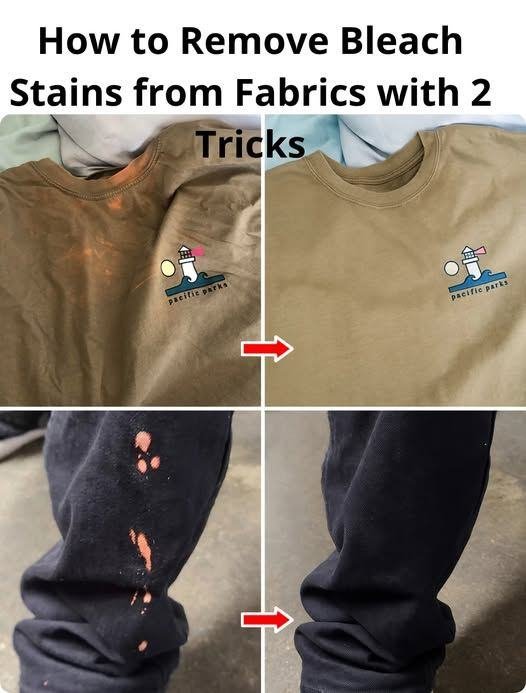
How to Remove Bleach Stains from Fabrics with 2 Simple Tricks That Actually Work
Bleach stains are every laundry lover’s nightmare. One small splash, and suddenly your favorite shirt, jeans, or bedsheet is marked with an ugly white or yellow patch that seems permanent. Most people assume the fabric is ruined for good—but that’s not always true.
The truth is, bleach doesn’t stain fabric the way coffee or oil does. Instead, it removes color. While you can’t always restore the original dye, you can fix the appearance, disguise the damage, and even save the garment using a few smart techniques.
In this guide, you’ll learn two effective tricks to deal with bleach stains, when they work best, and how to prevent future mishaps—all explained in simple, practical terms.
First, Understand What a Bleach “Stain” Really Is
Before fixing the problem, it helps to know what you’re dealing with.
Bleach:
-
Removes dye from fabric fibers
-
Weakens fibers if left too long
-
Creates light or orange patches depending on fabric type
That’s why traditional stain removers don’t work. There’s nothing on the fabric—the color is gone.
The goal, then, is color correction or camouflage, not stain removal in the usual sense.
Trick #1: Neutralize and Recolor the Bleach Spot
Best for:
-
Small bleach splashes
-
Dark or brightly colored fabrics
-
Cotton, denim, and blended materials
Why This Works
Even after rinsing, bleach residue can continue lightening fabric. Neutralizing it first prevents further damage, and recoloring helps restore the fabric’s appearance.
Step-by-Step Method
Step 1: Neutralize the Bleach
Mix:
-
1 tablespoon hydrogen peroxide
-
1 cup water
Gently dab the affected area with a clean cloth. This stops any remaining bleach from spreading or lightening the fabric further.
Tip: Always test on a hidden area first.
Step 2: Rinse and Dry
Rinse with cold water and let the fabric air dry completely before moving to the next step.
Step 3: Restore the Color
Depending on the fabric and stain size, you can use:
-
Fabric markers
-
Permanent markers (for small spots)
-
Liquid fabric dye (for larger areas)
Apply carefully, blending outward so the repair looks natural.
Pros
-
Inexpensive
-
Works quickly
-
Great for small stains
Cons
-
Color matching takes patience
-
Not ideal for large bleach areas
Trick #2: Turn the Bleach Stain into a Design Feature
Best for:
-
Large or uneven bleach marks
-
Casual wear like t-shirts and jeans
-
Creative or DIY-friendly fabrics
Why This Works
If you can’t hide the bleach mark, make it intentional. This approach transforms a mistake into a style statement.
Popular Options
Option 1: Tie-Dye or Reverse Dye
Bleach-stained fabrics are perfect for:
-
Tie-dye patterns
-
Ombre effects
-
Abstract designs
Use fabric dye to recolor the entire garment, blending the bleach area into the design.
Option 2: Decorative Patches or Embroidery
Cover the spot with:
-
Iron-on patches
-
Hand embroidery
-
Fabric appliqués
This works especially well on denim jackets, jeans, and kids’ clothing.
Option 3: Strategic Distressing
For denim:
-
Lightly distress other areas
-
Create a balanced, worn-in look
The bleach stain will no longer stand out.
Pros
-
Saves garments that seem “ruined”
-
Encourages creativity
-
Long-lasting fix
Cons
-
Requires more time
-
Not suitable for formal clothing
Common Mistakes to Avoid
-
Using heat before fixing the stain (heat sets damage)
-
Applying dye without neutralizing bleach
-
Rubbing aggressively, which weakens fibers
-
Mixing bleach with ammonia or vinegar (unsafe)
Can Bleach Stains Ever Be Fully Removed?
In most cases, bleach stains are permanent color loss. However, that doesn’t mean the fabric is useless.
Think of it this way:
-
You can’t erase the damage
-
But you can restore the look
With the right technique, most people won’t even notice the original stain.
How to Prevent Bleach Stains in the Future
-
Dilute bleach properly
-
Pour bleach into water, not fabric
-
Use bleach dispensers in washing machines
-
Keep bleach bottles capped and stored securely
-
Wear old clothes when cleaning
A little caution goes a long way.
Frequently Asked Questions
Can vinegar fix bleach stains?
No. Vinegar does not restore lost color, but it can help neutralize bleach residue if used immediately.
Does hydrogen peroxide remove bleach stains?
It doesn’t remove them, but it stops further bleaching, which is crucial.
Can fabric dye completely fix a bleach stain?
Often yes, especially for larger areas or full-garment dyeing.
Are bleach stains permanent?
The color loss is permanent, but the appearance can be repaired.
Can I fix bleach stains on white clothes?
On white fabrics, bleach stains are usually less noticeable and often don’t need fixing.
Do fabric markers wash out?
High-quality fabric markers are wash-resistant when heat-set properly.
Is it safe to dye over bleach stains?
Yes, once the bleach is fully neutralized and rinsed out.
What fabrics are hardest to fix?
Silk, wool, and synthetic blends are more challenging and may require professional help.
Final Thoughts: Don’t Toss That Fabric Just Yet
Bleach stains feel like the end of the road—but they don’t have to be. With just two smart tricks, you can rescue clothes, save money, and even end up with something more unique than before.
The key is acting calmly, understanding what bleach really does, and choosing the right fix for the fabric and stain size.
👉 Quick CTA
If this guide helped you save a garment, share it with someone who’s ever ruined laundry with bleach—and let fewer clothes end up in the trash.
Want more practical home and fabric care tips? Just say the word 👕✨