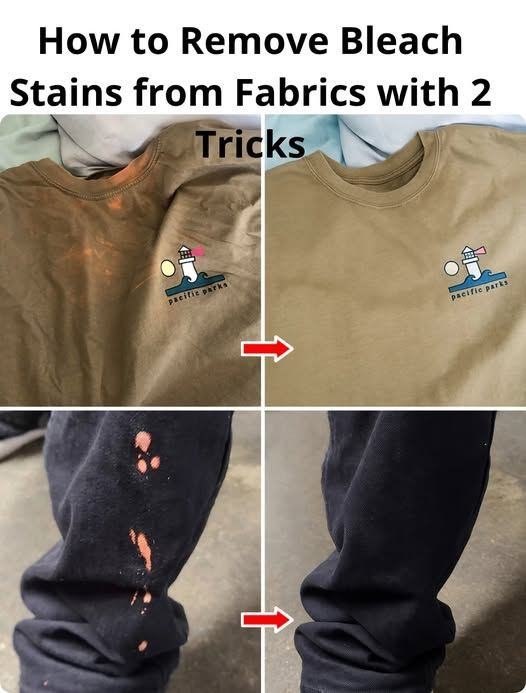
How to Remove Bleach Stains from Fabrics with 2 Simple Tricks
(What actually works—and what doesn’t)
Bleach stains are one of the most frustrating laundry accidents. One small splash, and suddenly your favorite shirt has an ugly orange or white spot that looks impossible to fix.
Here’s the honest truth upfront (and it matters):
👉 Bleach doesn’t leave a stain—it removes color.
So you can’t truly “wash it out.”
But you can neutralize it, disguise it, or restore the look of the fabric—and often save the item.
Below are two proven, practical tricks that actually help, depending on the fabric and situation.
First: Stop the Bleach From Spreading (Do This Immediately)
Before any fix works, you must stop the bleach reaction.
What to do right away:
-
Rinse the area thoroughly with cold water
-
Gently blot (don’t rub)
-
Pat dry with a towel
This prevents the bleach from continuing to strip color.
Now, choose the trick that fits your situation.
Trick #1: Use White Vinegar to Neutralize Bleach
Best for fresh bleach spots
Why This Works
Bleach is alkaline. White vinegar is acidic. Vinegar neutralizes leftover bleach, stopping further damage and preventing yellowing.
This trick won’t restore lost color, but it can:
-
Prevent the stain from getting larger
-
Reduce harsh orange tones
-
Stabilize the fabric
What You’ll Need
-
White distilled vinegar
-
Cold water
-
Clean cloth or sponge
Step-by-Step
-
Mix 1 tablespoon white vinegar + 1 cup cold water
-
Dab the solution onto the bleach spot
-
Let it sit for 5 minutes
-
Rinse with cold water
-
Air dry
⚠️ Important:
Do not mix vinegar and bleach directly. Always rinse first.
Best For
-
Cotton
-
Denim
-
T-shirts
-
Fresh bleach splashes
Trick #2: Recolor the Spot (Fabric Marker or Dye Method)
Best for visible, set-in bleach stains
Since bleach removes dye, the most effective “removal” is adding color back.
Option A: Fabric Marker (Small Spots)
Best for:
-
Tiny bleach dots
-
Dark fabrics
-
Quick fixes
How to do it:
-
Choose a fabric marker that closely matches the color
-
Test on an inside seam
-
Lightly color the bleached area
-
Let dry fully
-
Heat-set if instructions recommend it
This works especially well on black, navy, and dark gray clothing.
Option B: Fabric Dye (Larger Stains)
Best for:
-
Larger bleach areas
-
Light-colored clothing
-
When you’re okay with changing the overall color
How to do it:
-
Use a commercial fabric dye (follow package instructions)
-
Dye the entire garment for even results
-
Rinse and wash separately
Many people intentionally re-dye a bleached item darker—or even embrace a tie-dye look.
What NOT to Do (Common Mistakes)
❌ Scrub aggressively (damages fibers)
❌ Use hot water (sets damage)
❌ Apply more bleach to “even it out”
❌ Expect bleach stains to disappear completely
If someone claims bleach stains can be magically erased—they’re misleading you.
Can You Fix Bleach Stains on Different Fabrics?
| Fabric Type | Fixable? | Best Method |
|---|---|---|
| Cotton | Yes | Vinegar + dye |
| Denim | Yes | Fabric marker or dye |
| Polyester | Sometimes | Fabric marker |
| Wool | Difficult | Professional help |
| Silk | Risky | Dry cleaner only |
Pro Tip: Turn the Mistake Into Style
Some bleach stains can become design choices:
-
Intentional tie-dye
-
Distressed denim
-
Cropped or altered clothing
-
Iron-on patches or embroidery
Many fashion trends started as “laundry accidents.”
Final Takeaway
You can’t undo bleach—but you can outsmart it.
Remember:
-
Vinegar stops damage
-
Color restores appearance
-
Speed matters
-
Creativity saves clothes
Before tossing that shirt, try one of these two tricks. You might be surprised how wearable it becomes.
💬 Have a stubborn bleach stain or specific fabric?
Tell me what it is, and I’ll suggest the best fix.