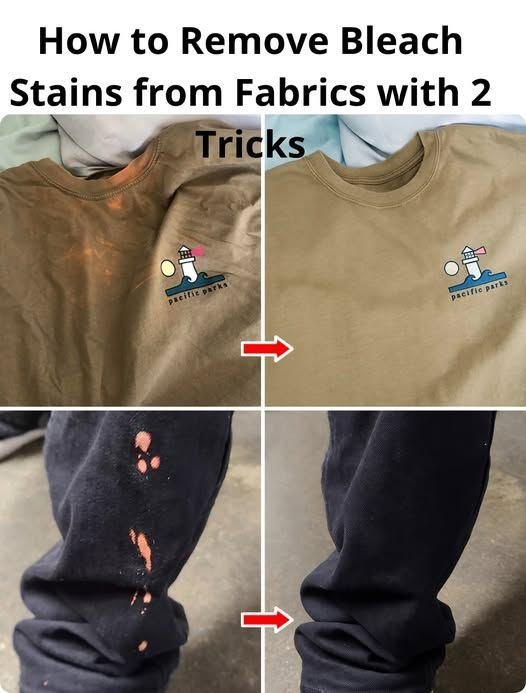
How to Remove Bleach Stains from Fabrics with 2 Surprisingly Effective Tricks (That Actually Work)
Bleach stain panic? Learn two proven fabric-safe tricks to fix bleach stains on clothes, carpets, and upholstery—step-by-step, no gimmicks.
Introduction: The Bleach Stain Moment Every American Has Had
You’re cleaning fast. Multitasking. Maybe wiping down the bathroom or tossing whites into the washer.
Then it happens.
A tiny splash.
A faint drip.
And suddenly—boom—a pale orange, pink, or white blotch on your favorite shirt, towel, or couch fabric.
If you’ve ever searched “how to remove bleach stains” in pure frustration, you’re not alone. In U.S. households, bleach is still one of the most commonly used cleaning products—and also one of the most commonly misused.
Here’s the honest truth most articles won’t tell you upfront:
Bleach stains can’t be “removed” in the traditional sense—but they can be fixed, disguised, or reversed visually if you know what you’re doing.
In this in-depth guide, you’ll learn two proven, fabric-safe tricks that actually work in real life—not hacks copied from forums. We’ll walk through:
-
Why bleach stains look the way they do
-
When a stain is fixable (and when it’s not)
-
Step-by-step instructions for both tricks
-
Real-world examples from clothing, carpets, and upholstery
-
Common mistakes that permanently ruin fabrics
-
What professionals do differently
-
FAQs Americans search for most
No hype. No false promises. Just practical solutions you can use today.
Understanding Bleach Stains: What’s Really Happening to Your Fabric
Bleach Doesn’t “Stain”—It Removes Color
This is the most important concept to understand.
Bleach is an oxidizing agent. When it touches fabric, it breaks down dye molecules at a chemical level. That’s why:
-
Dark fabrics turn orange, pink, or yellow
-
Lighter fabrics turn white
-
The color never “washes out”
Once the dye is gone, it’s gone.
That’s why throwing the garment back in the washer or scrubbing harder doesn’t help—and often makes things worse.
Why Bleach Stains Look Orange or Pink (Not White)
Many fabrics, especially cotton and polyester blends, use layered dyes. Bleach removes darker pigments first, leaving behind warmer undertones like:
-
Rust
-
Peach
-
Pink
-
Yellow
This is especially common in:
-
Black t-shirts
-
Navy uniforms
-
Gray sweatshirts
-
Colored towels
Can Bleach Stains Ever Be Fixed?
Yes—but only in two realistic ways:
-
Neutralize and recolor the affected area
-
Re-dye or color-correct the fabric
Anything else claiming to “remove” bleach stains is misleading.
Let’s get into the two tricks that actually work.
Trick #1: Recolor the Bleach Spot (Targeted Color Restoration)
Best For:
-
Small bleach spots or splashes
-
Shirts, jeans, towels, or fabric couches
-
When you don’t want to re-dye the entire item
This method works by adding color back where bleach removed it.
What You’ll Need
-
Fabric dye or permanent fabric marker (matching color)
-
Rubbing alcohol or water
-
Cotton swabs or a small paintbrush
-
Paper towel
-
Gloves (recommended)
Step-by-Step Instructions
Step 1: Test First (Non-Negotiable)
Always test the dye or marker on:
-
An inside seam
-
Hemline
-
Hidden corner
Wait 10 minutes to see how the color dries.
Step 2: Prep the Area
-
Lay the fabric flat
-
Place a paper towel underneath to prevent bleeding
-
Lightly dampen the stained area (helps blending)
Step 3: Apply Color Gradually
-
Dab—not rub—the dye or marker onto the bleach spot
-
Start lighter than you think you need
-
Build color slowly
Pro tip: For markers, lightly blot with alcohol afterward to soften harsh edges.
Step 4: Blend and Set
-
Feather the edges outward
-
Let dry completely (at least 24 hours)
-
Heat-set if required (check dye instructions)
Real-Life Example
A black cotton t-shirt with a dime-sized bleach splash can often look nearly new again using a black fabric marker—especially after one wash.
Is it perfect? No.
Is it wearable again? Absolutely.
Pros and Cons
Pros
-
Affordable
-
Fast
-
Works well for small areas
-
No special equipment
Cons
-
Not ideal for large stains
-
Color matching takes patience
-
May fade over time
Trick #2: Re-Dye the Entire Fabric (The Professional Fix)
Best For:
-
Large bleach stains
-
Towels, jeans, hoodies, curtains
-
When you want a uniform finish
This is the most reliable and long-lasting solution.
Why Re-Dyeing Works
Instead of hiding the damage, you’re:
-
Restoring overall color
-
Masking uneven bleach damage
-
Giving the item a second life
Many Americans successfully re-dye:
-
Work uniforms
-
Athletic wear
-
Bath towels
-
Couch covers
What You’ll Need
-
Fabric dye (fiber-appropriate)
-
Large container or washing machine
-
Hot water
-
Salt or dye fixative (if recommended)
-
Gloves
Step-by-Step Instructions
Step 1: Identify Fabric Type
Check the label:
-
Cotton, linen, rayon = easiest
-
Polyester blends = require special dye
-
Acrylic or nylon = unpredictable results
Step 2: Pre-Wash the Item
Wash without fabric softener.
This removes residues that block dye absorption.
Step 3: Prepare the Dye Bath
Follow manufacturer instructions exactly.
Use enough water so fabric moves freely.
Step 4: Dye Evenly
-
Submerge fully
-
Stir continuously for even coverage
-
Time matters—set a timer
Step 5: Rinse and Set
Rinse until water runs clear.
Heat-set or air-dry as instructed.
Pro Tip for Best Results
Dye the fabric darker than its original color.
Light-to-dark works far better than dark-to-light.
Pros and Cons
Pros
-
Long-lasting
-
Uniform appearance
-
Best for large stains
-
Looks intentional
Cons
-
More time-consuming
-
Requires careful prep
-
Color is permanent
Common Bleach Stain Mistakes (That Ruin Fabrics)
Avoid these at all costs:
-
❌ Using vinegar or baking soda (does nothing for color loss)
-
❌ Scrubbing aggressively (damages fibers)
-
❌ Mixing chemicals (dangerous and ineffective)
-
❌ Re-bleaching to “even it out” (makes it worse)
-
❌ Throwing it in the dryer before fixing (sets damage)
Special Fabric Scenarios (US Household Favorites)
Towels
Re-dyeing works extremely well due to absorbency.
Jeans
Indigo dye responds well to recoloring or full re-dye.
Upholstery
Spot recoloring with fabric markers is often the safest option.
Carpets
Professional recoloring pens are commonly used by restoration technicians.
Safety Tips Every Household Should Follow
-
Never mix bleach with ammonia or vinegar
-
Wear gloves when dyeing
-
Ventilate the area
-
Keep chemicals away from kids and pets
These aren’t optional—they’re essential.
Latest Trends: Why “Fixing” Clothes Is Back
With rising clothing costs and sustainability awareness, more Americans are choosing to:
-
Repair instead of replace
-
Customize damaged clothing
-
Embrace visible mending and dye art
What used to be a “ruined shirt” is now a DIY opportunity.
Frequently Asked Questions (People Also Ask)
1. Can bleach stains be reversed?
No, but they can be visually corrected using dye or recoloring techniques.
2. Does hydrogen peroxide fix bleach stains?
No. Hydrogen peroxide is also a bleaching agent.
3. Can black clothes be fixed after bleach?
Yes, often very successfully with fabric dye or markers.
4. Will washing fade the fix?
Spot fixes may fade slightly; full re-dyeing lasts longer.
5. Are bleach stains permanent?
The color loss is permanent—but appearance doesn’t have to be.
6. Can professionals fix bleach stains?
Yes, especially on carpets and upholstery.
7. Does fabric type matter?
Absolutely. Natural fibers respond best.
8. Can I use regular markers?
No. Only fabric-safe or alcohol-based markers work.
9. Is re-dyeing safe for washing machines?
Yes, when done properly and followed by a cleaning cycle.
Final Thoughts: Bleach Stains Don’t Have to Be the End
A bleach stain feels final—but it usually isn’t.
With the two proven tricks you’ve learned here:
-
Targeted recoloring for small spots
-
Full re-dyeing for major damage
You can rescue clothes, save money, and reduce waste—without falling for internet myths.
Before you toss that shirt, towel, or couch cover, give it one more chance.
👉 Your Turn
Have you successfully fixed a bleach stain—or totally ruined one?
Drop your experience in the comments, share this guide with a friend, and explore more practical fabric-care solutions right here.
Your laundry deserves a comeback.