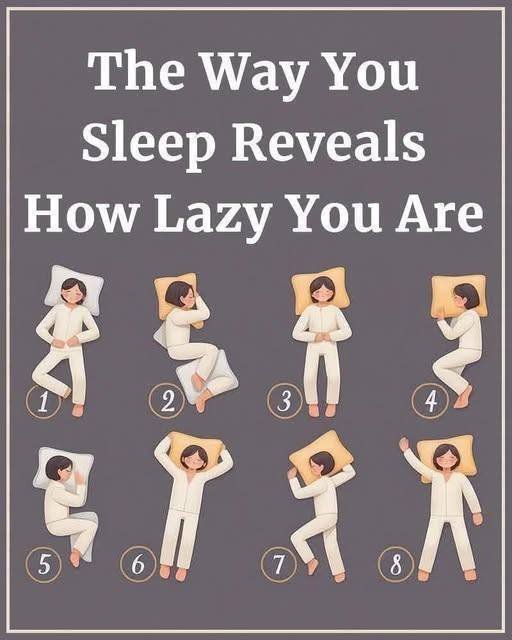
How Your Sleep Position Might Reveal If You’re Lazy—What Science Actually Says
Your sleep position could hint at personality traits—or maybe it doesn’t. Discover what research says about how we sleep and what it might reveal about us.
Introduction
Ever hear someone say:
“If you sleep like this, you must be lazy.”
It sounds catchy, even a little judgmental—but how much truth is there behind it?
Sleep positions are often linked to comfort, health, and sometimes personality. Viral quizzes and social media posts love to assign traits like laziness, leadership, or neuroticism based on how you sleep.
In this guide, we’ll explore:
-
The most common sleep positions
-
What research actually says about sleep habits and personality
-
Why these claims can be misleading
-
Practical tips for better sleep and self-awareness
By the end, you’ll know whether your sleep position says more about comfort or character.
Common Sleep Positions and Their Traits
1. The Fetal Position
-
Curling up on your side with knees drawn toward your chest
-
Often considered the most popular position
Claims: People who sleep like this are sensitive, introverted, or cautious. Some viral posts say: “Fetal sleepers are lazy or avoid responsibility.”
Reality: Research shows the fetal position is mostly about comfort and warmth. It’s common among people of all energy levels. Laziness has no scientific correlation here.
2. The Soldier Position
-
Lying on your back with arms straight at your sides
-
Often considered a “disciplined” or “reserved” position
Claims: Social media sometimes calls these people “perfectionists who avoid exertion.”
Reality: Back sleeping can reduce acid reflux and support spinal alignment. Personality correlations are weak and not proven scientifically.
3. The Starfish Position
-
Lying on your back with arms up near your head
-
Said to be friendly but sometimes “lazy”
Reality: Starfish sleeping can strain shoulders but is generally about relaxation. Laziness claims are purely speculative.
4. The Log Position
-
Sleeping on your side with arms down, like a log
-
Often called easygoing or social
Reality: Side sleeping promotes better digestion and reduces snoring. Personality traits assigned online are anecdotal, not research-backed.
5. The Freefall Position
-
Lying on your stomach with hands around the pillow
-
Viral posts often say: “These people are reckless or lazy”
Reality: Stomach sleeping can strain the neck but is usually about comfort, not character.
Why People Link Sleep Positions to Personality
-
The Barnum Effect
-
Broad statements feel personal and accurate, even if they’re vague.
-
-
Social Sharing
-
Quizzes that link traits to sleep positions are fun and shareable.
-
-
Pattern-Seeking Brain
-
Humans like to find meaning in random behavior.
-
While entertaining, these correlations are mostly cultural storytelling, not science.
What Sleep Positions Actually Reveal
Sleep positions often reflect:
-
Comfort needs: Support for spine, shoulders, or joints
-
Temperature regulation: Some positions trap warmth better
-
Health conditions: Acid reflux, snoring, or pregnancy may influence position
-
Habit: Long-term behaviors that feel relaxing
They do not reliably indicate laziness, ambition, or personality flaws.
Common Mistakes People Make
-
Judging themselves or others based on viral posts
-
Assuming one night reflects all habits—sleep positions vary nightly
-
Overgeneralizing traits without scientific backing
Tips for Better Sleep, Regardless of Position
| Tip | Why It Helps |
|---|---|
| Sleep on your side for comfort and reduced snoring | Aligns spine and eases digestion |
| Use supportive pillows | Reduces neck and shoulder strain |
| Keep a consistent sleep schedule | Supports natural circadian rhythms |
| Avoid screens before bed | Improves sleep quality |
| Experiment with positions | Comfort is more important than myths about personality |
FAQs
Q1: Can my sleep position really reveal laziness?
No. Sleep positions mostly reflect comfort, health, and habit, not personality.
Q2: Does sleeping on your stomach mean I’m reckless?
No. It’s simply a comfortable position for some people, despite potential neck strain.
Q3: Can changing positions improve sleep quality?
Yes. Side sleeping or back sleeping with support can reduce pain and improve rest.
Q4: Are there positions linked to better health?
Side and back sleeping generally support spine alignment, digestion, and reduced snoring.
Q5: Can I change my preferred sleep position?
It’s possible, but comfort and habit usually dominate. Use pillows or gradual adjustments.
Final Thoughts
Sleep positions are fascinating windows into comfort and habit—but they don’t define your character or laziness.
Enjoy learning about your sleep habits, focus on comfort and health, and don’t let viral myths assign labels to you.
Call-to-Action
Do you know your preferred sleep position? Try tracking it for a week and share your findings below. You might discover patterns that help you sleep better—without worrying about labels!