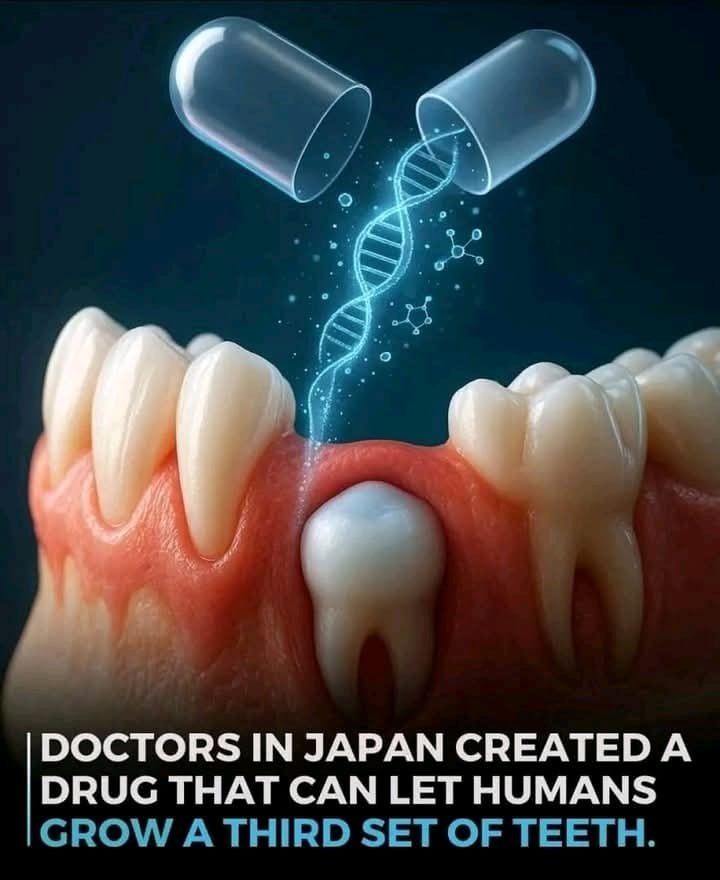
Humans May Soon Regrow Lost Teeth! | The Future of Dentistry
Imagine a future where losing a tooth doesn’t mean implants, bridges, or dentures—but growing a brand-new natural tooth instead. Thanks to breakthroughs in regenerative medicine and dental science, researchers believe humans may soon be able to regrow lost teeth.
This exciting possibility could transform dentistry forever. In this article, we’ll explore how tooth regeneration works, the latest scientific developments, and what this means for the future of dental care.
Disclaimer: This article discusses emerging research and future possibilities. Tooth regrowth is not yet available as a standard dental treatment.
Why Humans Can’t Regrow Teeth—Yet
Unlike sharks or reptiles, humans only develop two sets of teeth:
-
Primary (baby) teeth
-
Permanent (adult) teeth
Once adult teeth are lost, the body lacks the natural ability to replace them. However, tooth-forming stem cells still exist in our jaws, and scientists are learning how to activate them.
The Science Behind Tooth Regeneration
1. Stem Cell Research
Researchers have identified dental stem cells in:
-
Dental pulp
-
Periodontal ligament
-
Jawbone tissue
These stem cells can potentially be guided to form new tooth structures such as enamel, dentin, and roots.
2. Tooth Germ Technology
A tooth germ is the early developmental structure that forms a tooth.
Scientists have successfully:
-
Grown tooth germs in laboratory settings
-
Implanted them into animal jaws
-
Observed natural tooth eruption and function
This suggests that biological tooth replacement is possible.
3. Gene Activation (USAG-1 Protein Research)
Recent studies focus on blocking a protein called USAG-1, which suppresses tooth growth.
By inhibiting this protein:
-
Tooth development genes are reactivated
-
New teeth have grown in animal models
This research has sparked major excitement in the dental world.
Recent Breakthroughs That Spark Hope
Animal Trials Show Success
In laboratory studies:
-
Mice and ferrets successfully regrew functional teeth
-
Teeth developed roots, nerves, and blood supply
Human clinical trials are expected in the coming years, according to researchers involved in regenerative dentistry.
What Regrown Teeth Could Mean for Dentistry
If successful, tooth regeneration could:
-
Eliminate the need for dental implants
-
Provide a fully natural replacement
-
Reduce long-term dental costs
-
Improve oral health outcomes
Unlike implants, regrown teeth would:
-
Integrate naturally with the jawbone
-
Respond to pressure and temperature
-
Repair themselves like natural teeth
How Close Are We to Regrowing Human Teeth?
While promising, tooth regeneration is still in the research and trial phase.
Experts estimate:
-
Initial human trials may begin within this decade
-
Widespread availability could take 10–20 years
-
Safety, ethics, and long-term success must be proven
Will Everyone Be Eligible?
Future treatments may depend on:
-
Age
-
Jawbone health
-
Genetic factors
-
Overall oral health
People who lost teeth due to trauma may be ideal candidates early on.
How This Could Change the Dental Industry
The ability to regrow teeth could:
-
Shift dentistry toward regenerative care
-
Reduce invasive procedures
-
Increase focus on biological treatments
Dentists may one day act more like oral tissue engineers than surgeons.
What You Can Do Now
While waiting for future treatments:
-
Maintain good oral hygiene
-
Protect natural teeth
-
Attend regular dental checkups
-
Avoid smoking and excess sugar
Preserving jawbone health is essential for any future regenerative procedures.
Final Thoughts
The idea that humans may soon regrow lost teeth is no longer science fiction. With advances in stem cell therapy, gene regulation, and tissue engineering, the future of dentistry looks more natural and revolutionary than ever before.
Although it’s not available yet, the research is real—and the possibilities are exciting.
Frequently Asked Questions (FAQs)
Can humans regrow teeth now?
No, not yet. Current options remain implants, bridges, or dentures.
Is tooth regrowth safe?
Safety testing is ongoing. Long-term studies are required before approval.
Will regrown teeth be stronger than implants?
They may offer better biological integration, but comparisons are still under research.