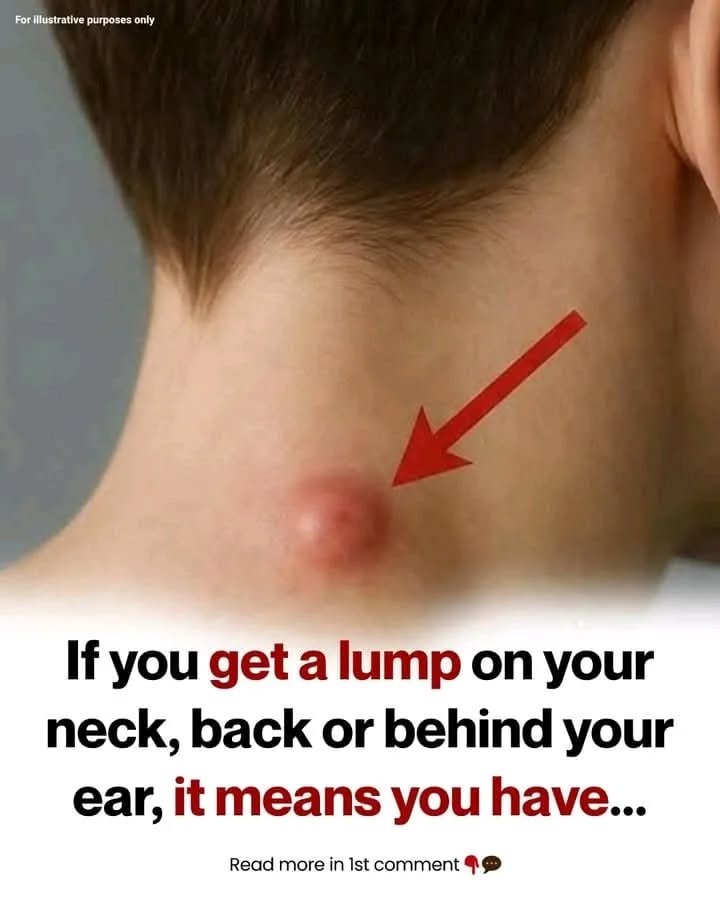
If You Get a Lump on Your Neck, Back, or Behind Your Ear: What It Really Means
Finding a lump on your neck, back, or behind your ear can be alarming. Your mind may instantly jump to worst-case scenarios, and that anxiety is completely natural. The good news? Most lumps in these areas are harmless and temporary, often caused by common and treatable conditions.
This detailed guide will help you understand what these lumps usually mean, when they’re harmless, and when you should take them seriously. Whether you’ve just noticed a small swelling or have had one for a while, this article will walk you through everything you need to know in clear, simple language.
Understanding Lumps in the Neck, Back, and Behind the Ear
A lump is any unusual swelling or mass that appears under the skin. These lumps can vary in size, texture, and tenderness. Some may feel soft and movable, while others might be firm or fixed in place.
The neck, upper back, and area behind the ear contain:
-
Lymph nodes
-
Muscles
-
Fat tissue
-
Skin glands
-
Blood vessels
Because so many structures exist in these areas, there are multiple possible reasons a lump can develop.
The Most Common Cause: Swollen Lymph Nodes
What Are Lymph Nodes?
Lymph nodes are small, bean-shaped glands that are part of your immune system. They help your body fight infections by trapping bacteria, viruses, and other harmful substances.
Why Do They Swell?
Lymph nodes commonly swell when your body is dealing with an infection, such as:
-
A cold or flu
-
Sore throat
-
Ear infection
-
Dental infection
-
Skin infection
When this happens, you may feel a lump:
-
On the sides of your neck
-
At the back of your neck
-
Behind your ear
How They Usually Feel
-
Soft or rubbery
-
Slightly painful or tender
-
Movable under the skin
In most cases, swollen lymph nodes return to normal size within a few days or weeks once the infection clears.
Cysts: A Very Common and Harmless Cause
What Is a Cyst?
A cyst is a closed sac under the skin that may be filled with fluid, air, or semi-solid material.
Key Characteristics
-
Usually painless
-
Smooth and round
-
Slow-growing
-
Can appear on the neck, back, or behind the ear
Cysts are generally non-cancerous. They only need treatment if they become infected, painful, or cosmetically bothersome.
Lipomas: Soft Fatty Lumps
What Is a Lipoma?
A lipoma is a benign growth made of fat cells. It’s one of the most harmless causes of lumps under the skin.
How to Recognize a Lipoma
-
Soft and squishy
-
Painless
-
Moves easily when touched
-
Grows very slowly
Lipomas are common on the back and neck and usually do not require treatment unless they cause discomfort.
Muscle Knots and Tension-Related Lumps
Sometimes, what feels like a lump is actually a tight muscle knot.
Causes
-
Poor posture
-
Long hours at a desk or phone use
-
Stress and anxiety
-
Muscle strain
Symptoms
-
Pain when pressed
-
Stiffness in the neck or shoulders
-
Pain that improves with massage or stretching
These are not dangerous and often improve with rest, heat therapy, and posture correction.
Skin Infections and Boils
A painful lump with redness or warmth may be due to a skin infection.
Signs of Infection
-
Red, swollen skin
-
Pain or throbbing
-
Pus formation
-
Warmth around the lump
Boils and abscesses occur when bacteria infect a hair follicle or skin gland. These often need medical treatment, such as antibiotics or drainage.
Less Common but Serious Causes
While rare, some lumps may indicate a more serious condition and should not be ignored.
Warning Signs to Watch For
Seek medical attention if a lump:
-
Is hard and does not move
-
Continues growing over time
-
Lasts longer than 2–3 weeks
-
Is painless but persistent
-
Is accompanied by unexplained weight loss
-
Comes with night sweats or ongoing fever
In rare cases, persistent lumps can be linked to conditions like lymphoma or other cancers. Early evaluation is key, and many serious conditions are highly treatable when caught early.
When Should You See a Doctor?
You should consult a healthcare professional if:
-
The lump does not go away after two weeks
-
It rapidly increases in size
-
It becomes very painful
-
You feel generally unwell or fatigued
-
You have difficulty swallowing or breathing
A doctor may perform a physical exam and, if needed, recommend imaging tests or blood work to determine the cause.
What You Should NOT Do
-
Do not repeatedly press or poke the lump
-
Do not attempt to squeeze it
-
Do not self-diagnose using fear-based information
-
Do not ignore it if it keeps growing
Calm observation and professional advice are always the safest approach.
Frequently Asked Questions
Is every lump a sign of cancer?
No. The vast majority of lumps are benign and caused by infections or harmless growths.
Can stress cause lumps?
Stress can cause muscle tension, which may feel like a lump, especially in the neck and shoulders.
Are lumps behind the ear common?
Yes. They are often related to swollen lymph nodes or minor skin issues.
Do painful lumps mean infection?
Pain often suggests inflammation or infection, which is usually treatable.
Can lumps disappear on their own?
Yes. Many lumps, especially swollen lymph nodes, resolve without treatment.
Should I worry about a painless lump?
Painless lumps should still be monitored, especially if they persist or grow.
Can children get these lumps?
Yes. Children commonly get swollen lymph nodes due to frequent infections.
How are lumps diagnosed?
Diagnosis may include a physical exam, ultrasound, blood tests, or biopsy if needed.
Final Thoughts
Finding a lump on your neck, back, or behind your ear can be unsettling, but most lumps are not dangerous. Infections, cysts, and muscle tension are far more common causes than serious disease.
The key is to pay attention to your body, monitor changes, and seek medical advice when something doesn’t feel right. Early evaluation brings peace of mind and, when necessary, timely treatment.
Take Action
If you’ve noticed a lump and feel unsure, don’t panic — but don’t ignore it either. A simple check-up can provide clarity and reassurance.
If you found this article helpful, consider sharing it with others who may have similar concerns. Knowledge reduces fear — and your health is always worth attention.