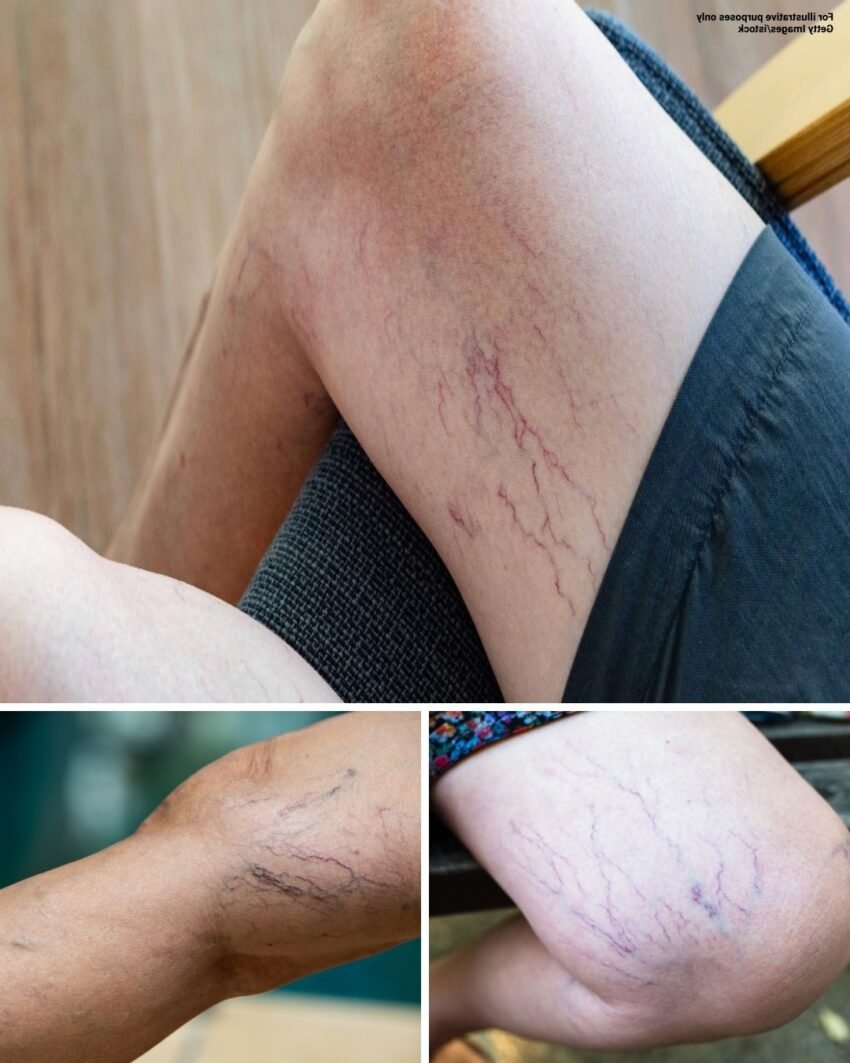
If You Have Purple Veins on Your Legs, It Could Mean This
Purple veins on the legs are a common concern, especially as people age or spend long hours standing. While sometimes harmless, they can also signal underlying circulatory or vascular issues. Understanding the cause is key to preventing complications and maintaining leg health.
What Purple Veins on the Legs Are
Purple veins, often visible just under the skin, are usually varicose veins or spider veins.
-
Varicose veins: Large, swollen, twisted veins that bulge out of the skin
-
Spider veins: Smaller, web-like veins that appear red, blue, or purple
These veins result from weakened vein walls or faulty valves, which allow blood to pool instead of flowing back to the heart.
Common Causes of Purple Veins
-
Genetics
Family history plays a major role. If your parents had varicose veins, you are more likely to develop them. -
Aging
Veins lose elasticity over time, causing them to stretch and valves to weaken. -
Prolonged Standing or Sitting
Jobs that involve long periods of standing or sitting can increase pressure in the leg veins. -
Hormonal Changes
Pregnancy, menopause, or birth control pills can affect vein health. -
Obesity
Excess weight increases pressure on veins, making them more prone to bulging. -
Blood Clot History
Previous deep vein thrombosis (DVT) or clots can damage veins and lead to visible purple veins.
When Purple Veins Are a Warning Sign
Purple veins can be harmless, but sometimes they indicate serious health concerns:
-
Chronic Venous Insufficiency: Veins struggle to return blood to the heart, causing swelling and skin changes
-
Blood Clots: Painful, swollen, or warm areas along with purple veins may require urgent medical attention
-
Venous Ulcers: Long-term venous insufficiency can lead to skin sores near the ankles
How to Improve Leg Vein Health
1. Stay Active
-
Walking, swimming, and cycling improve blood circulation in the legs.
2. Elevate Your Legs
-
Raise your legs above heart level for 15–20 minutes daily to reduce pressure.
3. Wear Compression Stockings
-
Help improve blood flow and reduce swelling in leg veins.
4. Maintain a Healthy Weight
-
Reduces strain on veins and prevents further damage.
5. Avoid Long Periods of Standing or Sitting
-
Take short walking breaks or stretch your legs to encourage circulation.
6. Seek Medical Advice
-
If veins are painful, swollen, or accompanied by skin changes, consult a vascular specialist.
Treatments for Purple Veins
-
Sclerotherapy: Injection of a solution to shrink veins
-
Laser Therapy: Non-invasive option for spider veins
-
Vein Stripping or Ablation: For severe varicose veins
Final Thoughts
Purple veins on the legs are often a sign of weakened veins or poor circulation, but in some cases, they indicate serious vascular issues. Early lifestyle adjustments and medical consultation can prevent complications, relieve discomfort, and improve leg appearance.