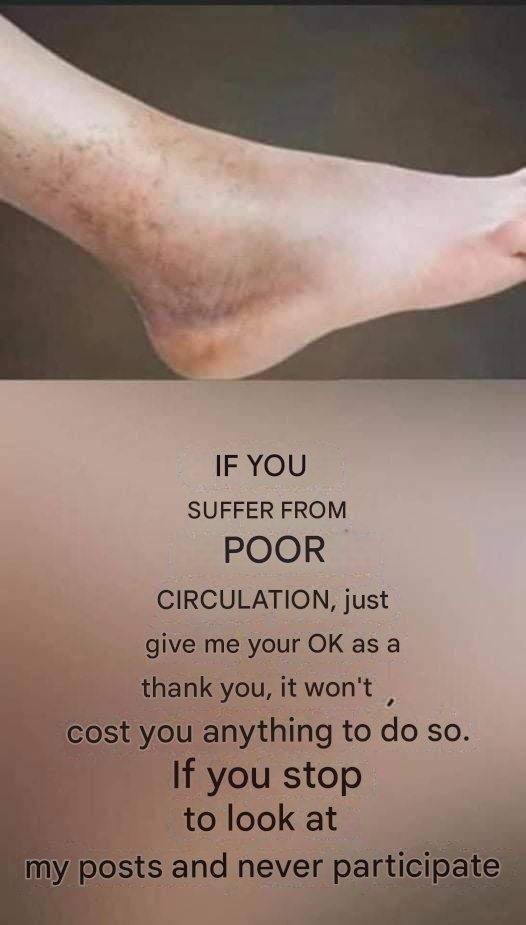
If You Suffer from Poor Circulation and Your Legs Feel Like This, Here Is the Solution
Introduction: When Your Legs Are Trying to Tell You Something
Do your legs often feel:
-
Heavy or tired
-
Cold, even in warm weather
-
Numb or tingly
-
Crampy or achy after short walks
If so, you’re not alone. These sensations are commonly linked to poor circulation in the legs, a condition that affects millions of people—especially as they get older.
Poor circulation isn’t just uncomfortable. Over time, it can impact mobility, energy levels, and overall quality of life. The encouraging news is that circulation can often be improved with the right combination of daily habits, nutrition, and targeted lifestyle changes.
This article explains:
-
What poor circulation really feels like
-
Why it happens
-
Who is most at risk
-
Practical, safe solutions that actually help
-
When to seek medical advice
Everything here is informational, realistic, and focused on long-term leg health.
What Does Poor Circulation in the Legs Feel Like?
Circulation problems don’t always announce themselves loudly. They often start quietly and gradually.
Common Sensations in the Legs
-
Persistent cold feet or toes
-
Tingling or “pins and needles”
-
Heaviness or fatigue while standing
-
Cramping during walking that improves with rest
-
Swelling around ankles or calves
-
Skin that looks pale, bluish, or shiny
-
Slow-healing cuts or sores
These symptoms happen because blood isn’t flowing efficiently, meaning muscles and nerves aren’t getting enough oxygen and nutrients.
Why Poor Circulation Happens
Blood circulation relies on healthy blood vessels, strong heart function, and regular movement. Problems arise when one or more of these systems is compromised.
Common Causes
-
Prolonged sitting or inactivity
-
Aging-related vessel stiffness
-
Smoking history
-
Diabetes
-
High blood pressure
-
High cholesterol
-
Excess body weight
-
Dehydration
In some people, circulation problems are mild and functional. In others, they may signal underlying vascular conditions that need medical care.
Why the Legs Are Affected First
The legs are farthest from the heart and work against gravity to return blood upward. This makes them especially vulnerable to circulation issues.
Factors that worsen leg circulation include:
-
Weak calf muscles
-
Poor valve function in veins
-
Long periods of standing or sitting
-
Reduced physical activity
When circulation slows, blood can pool in the lower legs, causing discomfort and fatigue.
The Real Solution: Improving Circulation Naturally and Safely
There is no single “magic fix,” but a combination approach works remarkably well for most people.
1. Move Your Legs Daily (Even Gently)
Movement is one of the most powerful circulation boosters.
Effective options include:
-
Walking 15–30 minutes daily
-
Seated leg lifts
-
Ankle rotations
-
Heel-to-toe rocking
-
Gentle stretching
Movement activates the calf muscles, which act like a pump to push blood back toward the heart.
2. Support Circulation Through Nutrition
Certain nutrients help maintain healthy blood vessels and improve blood flow.
Helpful Nutrients
-
Potassium (supports muscle function)
-
Magnesium (helps blood vessel relaxation)
-
Omega-3 fatty acids (reduce inflammation)
-
Antioxidants (protect vessel walls)
Foods that support circulation include:
-
Leafy greens
-
Fatty fish
-
Berries
-
Beets
-
Nuts and seeds
Hydration is just as important—thickened blood flows more slowly.
3. Elevate Your Legs Properly
Elevating your legs allows gravity to assist blood return.
How to do it correctly:
-
Lie down and raise legs above heart level
-
Use pillows or a footrest
-
Hold for 15–20 minutes
This can reduce swelling and relieve heaviness, especially after long days.
4. Improve Blood Flow With Temperature and Massage
Warmth
-
Warm showers or foot soaks relax blood vessels
-
Avoid extreme heat if you have nerve issues
Massage
-
Gentle upward strokes from feet toward knees
-
Helps stimulate blood movement
-
Can reduce stiffness and tension
5. Wear Supportive Footwear and Clothing
Tight clothing around the waist or legs can restrict blood flow.
Helpful choices:
-
Comfortable shoes with good support
-
Loose-fitting pants
-
Compression socks (if recommended by a professional)
Compression garments can be especially helpful for swelling and vein-related issues.
Common Mistakes That Make Circulation Worse
Many people unintentionally worsen circulation by:
-
Sitting for hours without movement
-
Crossing legs frequently
-
Smoking or exposure to smoke
-
Ignoring hydration
-
Wearing tight socks or shoes
-
Relying only on supplements without lifestyle changes
Small daily habits make a big difference.
When Poor Circulation Needs Medical Attention
You should consult a healthcare professional if you experience:
-
Persistent leg pain during walking
-
Non-healing wounds on feet or legs
-
Sudden color changes
-
Severe swelling
-
Numbness that doesn’t improve
-
Skin breakdown or ulcers
These may indicate conditions that require medical evaluation.
Who Is Most at Risk?
Circulation problems are more common in:
-
Adults over 50
-
People with diabetes
-
Smokers (current or former)
-
Individuals with heart or vascular conditions
-
Those with sedentary lifestyles
Awareness allows for earlier intervention.
Frequently Asked Questions
1. Can poor circulation be reversed?
In many cases, circulation can improve significantly with consistent lifestyle changes.
2. Does walking really help circulation?
Yes. Walking is one of the most effective and safest ways to boost leg blood flow.
3. Are cold feet always a circulation problem?
Not always, but persistent coldness can be a sign worth checking.
4. Do supplements improve circulation?
Some nutrients support vascular health, but they work best alongside movement and diet.
5. Is swelling always dangerous?
Occasional swelling can be harmless, but ongoing swelling should be evaluated.
6. Can dehydration affect circulation?
Yes. Dehydration thickens blood and slows flow.
7. Are compression socks safe for everyone?
They’re helpful for many people but should be used under guidance if you have arterial disease.
8. How long before I notice improvement?
Many people notice changes within a few weeks of consistent habits.
Long-Term Outlook: Small Steps, Big Results
Poor circulation doesn’t improve overnight—but it does improve with consistency.
Daily movement, proper hydration, balanced nutrition, and mindful habits can:
-
Reduce leg discomfort
-
Improve energy
-
Support mobility
-
Lower long-term risks
Your legs carry you through life. Supporting their circulation supports your independence.
Conclusion: Don’t Ignore the Signals
If your legs feel heavy, cold, numb, or weak, your body may be asking for better circulation—not resignation.
Start with small changes:
-
Move more
-
Sit less
-
Hydrate well
-
Nourish your body
If symptoms persist or worsen, seek professional guidance early.
Listening to your body today can protect your mobility tomorrow.