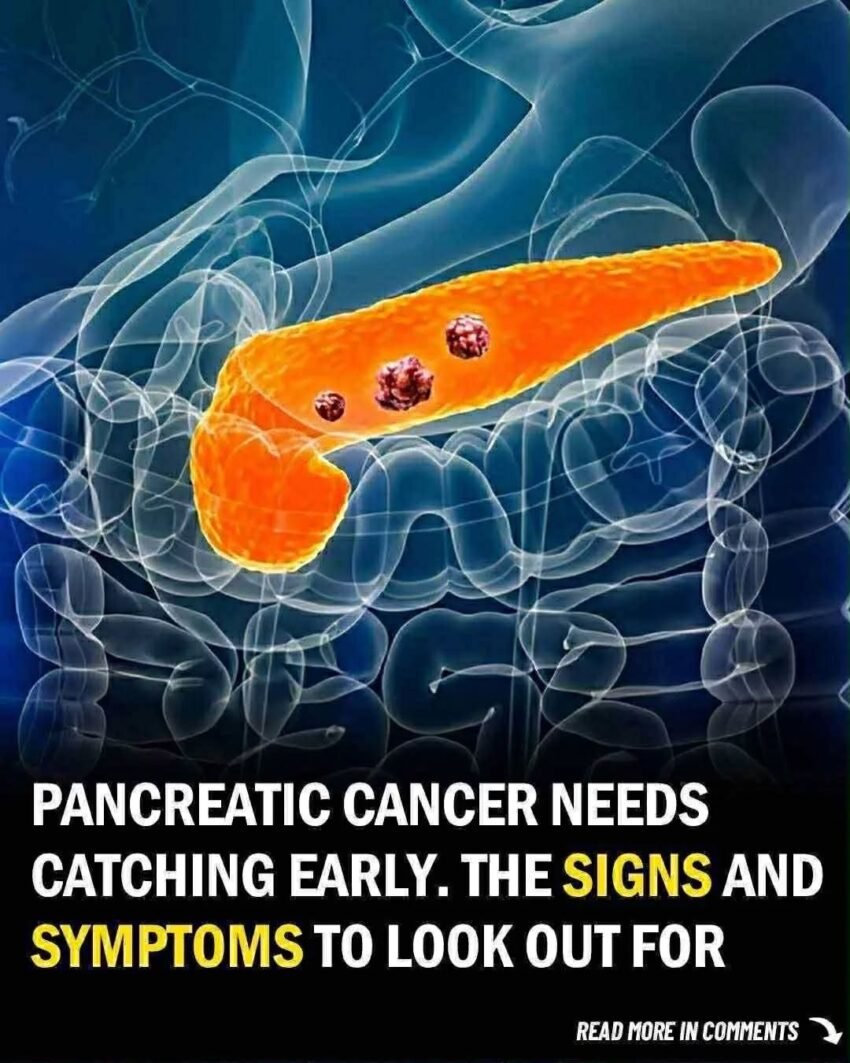
Signs of Pancreatic Cancer You Should Never Ignore 🩺
Pancreatic cancer is one of the most dangerous cancers, largely because it often goes unnoticed until it’s advanced. Early detection is crucial, but the warning signs can be subtle. Recognizing them early could save lives.
⚠️ This article is for educational purposes only. Always consult a doctor if you notice persistent or unusual symptoms.
Why Pancreatic Cancer Is Hard to Detect
-
The pancreas is deep inside the abdomen, so tumors don’t cause early pain.
-
Early symptoms are often vague, like fatigue, mild abdominal discomfort, or digestive changes.
-
By the time noticeable symptoms appear, cancer may have progressed to advanced stages.
Key Signs and Symptoms to Watch For
1. Unexplained Abdominal or Back Pain
-
Pain in the upper abdomen that may radiate to the back
-
Usually worse when lying down or after eating
2. Jaundice (Yellowing of Skin and Eyes)
-
Yellowing of the skin or whites of the eyes
-
Dark urine or pale stools
-
Caused by a tumor blocking the bile duct
3. Unexplained Weight Loss
-
Losing weight without dieting or exercise
-
Often accompanied by loss of appetite
4. Digestive Problems
-
Nausea or vomiting
-
Indigestion, bloating, or oily/fatty stools
-
Difficulty digesting fatty foods
5. New-Onset Diabetes
-
Sudden diabetes or worsening blood sugar in adults over 50
-
Pancreatic tumors can affect insulin production
6. Fatigue and Weakness
-
Persistent tiredness that doesn’t improve with rest
7. Blood Clots
-
Unexplained blood clots in the legs or lungs can be a warning sign
8. Depression or Mood Changes
-
Some studies suggest unexpected mood changes may appear in early stages
Risk Factors That Increase the Chance of Pancreatic Cancer
-
Age over 50
-
Smoking
-
Chronic pancreatitis
-
Family history of pancreatic cancer
-
Obesity and diabetes
Knowing your risk can help you stay alert for early warning signs.
Early Detection Tips
-
Don’t ignore persistent abdominal pain, jaundice, or unexplained weight loss
-
Schedule a checkup if you experience new digestive problems or blood sugar changes
-
Ask your doctor about imaging tests like CT scans or MRIs if you have multiple risk factors
Early detection dramatically increases survival rates. Pancreatic cancer is much more treatable when found early.
Lifestyle Measures to Reduce Risk
-
Quit smoking and limit alcohol intake
-
Maintain a healthy weight and exercise regularly
-
Eat a balanced diet rich in fruits, vegetables, and whole grains
-
Control diabetes and monitor blood sugar levels
Final Thoughts
Pancreatic cancer is a silent but aggressive disease, making awareness of its signs crucial. Persistent abdominal pain, jaundice, unexplained weight loss, and digestive issues should never be ignored.
Early consultation with a healthcare provider can make a huge difference in diagnosis and treatment outcomes.
FAQ: Pancreatic Cancer Symptoms
Q: Is pancreatic cancer always fatal?
No, early detection improves survival rates, and new treatments are improving outcomes.
Q: How is pancreatic cancer diagnosed?
Through imaging tests like CT scans, MRIs, endoscopic ultrasound, and sometimes biopsy.
Q: Can lifestyle changes prevent pancreatic cancer?
While not guaranteed, healthy habits like avoiding smoking, controlling weight, and eating nutritious foods can reduce risk.