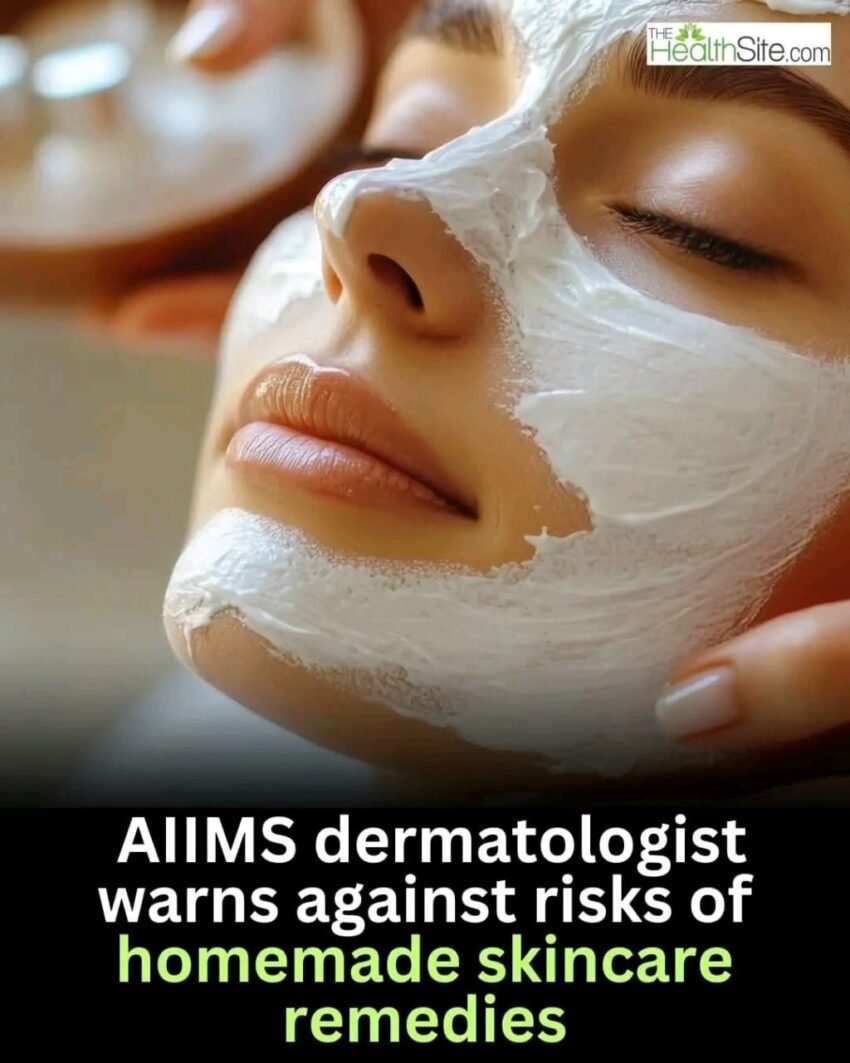
Stop Putting Kitchen Ingredients on Your Face! 🚫 AIIMS Expert Reveals the Shocking Truth About Homemade Skincare
Introduction
In the age of Instagram and TikTok, DIY skincare hacks using kitchen ingredients have become wildly popular. From applying turmeric and lemon juice to yogurt masks, millions are trying to achieve flawless skin naturally.
But before you smear that paste of lemon, honey, or baking soda on your face, AIIMS (All India Institute of Medical Sciences) dermatology experts warn that these practices could do more harm than good. Homemade skincare isn’t always safe, and what seems natural may damage your skin barrier, cause irritation, or trigger infections.
In this article, we reveal the truth about using kitchen ingredients on your skin and provide safer alternatives for glowing, healthy skin.
Why Kitchen Ingredients Can Be Harmful
While fruits, spices, and other ingredients seem harmless, experts caution that their chemical properties can irritate or damage your skin:
-
Acidity – Lemon juice and vinegar have high acidity that can burn or lighten skin unevenly.
-
Alkalinity – Baking soda has a high pH, which disrupts the natural acid mantle of the skin, leading to dryness and sensitivity.
-
Allergens – Honey, turmeric, or even yogurt can trigger allergic reactions, rashes, or redness in some individuals.
-
Unknown concentrations – Commercial skincare products are tested for safe concentrations; DIY mixes are uncontrolled and unpredictable.
Common Kitchen Ingredients People Use on Their Face
Here are some popular DIY ingredients and the risks associated with them:
1. Lemon Juice
-
Claim: Brightens skin and reduces pigmentation
-
Risk: Can cause chemical burns, photosensitivity, and dark patches if exposed to sunlight.
2. Baking Soda
-
Claim: Exfoliates and clears acne
-
Risk: Destroys skin’s natural protective barrier, causing dryness, irritation, and redness.
3. Turmeric
-
Claim: Anti-inflammatory and brightening
-
Risk: Can stain the skin yellow, cause allergic reactions, and may not penetrate properly without a carrier.
4. Honey & Yogurt
-
Claim: Moisturizes and softens skin
-
Risk: Raw honey can carry bacteria, and yogurt can trigger breakouts if left too long or if the skin is sensitive.
AIIMS Expert Advice on Homemade Skincare
According to dermatologists at AIIMS:
-
“Natural does not always mean safe. Skin is delicate, and DIY treatments can lead to permanent damage if misused.”
-
Patch testing is essential before applying anything new on the face.
-
Avoid strong acids and abrasives like lemon juice, vinegar, and baking soda directly on the skin.
-
Consult dermatologists for conditions like acne, pigmentation, or eczema instead of self-medicating with kitchen remedies.
Safe Alternatives to DIY Skincare
Instead of relying on untested kitchen hacks, consider these safer ways to achieve healthy skin:
-
Use dermatologically-tested products
-
Choose products with gentle exfoliants, antioxidants, and moisturizers suitable for your skin type.
-
-
Moisturize naturally
-
Oils like jojoba, argan, or almond oil are safer than raw kitchen ingredients.
-
-
Sun protection
-
Daily use of sunscreen prevents pigmentation, burns, and early aging.
-
-
Healthy lifestyle
-
Drink plenty of water, eat fruits and vegetables, and get adequate sleep for naturally glowing skin.
-
-
Professional treatments
-
Chemical peels, laser therapy, and dermatology-approved facials are controlled and safe for improving skin texture and tone.
-
Common Myths About Homemade Skincare
-
“Natural means no side effects” – False. Natural ingredients can cause allergies or burns.
-
“DIY is cheaper and better” – False. Damage from DIY remedies can lead to costly dermatological treatments later.
-
“More application equals faster results” – False. Overuse increases the risk of irritation, redness, and hyperpigmentation.
Conclusion
Kitchen ingredients may seem like a cheap, natural way to care for your skin, but AIIMS experts warn that they can do more harm than good. From chemical burns and irritation to infections and permanent pigmentation, DIY skincare is not risk-free.
The safest way to achieve healthy, glowing skin is through dermatologist-approved products, gentle natural oils, and a healthy lifestyle. Always remember: your skin deserves care, not experiments.
By following safe skincare practices, you can maintain radiant, healthy skin without risking damage from harmful DIY hacks.