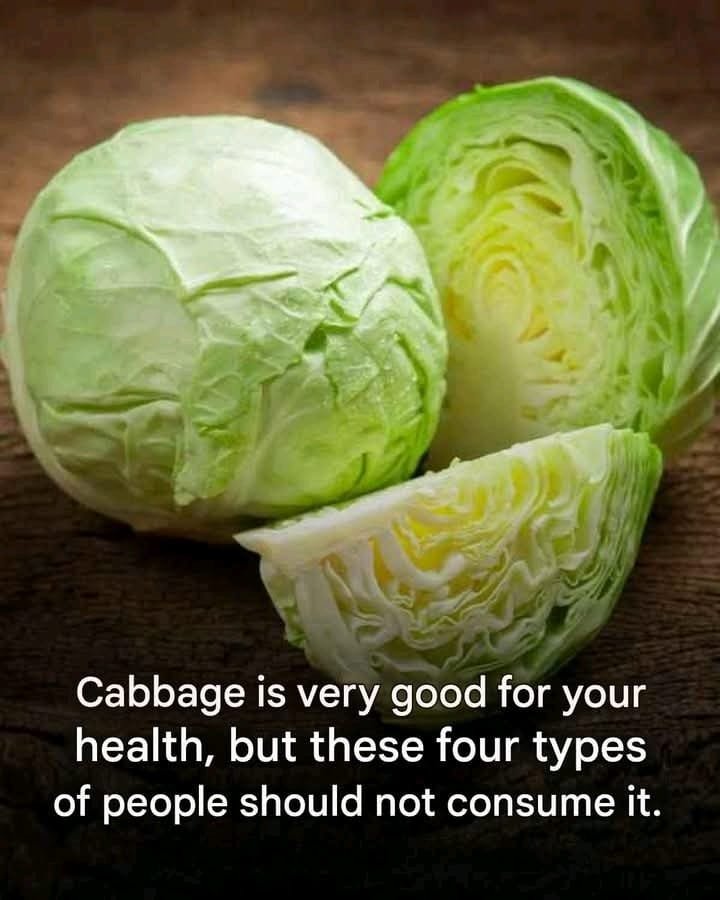
The 4 Types of People Who Shouldn’t Eat Cabbage
Cabbage is often hailed as a superfood—low in calories, rich in fiber, and packed with vitamins like C and K. It can help with digestion, weight management, and even heart health.
However, despite its benefits, cabbage isn’t suitable for everyone. Certain individuals may experience digestive issues, health complications, or interfere with existing medical conditions when consuming it. Here’s who should be cautious.
1. People With Thyroid Problems
Cabbage contains goitrogens, compounds that can interfere with thyroid hormone production.
-
Individuals with hypothyroidism or thyroid issues should limit raw cabbage consumption.
-
Cooking cabbage reduces goitrogenic activity, making it safer in moderation.
-
Excessive raw cabbage can worsen thyroid function, leading to fatigue, weight gain, or hormonal imbalance.
💡 Tip: If you have thyroid problems, consult your doctor before adding raw cabbage to your diet.
2. People With Digestive Disorders
Cabbage is high in fiber and raffinose, a complex sugar that can cause gas and bloating.
-
Those with Irritable Bowel Syndrome (IBS), Crohn’s disease, or sensitive stomachs may experience:
-
Gas and bloating
-
Stomach cramps
-
Diarrhea in some cases
-
-
Cooking cabbage can make it easier to digest, but moderation is key.
💡 Tip: Start with small amounts and monitor your body’s response.
3. People on Blood-Thinning Medication
Cabbage is rich in vitamin K, which plays a crucial role in blood clotting.
-
If you’re taking blood-thinning medications like warfarin, excessive cabbage intake can interfere with your medication’s effectiveness.
-
Sudden increases in vitamin K can reduce the medication’s anticoagulant effect, potentially increasing the risk of clotting.
💡 Tip: Maintain a consistent intake of vitamin K and consult your doctor if you plan to eat more cabbage.
4. People Prone to Kidney Stones
Cabbage contains oxalates, compounds that can contribute to kidney stone formation in susceptible individuals.
-
Those with a history of calcium oxalate kidney stones should avoid excessive cabbage consumption.
-
High-oxalate foods can increase the risk of stone formation and worsen kidney health.
💡 Tip: Pair cabbage with calcium-rich foods to reduce oxalate absorption, or eat it in moderation.
How to Enjoy Cabbage Safely
Even if you fall into one of these categories, you don’t necessarily need to avoid cabbage completely:
-
Cook it instead of eating raw to reduce goitrogens and improve digestibility
-
Moderate your portions—small servings are usually safe
-
Pair it with other vegetables and balanced meals to avoid digestive overload
-
Drink plenty of water when consuming fiber-rich foods
Final Thoughts
Cabbage is a nutritional powerhouse, but it isn’t suitable for everyone. Individuals with thyroid issues, digestive disorders, blood-thinning medication, or a history of kidney stones should exercise caution. By being aware of your health conditions and adjusting consumption, you can still enjoy cabbage safely and reap its benefits.
Frequently Asked Questions (FAQs)
Can I eat cooked cabbage if I have thyroid issues?
Yes, cooking reduces goitrogenic compounds, making it safer in moderation.
How much cabbage is considered safe for kidney stone-prone individuals?
Small servings occasionally are usually fine, but avoid large or frequent consumption.
Does cabbage interfere with all blood-thinning medications?
Primarily with medications like warfarin. Always consult your doctor about dietary changes.