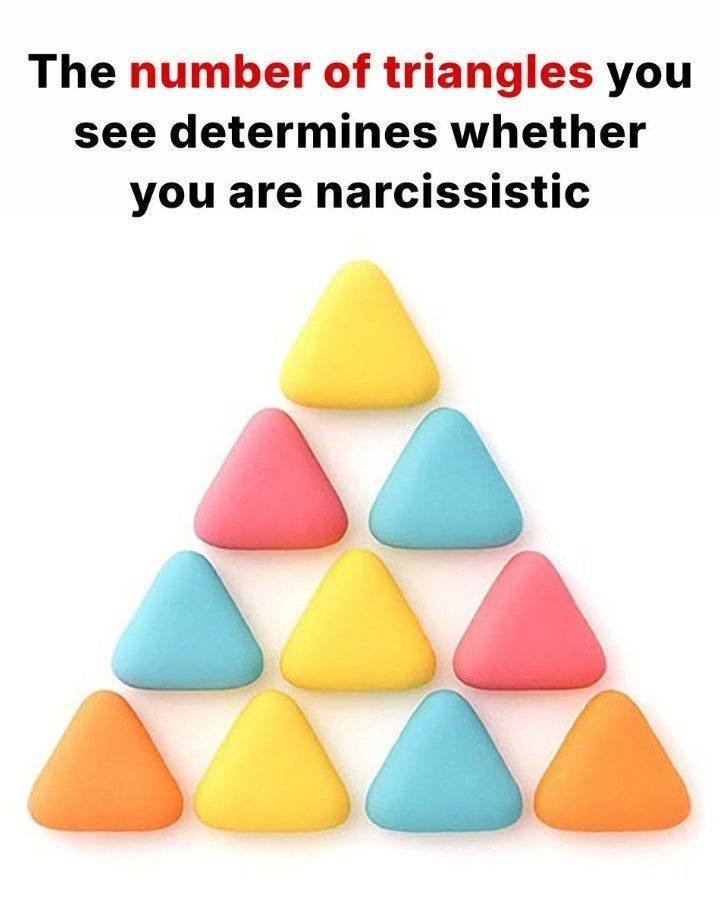
How Many Triangles You See: What This Popular Visual Illusion Really Says About Personality
A viral triangle illusion claims to reveal narcissism. Discover the real psychology behind it, what science says, and how to interpret it responsibly.
Visual puzzles and optical illusions have taken over social media feeds, quizzes, and blog posts. Among them, one claim stands out for its shock value and curiosity factor: “The number of triangles you see reveals if you are narcissistic.”
At first glance, it sounds bold—even unsettling. Can simply counting shapes in an image truly expose something as complex as personality? Or is this just another internet myth dressed up as psychology?
In this in-depth guide, we’ll break down where this idea comes from, why it feels convincing, what psychology actually says, and how to enjoy these tests without falling into misinformation. By the end, you’ll have clarity, critical insight, and a healthier way to look at viral personality trends.
Understanding the Triangle Illusion Phenomenon
The triangle illusion usually shows a geometric image made up of overlapping lines, shapes, or nested patterns. Viewers are asked a simple question:
“How many triangles do you see?”
The answer varies wildly. Some people spot 6. Others see 18. A few claim to find over 40.
Then comes the hook.
Depending on the number counted, the image supposedly reveals traits like:
-
High intelligence
-
Creativity
-
Attention to detail
-
Or… narcissism
This last label is what makes the illusion go viral.
Why the Illusion Feels So Personal
Visual tests feel intimate because they rely on perception, not knowledge. There’s no studying involved. No preparation. Just you and what your brain notices.
That creates three powerful psychological effects:
1. Immediate Emotional Investment
You’ve already answered before you’re told what it means. That makes the result feel earned.
2. Confirmation Bias
If the description matches how you see yourself—or fear others see you—you’re more likely to believe it.
3. Barnum Effect
This is when vague, general statements feel deeply personal. Many personality claims fall into this category.
Together, these effects make the illusion feel revealing, even when it isn’t scientifically grounded.
What Narcissism Actually Means in Psychology
Before we go further, it’s essential to clarify one thing.
Narcissism is not a casual label.
In psychology, narcissism exists on a spectrum. At one end are healthy traits, such as:
-
Confidence
-
Leadership
-
Self-assurance
At the extreme end is Narcissistic Personality Disorder (NPD), a clinically diagnosed condition that includes:
-
Persistent lack of empathy
-
Grandiosity
-
Deep sensitivity to criticism
-
Interpersonal difficulties
Diagnosing narcissism requires:
-
Clinical interviews
-
Long-term behavioral patterns
-
Professional assessment
It cannot be identified through a single image or visual task.
So Where Did This Triangle Claim Come From?
The idea likely evolved from a mix of:
-
Pop psychology articles
-
Misinterpreted perception research
-
Social media engagement tactics
Some perception studies show that people differ in how they process visual information. For example:
-
Some focus on global patterns
-
Others notice small details first
However, no credible research links triangle counting to narcissistic traits.
The claim is a simplification designed to attract clicks—not a reflection of scientific consensus.
What Triangle-Counting Can Reveal (Realistically)
While it doesn’t diagnose personality disorders, this illusion can hint at how your brain processes information.
1. Visual Attention Style
Some people naturally scan for:
-
Large shapes first
-
Symmetry and structure
Others zoom in on:
-
Small details
-
Hidden intersections
Neither approach is better. They’re just different cognitive styles.
2. Pattern Recognition Tendencies
People trained in fields like design, engineering, or mathematics may spot more shapes because they’re accustomed to visual decomposition.
3. Engagement Level
Those who spend more time analyzing the image usually find more triangles. Patience plays a role.
That’s it. No ego measurement required.
Why Narcissism Is a Popular Label Online
The word “narcissistic” spreads fast because it:
-
Provokes emotion
-
Feels socially relevant
-
Taps into modern relationship discourse
In digital culture, complex traits are often reduced to quick labels. Unfortunately, this leads to:
-
Oversimplification
-
Stigmatization
-
Misinformation
Personality psychology doesn’t work that way.
The Danger of Taking Viral Tests Too Seriously
Believing these claims without context can cause real issues.
Potential Risks
-
Self-mislabeling
-
Unnecessary anxiety
-
Misjudging others
-
Reinforcing stereotypes
When personality becomes entertainment, nuance gets lost.
How Psychologists Actually Study Personality
Legitimate personality research relies on:
-
Validated questionnaires
-
Long-term behavioral observation
-
Statistical analysis
-
Peer-reviewed studies
Common frameworks include:
-
The Five-Factor Model (Big Five)
-
Clinical diagnostic criteria
-
Structured interviews
None involve optical illusions as diagnostic tools.
Why People Still Love These Tests (And That’s Okay)
Despite the lack of science, these illusions aren’t useless.
They offer:
-
Entertainment
-
Self-reflection prompts
-
Conversation starters
-
Cognitive engagement
As long as they’re treated as fun—not fact—they can be harmless and enjoyable.
Pros and Cons of Visual Personality Illusions
Pros
-
Easy to engage with
-
Visually stimulating
-
Encourages curiosity
-
Shareable content
Cons
-
Scientifically unsupported claims
-
Misleading labels
-
Oversimplification of psychology
-
Risk of misinformation
Balance is key.
Common Mistakes People Make With These Tests
-
Taking results literally
-
Using them to judge others
-
Confusing perception with personality
-
Ignoring scientific context
Remember: perception ≠ personality.
How to Enjoy These Illusions Responsibly
Here’s a healthier way to engage with them:
-
Treat them as puzzles, not assessments
-
Focus on how you see, not what it means
-
Use them as a starting point for learning
-
Be skeptical of extreme claims
Critical thinking enhances enjoyment.
What Research Says About Visual Perception and Personality
Some studies suggest weak correlations between perception styles and cognitive traits like:
-
Attention
-
Spatial reasoning
-
Analytical thinking
However:
-
Correlation is not causation
-
Effects are small
-
Results vary widely
No reputable research supports diagnosing narcissism through visual tasks.
Why This Topic Keeps Trending
Several forces keep these claims alive:
-
Algorithm-driven content promotion
-
Short attention spans
-
Desire for self-understanding
-
The appeal of instant answers
In a complex world, simple explanations feel comforting—even when they’re wrong.
Frequently Asked Questions
Is seeing more triangles a sign of narcissism?
No. There is no scientific evidence supporting that claim.
Can optical illusions reveal personality traits?
They may reflect perception styles, but not deep personality traits or disorders.
Why do people see different numbers of triangles?
Differences in attention, experience, and how long someone analyzes the image.
Are these tests based on psychology?
Most are inspired by psychology but are not scientifically validated.
Can narcissism be self-diagnosed?
No. Only trained professionals can diagnose personality disorders.
Are these illusions harmful?
They’re generally harmless unless taken too seriously or used to label others.
Why do results feel accurate sometimes?
Because of cognitive biases like the Barnum effect and confirmation bias.
Should I share these tests online?
Yes—if you present them as fun, not factual.
Do psychologists use visual tests?
They use structured tools, not viral illusions.
What’s the best way to learn about personality?
Through credible books, research-backed assessments, and professional guidance.
The Future of Viral Psychology Content
As digital literacy improves, audiences are becoming more critical. Trends suggest:
-
Greater demand for accuracy
-
Clear disclaimers
-
Educational framing
-
Expert-backed explanations
Entertainment and education can coexist—but transparency matters.
Final Thoughts: Curiosity Is Healthy, Misinformation Is Not
Counting triangles can be fun. It can spark curiosity and challenge your perception. But it cannot define who you are.
Personality is shaped by:
-
Experiences
-
Relationships
-
Values
-
Behavior over time
Not by a single image on a screen.
Enjoy the illusion. Share the puzzle. But leave the diagnoses to professionals.
Call to Action
If you found this article insightful, share it with friends who love visual puzzles—or those who take them a bit too seriously. Join the conversation, challenge assumptions, and keep learning with curiosity and critical thinking.