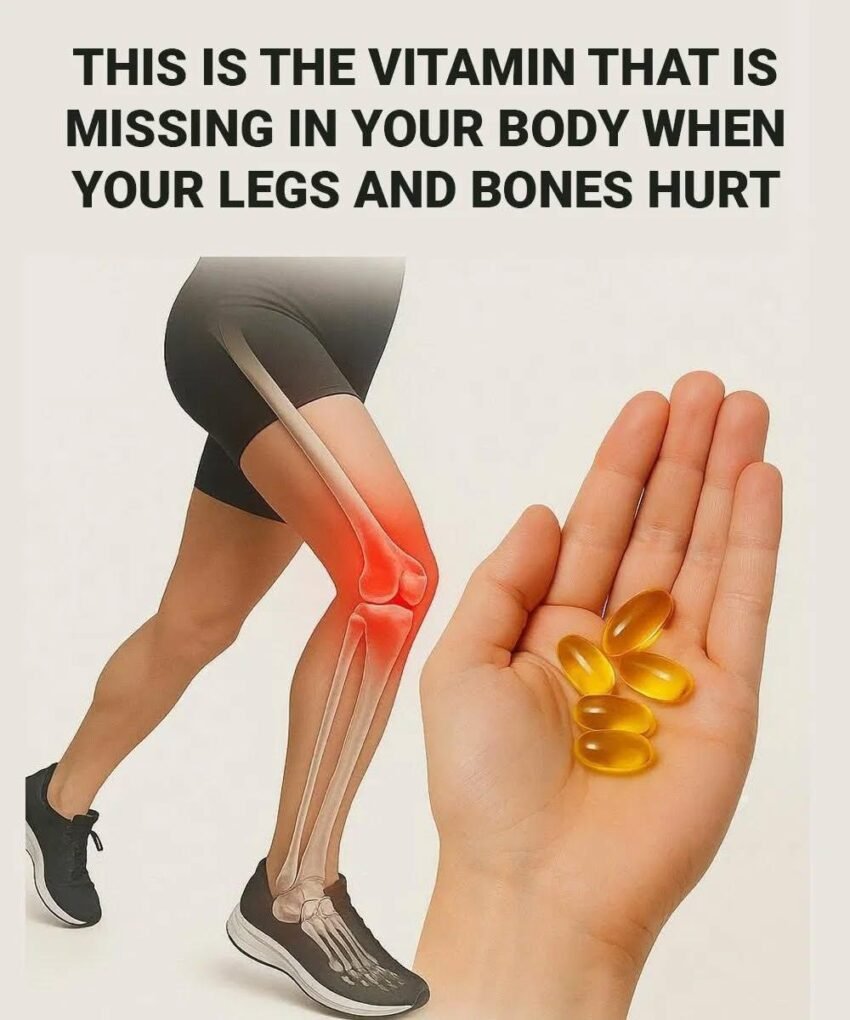
The Vitamin Your Body Lacks When Legs and Bones Hurt 🦴⚡
Do your legs ache, bones feel weak, or joints throb for no apparent reason? While aging, overuse, or minor injuries are often blamed, the root cause may actually be a vitamin deficiency. Identifying it early can prevent long-term bone problems and improve overall health.
⚠️ This article is for educational purposes only. Consult a doctor for persistent pain or suspected deficiencies.
The Vitamin Linked to Bone and Leg Pain
The main culprit is Vitamin D.
Why Vitamin D Matters:
-
Helps the body absorb calcium, which is essential for strong bones.
-
Supports muscle function, reducing cramps and weakness.
-
Plays a role in immune health and overall energy.
Without enough vitamin D:
-
Bones become weak and brittle (osteomalacia in adults).
-
Muscle aches and cramps increase.
-
Risk of fractures rises.
Signs You May Be Vitamin D Deficient
-
Bone Pain and Tenderness – especially in the lower back, hips, and legs.
-
Muscle Weakness or Cramps – difficulty standing from chairs or climbing stairs.
-
Fatigue or Low Energy – despite adequate sleep.
-
Frequent Illnesses – vitamin D deficiency can weaken immunity.
-
Mood Changes – depression or low mood may be linked to low vitamin D.
Other Nutrients That Affect Bone Health
While vitamin D is crucial, it works best alongside:
-
Calcium: Essential for strong bones (dairy, leafy greens, almonds).
-
Magnesium: Supports bone structure and muscle function (nuts, seeds, whole grains).
-
Vitamin K2: Helps calcium deposit in bones instead of arteries (fermented foods, cheese).
How to Boost Vitamin D Levels
1. Sunlight Exposure
-
Spend 10–30 minutes in the sun daily (arms and legs exposed).
-
Morning sun is best to minimize skin damage.
2. Vitamin D-Rich Foods
-
Fatty fish: salmon, mackerel, sardines
-
Egg yolks
-
Fortified milk, yogurt, or cereals
3. Supplements
-
Vitamin D3 supplements may be recommended by a doctor, especially in winter or low-sunlight regions.
-
Dosage varies; a blood test can determine your specific needs.
Tips for Strong Bones and Healthy Legs
-
Engage in weight-bearing exercises like walking, jogging, or yoga.
-
Maintain a balanced diet rich in calcium, magnesium, and vitamin K2.
-
Avoid smoking and excessive alcohol, which weaken bones.
-
Monitor vitamin D levels periodically, especially if you have chronic pain or fatigue.
Final Thoughts
Leg and bone pain are often overlooked as normal aches, but they may signal vitamin D deficiency. Adequate sunlight, proper diet, and supplements can restore bone health, reduce muscle pain, and boost overall well-being.
Don’t ignore persistent leg or bone pain — addressing vitamin deficiencies early can prevent serious long-term complications.
FAQ: Vitamin D and Bone Health
Q: How do I know if I’m vitamin D deficient?
A blood test can accurately measure your vitamin D levels.
Q: Can vitamin D alone fix leg and bone pain?
It helps significantly, but calcium, magnesium, exercise, and overall nutrition are also essential.
Q: Can too much vitamin D be harmful?
Yes, excessive intake can lead to calcium buildup in organs, so follow your doctor’s guidance.