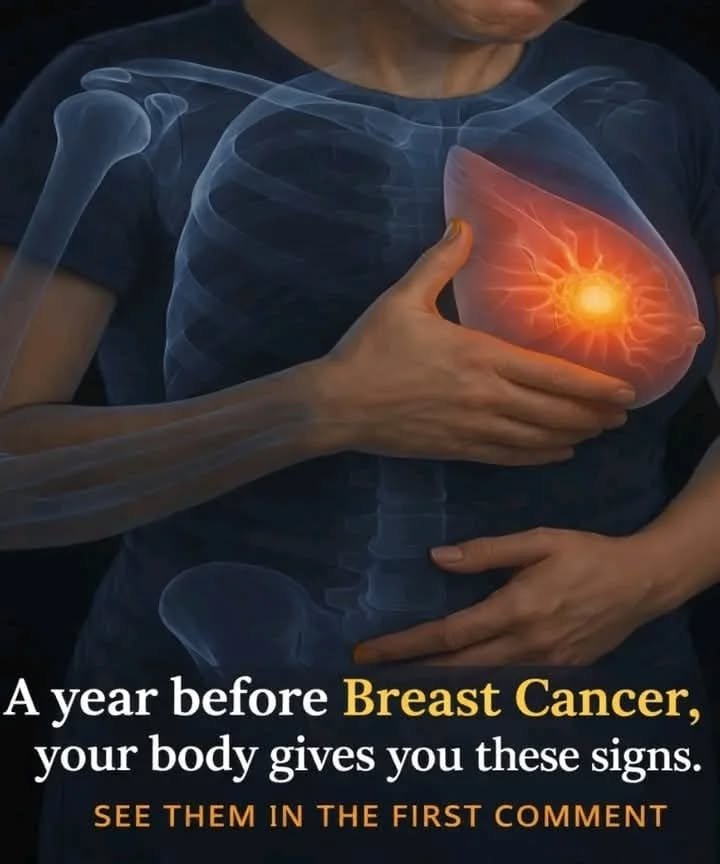
These Are the Symptoms You May Experience if You Have Breast Cancer
Breast cancer is one of the most common cancers among women worldwide, but early detection significantly increases treatment success. Knowing the possible symptoms and monitoring changes in your body can save lives.
This guide highlights warning signs and symptoms you should not ignore, while emphasizing the importance of professional medical evaluation.
1. Lumps or Thickening in the Breast
The most common symptom of breast cancer is a new lump or area of thickened tissue in the breast or underarm.
-
Lumps are often painless but can be tender.
-
Not all lumps are cancerous, but any new lump should be checked by a doctor.
2. Changes in Breast Size or Shape
Breast cancer may cause noticeable changes in size, shape, or symmetry.
-
Swelling in all or part of the breast
-
One breast appearing lower or larger than the other
Even subtle differences should be evaluated by a healthcare professional.
3. Skin Changes
Watch for changes in the skin of your breast, such as:
-
Dimpling or puckering (like the texture of an orange peel)
-
Redness, rash, or inflammation
-
Thickening of the skin
These changes may indicate tumor growth near the surface.
4. Nipple Changes
Pay attention to your nipples, as they may show early signs of breast cancer:
-
Inversion (turning inward) if it wasn’t previously inverted
-
Discharge that is bloody, clear, or unusual
-
Pain, itching, or scaling
5. Persistent Pain
While breast cancer is not always painful in its early stages, some people experience persistent pain or tenderness in the breast or underarm region.
6. Swollen Lymph Nodes
Breast cancer can spread to lymph nodes under the arm or near the collarbone. Signs include:
-
Swelling or lumps in the armpit
-
Tenderness or heaviness in the underarm area
7. Unexplained Weight Loss or Fatigue
Although not specific to breast cancer, unexplained weight loss or persistent fatigue can accompany advanced stages of the disease.
8. Changes in Texture or Color of the Breast
-
Shiny or stretched skin
-
Warmth or redness
-
Unusual bruising
These signs may indicate an inflammatory form of breast cancer, which requires urgent evaluation.
When to See a Doctor
-
If you notice any new changes in your breasts, schedule an appointment promptly.
-
Regular self-exams and mammograms are essential for early detection.
-
Family history and age can affect risk, so discuss personalized screening schedules with your doctor.
How Early Detection Saves Lives
-
Detecting breast cancer early increases survival rates significantly.
-
Treatments are often less invasive and more effective when the disease is caught before it spreads.
-
Awareness of your own body and regular check-ups are key.
Final Thoughts
Breast cancer can present with subtle signs, which is why knowing the symptoms and monitoring changes in your breasts is critical. Early detection can make a life-saving difference.
If you notice any of these signs—even if they seem minor—consult a healthcare professional immediately. Your vigilance is the first step toward protection and early intervention.