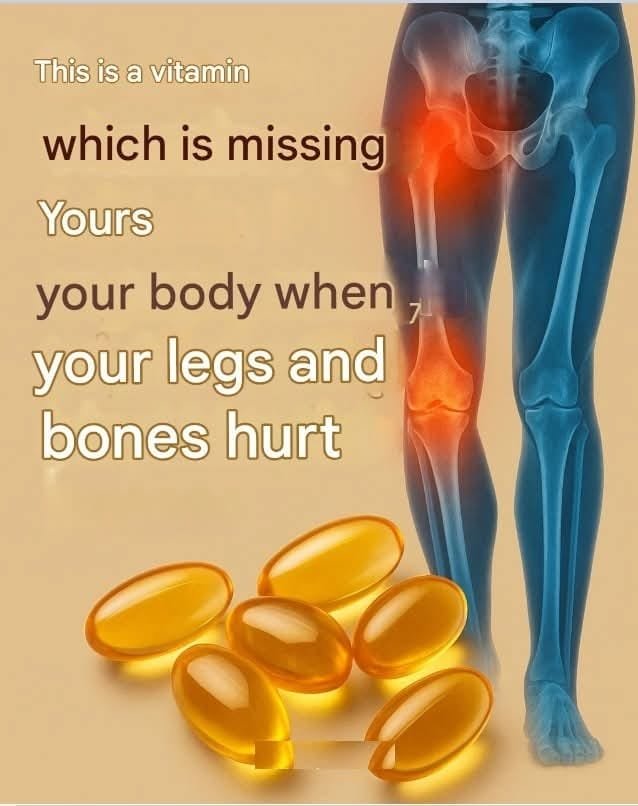
This Is the Vitamin Your Body Is Missing When Your Legs and Bones Hurt
Learn which vitamin deficiency causes leg and bone pain, its symptoms, natural sources, and safe ways to restore healthy bones and muscles.
Introduction: When Leg and Bone Pain Signals More Than Fatigue
Do your legs ache after minimal activity? Are your bones feeling weaker than usual? While aging, overuse, or injury can cause discomfort, persistent leg and bone pain may indicate a vitamin deficiency that affects your muscles and skeletal system.
One vitamin in particular plays a critical role in bone strength, muscle function, and overall mobility. Knowing which nutrient your body might be missing can help you prevent long-term damage and regain energy.
The Culprit: Vitamin D
Why Vitamin D Matters
Vitamin D is essential for:
-
Calcium absorption – Without it, calcium cannot strengthen bones properly
-
Bone remodeling – Keeps bones strong and resilient
-
Muscle function – Deficiency can lead to weakness and fatigue
-
Immune support – Helps prevent inflammation that can worsen joint pain
When vitamin D levels are low, your body may experience:
-
Aching legs and bone pain
-
Weak muscles and fatigue
-
Increased risk of fractures
Signs You Might Be Deficient in Vitamin D
-
Bone Pain and Tenderness – Often in the legs, hips, and ribs
-
Muscle Weakness – Feeling wobbly or struggling with stairs
-
Fatigue – Even after proper rest
-
Frequent Falls – Especially in older adults due to weak bones and muscles
-
Slow Healing – Fractures or injuries take longer to recover
-
Mood Changes – Low vitamin D has been linked to seasonal depression
-
Bone Loss – Detected by medical scans over time
Note: Mild deficiencies can be subtle, while severe deficiency can cause pronounced pain and mobility issues.
Why Deficiency Occurs
-
Limited Sun Exposure: Your skin produces vitamin D when exposed to sunlight
-
Age: Older adults produce less vitamin D naturally
-
Dietary Gaps: Few foods naturally contain vitamin D
-
Obesity: Vitamin D can be sequestered in fat cells, making it less available
-
Kidney or Liver Disorders: These organs convert vitamin D into its active form
How to Boost Your Vitamin D Levels
1. Sunlight Exposure
-
10–30 minutes of midday sun on arms, legs, or face a few times a week
-
Factors like skin tone, latitude, and sunscreen affect vitamin D production
2. Dietary Sources
-
Fatty fish: Salmon, mackerel, sardines, and tuna
-
Egg yolks and fortified dairy products
-
Mushrooms exposed to sunlight
3. Supplements
-
Vitamin D3 (cholecalciferol) is most effective
-
Typical doses vary: 600–2,000 IU daily for adults (higher if prescribed by a doctor)
-
Always consult a healthcare provider before starting supplements
Lifestyle Tips to Support Bone and Leg Health
-
Exercise Regularly: Weight-bearing exercises like walking, jogging, and resistance training strengthen bones
-
Maintain a Balanced Diet: Include calcium-rich foods alongside vitamin D
-
Limit Alcohol and Smoking: Both impair bone health
-
Monitor Your Levels: Periodic blood tests can track vitamin D and calcium status
Frequently Asked Questions (FAQs)
Can vitamin D deficiency cause severe leg cramps?
Yes. Low vitamin D can lead to muscle weakness and cramping, especially in the legs.
How long does it take to restore vitamin D levels?
Depending on deficiency severity, supplementation may take weeks to months to normalize blood levels.
Can children experience bone pain from low vitamin D?
Absolutely. Severe deficiency in children can cause rickets, leading to bone deformities and pain.
Is sunlight alone enough?
For many, sunlight helps but may not be sufficient due to geographic location, skin tone, or lifestyle.
Can vitamin D prevent osteoporosis?
Yes. Adequate vitamin D combined with calcium and exercise strengthens bones and reduces fracture risk.
Final Thoughts: Don’t Ignore Persistent Bone or Leg Pain
If your legs ache or your bones feel weak, vitamin D deficiency could be the underlying cause. Addressing it early can:
-
Reduce pain and fatigue
-
Improve muscle strength and mobility
-
Protect against fractures and long-term bone loss
Next Step: Ask your doctor for a vitamin D blood test and consider incorporating sunlight, vitamin D-rich foods, and safe supplementation into your daily routine.
Call to Action
If you’ve been struggling with leg or bone pain, check your vitamin D levels and start making small changes today. Share this guide with friends and family to help them stay strong and pain-free! 💪☀️