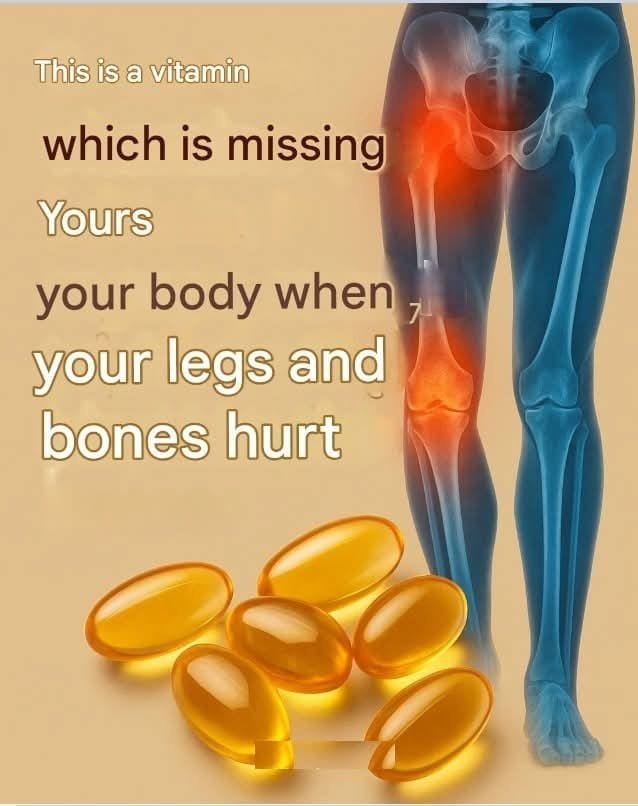
This Is the Vitamin Your Body Is Missing When Your Legs and Bones Hurt
If you’ve been feeling aches in your legs, stiffness in your joints, or bone discomfort, you might assume it’s just age or overexertion. But sometimes, the real culprit is something far simpler: a vitamin deficiency.
Understanding which nutrient your body is lacking—and how to get it—can help restore comfort, improve mobility, and support bone health.
Why Your Legs and Bones Hurt
Pain in bones and legs can have many causes:
-
Overuse or exercise – temporary soreness from strain
-
Joint inflammation – arthritis or tendon issues
-
Circulation problems – poor blood flow can cause fatigue and discomfort
-
Vitamin or mineral deficiencies – lack of key nutrients weakens bones and muscles
While several vitamins and minerals contribute to bone and muscle health, one often overlooked nutrient is Vitamin D.
Vitamin D: The “Sunshine Vitamin”
Vitamin D is crucial for your bones, muscles, and overall mobility. Without enough, your body struggles to absorb calcium, which can lead to:
-
Weak bones (osteomalacia in adults)
-
Muscle weakness and cramps
-
Fatigue and general aches
-
Increased risk of fractures
Fun fact: Vitamin D is called the “sunshine vitamin” because your skin produces it when exposed to sunlight.
How Vitamin D Supports Leg and Bone Health
-
Calcium Absorption
-
Vitamin D helps your intestines absorb calcium from food, strengthening bones.
-
-
Bone Remodeling and Repair
-
Bones are living tissue—they constantly rebuild. Vitamin D ensures this process happens efficiently.
-
-
Muscle Function
-
Low vitamin D is linked to leg weakness, balance issues, and more frequent falls in adults.
-
-
Immune and Cardiovascular Support
-
Bonus benefit: it helps regulate immune function and supports heart health.
-
How to Know If You’re Deficient
Common signs of Vitamin D deficiency include:
-
Persistent bone or leg pain
-
Muscle weakness or cramps
-
Fatigue and low energy
-
Mood changes like depression or irritability
-
Frequent illness or slow recovery
A simple blood test can confirm deficiency. Your doctor can check 25-hydroxyvitamin D levels, the most accurate marker.
How to Restore Vitamin D Levels
1. Sun Exposure
-
10–30 minutes of midday sun, 2–3 times per week, can boost vitamin D naturally.
-
Fair-skinned people need less time; darker skin requires longer exposure.
2. Foods Rich in Vitamin D
-
Fatty fish (salmon, mackerel, sardines)
-
Egg yolks
-
Fortified foods (milk, orange juice, cereals)
-
Mushrooms exposed to sunlight
3. Supplements
-
Vitamin D3 is more effective than D2 for raising blood levels.
-
Dosage depends on your deficiency—do not exceed recommended daily allowance without medical guidance.
Lifestyle Tips for Healthy Bones and Legs
-
Strength training: Improves muscle mass and bone density.
-
Weight-bearing exercise: Walking, jogging, or dancing strengthens bones.
-
Balanced diet: Include protein, calcium, magnesium, and vitamin K.
-
Avoid smoking and excessive alcohol: Both can weaken bones over time.
When to See a Doctor
Consult a healthcare provider if you experience:
-
Persistent leg or bone pain despite rest
-
Weakness affecting mobility
-
Frequent falls
-
Numbness or tingling
-
Unexplained fractures
Early detection of vitamin D deficiency can prevent long-term bone and muscle issues.
Final Thoughts
If your legs ache or your bones feel weak, vitamin D deficiency may be the hidden culprit. Sunlight, diet, and supplementation can help restore strength, reduce discomfort, and support daily vitality.
💬 Share Your Experience
Have you ever been low on vitamin D?
Comment below with how you boosted your levels—and which changes helped your legs and bones feel stronger.