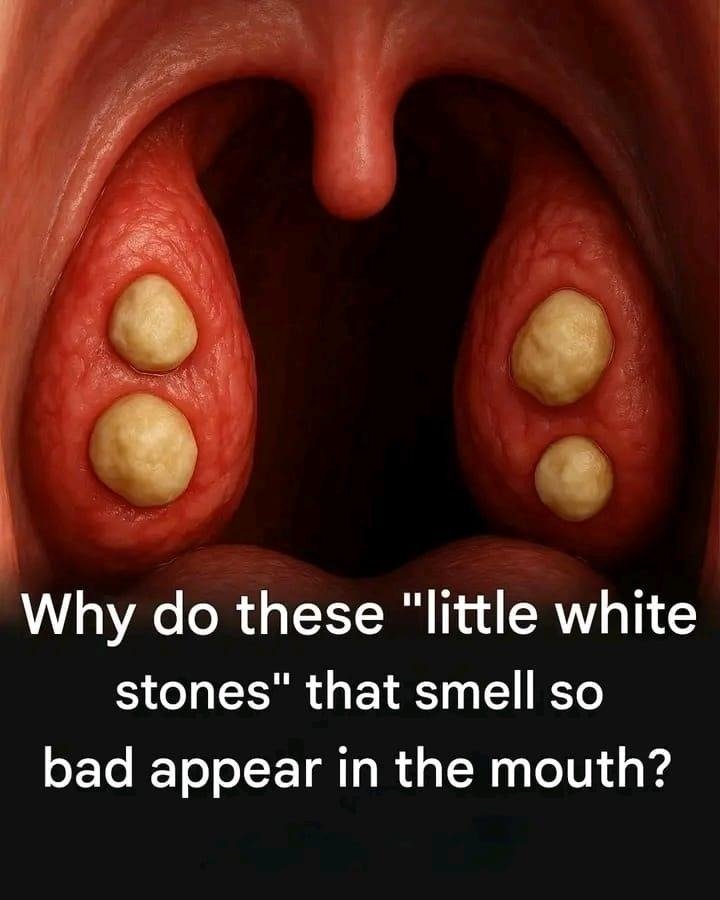
What Are Those ‘White Stones’ That Appear in the Mouth and Cause Bad Breath?
Learn about the white stones in your mouth, known as tonsil stones (tonsilloliths), their causes, symptoms, and safe ways to prevent and remove them.
Introduction
If you’ve ever noticed small, white or yellowish lumps at the back of your throat and experienced bad breath, you may have encountered tonsil stones—also called tonsilloliths.
While they are usually harmless, they can be uncomfortable, cause persistent bad breath, and even lead to throat irritation if left untreated. Understanding what they are and how to deal with them can improve oral hygiene and comfort.
What Are Tonsil Stones?
Tonsil stones are small, calcified deposits that form in the crevices of the tonsils, called tonsillar crypts.
They are composed of:
-
Bacteria
-
Dead cells
-
Food particles
-
Mucus
Over time, these substances harden, forming white or yellowish stones.
Why Do Tonsil Stones Cause Bad Breath?
Tonsil stones are a breeding ground for bacteria, which release sulfur compounds. This can lead to:
-
Chronic bad breath (halitosis)
-
Unpleasant taste in the mouth
-
Irritation or scratching in the throat
Even small stones can cause noticeable odor, especially when trapped bacteria grow unchecked.
Common Causes of Tonsil Stones
-
Poor oral hygiene: Plaque and bacteria buildup
-
Chronic tonsillitis: Repeated infections create debris
-
Large tonsil crypts: More crevices for debris to accumulate
-
Excess mucus: From allergies or sinus issues
-
Post-nasal drip: Bacteria and debris from nasal secretions
People who frequently get tonsil stones often have a combination of these factors.
Symptoms of Tonsil Stones
-
Visible white or yellowish lumps on tonsils
-
Bad breath that is persistent
-
Sore or irritated throat
-
Difficulty swallowing in severe cases
-
Ear pain (due to nerve connection)
-
Feeling of something stuck in the throat
Note: Many tonsil stones are very small and cause no pain, only mild odor.
How to Remove Tonsil Stones Safely
-
Gargle regularly
-
Warm salt water or antibacterial mouthwash can loosen stones and reduce bacteria
-
-
Manual removal (with care)
-
Only use a soft cotton swab or gargling
-
Avoid sharp objects to prevent injury
-
-
Stay hydrated
-
Drinking water helps flush debris
-
-
Maintain oral hygiene
-
Brush teeth twice daily
-
Floss daily
-
Clean the tongue
-
-
Medical options (if recurrent)
-
Laser tonsil crypt reduction
-
Tonsillectomy (removal of tonsils, for severe cases)
-
Prevention Tips
-
Brush and floss daily
-
Gargle after meals
-
Avoid excessive dairy (can increase mucus)
-
Treat sinus or allergy issues promptly
-
Visit a dentist or ENT if stones recur frequently
When to See a Doctor
Seek medical attention if you experience:
-
Frequent or large tonsil stones
-
Severe pain or difficulty swallowing
-
Persistent bad breath despite hygiene
-
Recurrent tonsillitis
A doctor can safely remove stones and check for underlying issues.
Frequently Asked Questions (FAQs)
Are tonsil stones contagious?
No, they are not contagious. They form individually in your tonsils due to local bacteria and debris.
Can tonsil stones go away on their own?
Small stones sometimes dislodge naturally, but larger or recurring stones often need intervention.
Do tonsil stones indicate a serious disease?
Rarely. They are usually harmless, but recurrent stones may need evaluation for tonsil health.
Final Thoughts
Those white stones in the mouth—tonsil stones—are common and usually harmless, but they can be unpleasant and cause bad breath. Regular oral hygiene, proper hydration, and gentle removal techniques can help prevent them.
If tonsil stones become frequent or bothersome, consult an ENT doctor for professional care and long-term solutions.